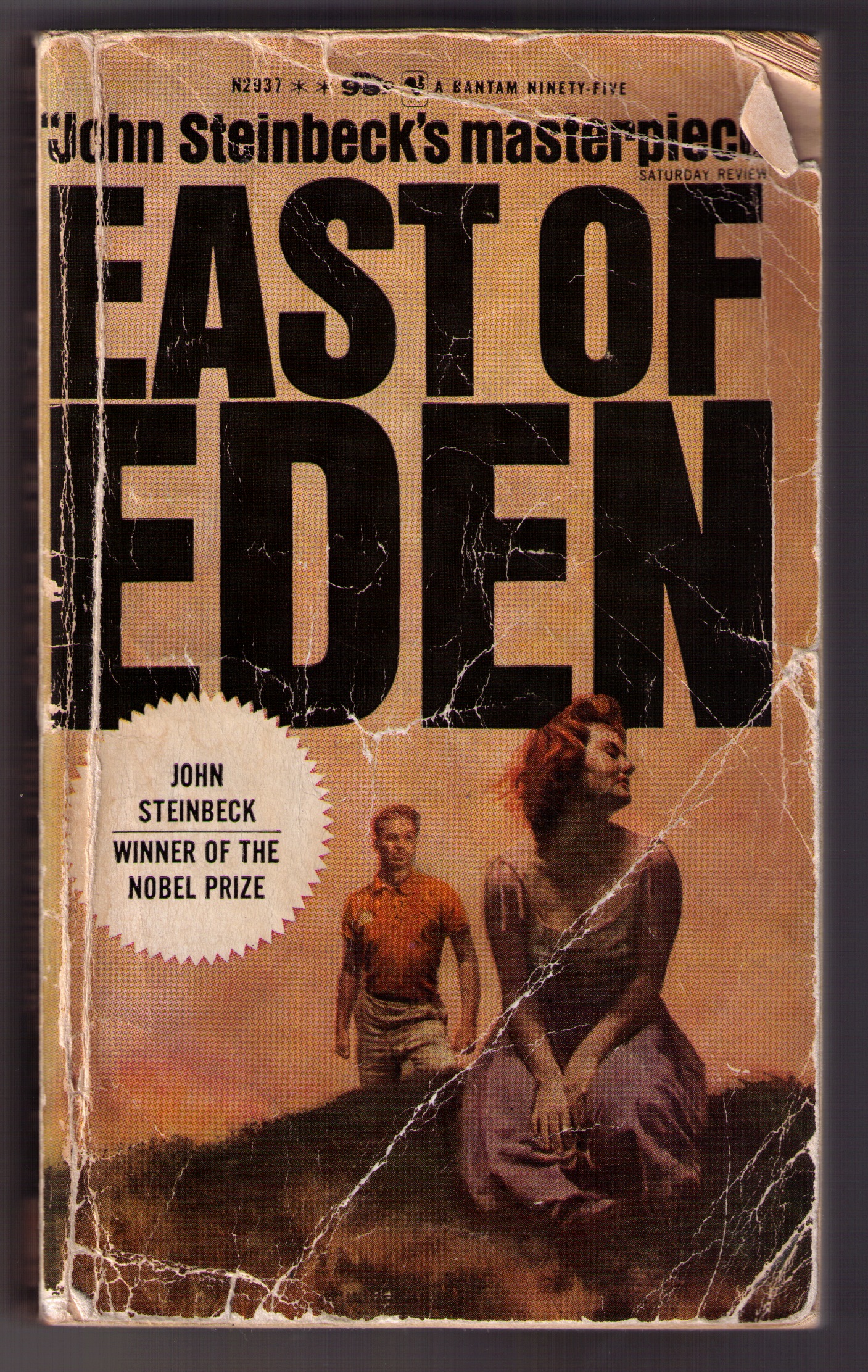
I just finished Steinbeck’s ‘East of Eden’. The 850-page book is being adapted for the small screen, and the seven-episode series is dropping on Netflix in October. After reading this, I can confirm that Steinbeck’s best work is definitely ‘The Grapes of Wrath’ which I wrote about earlier. But nevertheless, the book kept me engaged. East of Eden is a story of how the American West was populated, settled and cultivated. The book, through the lives of two connected families also narrates the socio-technological transformation of America over a century. The state institutions, the Sheriff, doctors being called to houses, well-diggers, speculators, Ford’s cars, the National Geographic, refrigeration, the lettuce experiments in the valley etc were some of the key milestones that I took note of.
The book is loosely based on Steinbeck’s own life and grapples with the moral quandaries he himself faced. He was married twice and divorced his first wife after falling for a much younger woman. In WWII, he also covered the Battle of Salerno as a correspondent and returned traumatized. Alcohol ended up being his saviour.
Steinbeck’s writing is bland here. There’s not much of a literary flair in this work except for some occasional flashes of brilliance; like this section where he compares the role of the Church and the Brothel in any new town:
A new country seems to follow a pattern. First come the openers, strong and brave and rather childlike. They can take care of themselves in a wilderness, but they are naïve and helpless against men, and perhaps that is why they went out in the first place. When the rough edges are worn off the new land, businessmen and lawyers come in to help with the development—to solve problems of ownership, usually by removing the temptations to themselves. And finally comes culture, which is entertainment, relaxation, transport out of the pain of living. And culture can be on any level, and is.
The church and the whorehouse arrived in the Far West simultaneously. And each would have been horrified to think it was a different facet of the same thing. But surely there were both intended to accomplish the same thing: the singing, the devotion, the poetry of the churches took a man out of his bleakness for a time, and so did the brothels. The sectarian churches came in swinging, cocky and loud and confident. Ignoring the laws of debt and repayment, they built churches which couldn’t be paid for in a hundred years. The sects fought evil, true enough, but they also fought each other with a fine lustiness. They fought at the turn of a doctrine. Each happily believed all the others bound for hell in a basket. And each for all its bumptiousness brought with it the same thing: the Scripture on which our ethics, our art and poetry, and our relationships are built. It took a smart man to know where the difference lay between the sects, but anyone could see what they had in common. And they brought music—maybe not the best, but the form and sense of it. And they brought conscience, or rather, nudged the dozing conscience. They were not pure, but they had a potential of purity, like a soiled white shirt. And any man could make something pretty fine of it within himself.
…..
While the churches, bringing the sweet smell of piety for the soul, came in prancing and farting like brewery horses in bock-beer time, the sister evangelism, with release and joy for the body, crept in silently and gravely, with its head bowed and its face covered
I might write some more about this work as there’s more stuff worthy of sharing (especially the Cain and Abel reference from the Genesis). I also got to know that fifty years after the books publication, interest in it suddenly spiked when Oprah picked it as her choice in her 2004 book club! The power of influencers…
Discover more from Manish Mohandas
Subscribe to get the latest posts sent to your email.
