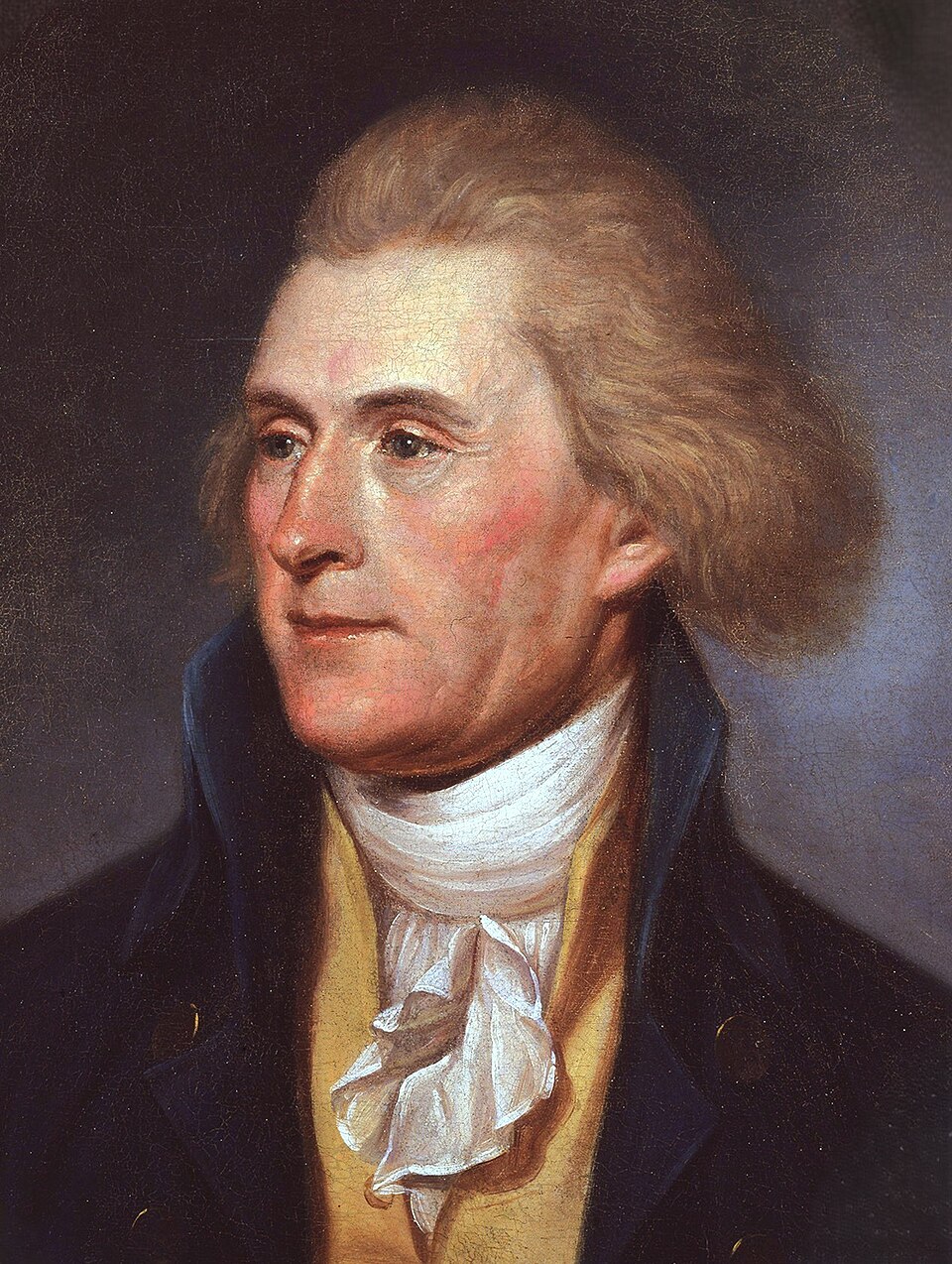
After reading and writing a bit about the American Revolution, I have been tackling the biographies of a few of the Founding Fathers. Jon Meacham’s ‘Thomas Jefferson: The Art of Power’ was the first of the lot.
In 1962, at a dinner honoring the Nobel Prize winners of the Western Hemisphere, President Kennedy began his speech with these lines:
I think this is the most extraordinary collection of talent, of human knowledge, that has ever been gathered together at the White House, with the possible exception of when Thomas Jefferson dined alone.
Someone once said that Thomas Jefferson was a gentleman of 32 who could calculate an eclipse, survey an estate, tie an artery, plan an edifice, try a cause, break a horse, and dance the minuet. Whatever he may have lacked, if he could have had his former colleague, Mr. Franklin, here we all would have been impressed.
Jefferson was truly a polymath. He was the first Secretary of State of the US, its second Vice President and the third President of the country. But his enduring legacy was his role as the drafter of the ‘Declaration of Independence’, which he accomplished at the age of 33!
I urge you to read the whole document (it’s not long :)) as it’s arguably one of the most consequential pieces of writing in world history. The second paragraph begins with these legendary lines:
We hold these truths to be self-evident, that all men are created equal, that they are endowed by their Creator with certain unalienable Rights, that among these are Life, Liberty and the pursuit of Happiness.–That to secure these rights, Governments are instituted among Men, deriving their just powers from the consent of the governed, –That whenever any Form of Government becomes destructive of these ends, it is the Right of the People to alter or to abolish it, and to institute new Government, laying its foundation on such principles and organizing its powers in such form, as to them shall seem most likely to effect their Safety and Happiness.
And it is strangely due to these very lines that Jefferson’s legacy has been complicated. The drafter of the Declaration of Independence and the chap who wrote about equality and unalienable rights owned close to 700 slaves in his estate in Monticello. But even more damning was his relationship with one of them – Sally Hemings.
Sally Hemings was the illegitimate daughter of his father-in-law and his slave. So technically she was his wife’s stepsister. Jefferson’s wife, on her deathbed, extracts a promise from him that he’d never every marry again. He was 39 then and Sally was 9. Years later, when he was deployed to Paris as the Minister Plenipotentiary (working under Benjamin Franklin and eventually succeeding him), Sally joins him as a 16-year-old. And over the course of the years, gives birth to six children of Jefferson. Though she was technical a free person in Paris (due to slavery being abolished in France), she returns to Virginia with Jefferson after he promises to privileges for her and freedom for her children. Whatever way we look at it, this even today remains a blot on his career. From my reading of the period’s history, the Blacks were never seen as equal humans and Jefferson, Washington and the rest were products of their period.
One of their sons Madison Hemings wrote a memoir documenting aspects of his ‘parents’ relationshiop. In a fascinating piece published in the NYT, the historian Annette Gordon-Reed writes:
And then there is the question of family. People often tell me they think it’s ridiculous that Sally Hemings, Thomas Jefferson and their children could be a true family. It is so far removed from what they think a family should be — an institution where the mother and father are “equal,” where the children are acknowledged by the father and receive his attention and patrimony — that it makes no sense to think of them as such.
But Madison Hemings, a product of a 19th-century slave society, clearly believed that he and his siblings and parents were a family. He used the terms “father” and “mother” and “the family,” and he drew a circle around them, speaking of the ways in which their lives were different from that of other African-Americans at Monticello.
While Madison Hemings said that Thomas Jefferson was “uniformly kind,” but “not in the habit” of being demonstrably affectionate to him and his siblings, his memoir shows how the parents were expected to treat each other and how the children’s lives were to proceed. They had a life together, however bizarre that life may appear to us today. His memories go far beyond the depiction of his mother as just a sex slave of 38 years, who also happened to have borne children.
The lives of Sally Hemings and her children offer a counterpoint to those outside of their circle. We see what slavery took from others on the mountain when Madison Hemings says that his siblings were “measurably happy” as children because they knew they would not be slaves all their lives, and because they were always allowed to be with their mother.
While in Paris, Sally Hemings gambled that she could return to her family in Virginia, raise her children, see them go off into freedom, and live a life taking care of the rooms and wardrobe of the man who promised her he would make this life possible. Her story is fascinating, but visitors should never forget the lives of hundreds of other enslaved African-Americans who knew they could not rely on Thomas Jefferson.
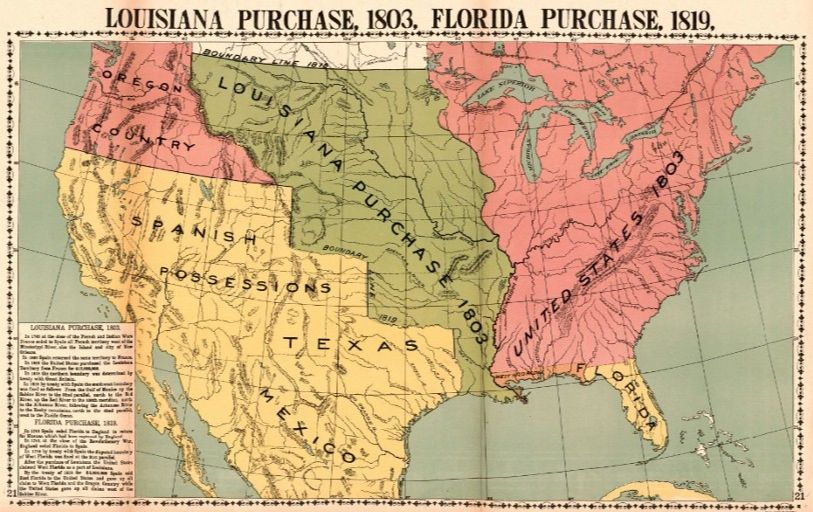
Jefferson’s presidency was remarkable for the Louisiana Purchase. A transaction by which he doubled the territory of America by purchasing close to 2.1 million sq.km from France and through the process created a precedent for the Executive to take drastic calls without Legislative approvals.
Meacham, explaining Jefferson’s breadth of reading shares this snippet while narrating his communication with the scientist Joesph Priestly:
“I very early saw that Louisiana was indeed a speck in our horizon which was to burst in a tornado; and the public are unapprised how near this catastrophe was. Nothing but a frank and friendly development of causes and effects on our part, and good sense enough in Bonaparte to see that the train was unavoidable, and would change the face of the world, saved us from that storm.” He closed the letter with a scholarly query: “Have you seen the new work on Malthus on population? It is one of the ablest I have ever seen.”
How like Jefferson – amid the greatest of possible events affecting every aspect of American life and beyond, he was reading Malthus.
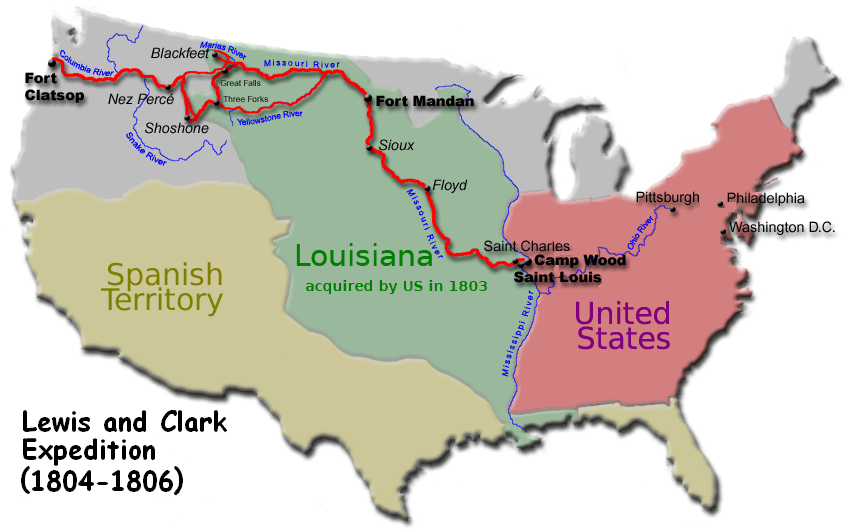
In line with his scientific curiosity, Jefferson commissioned the famous Lewis and Clark Expedition during his Presidency, with the intent of exploring and mapping the western territories and investigate the possibility of a navigable route to the Pacific. Their maps and observations greatly expanded American knowledge of the West.
His arguments with Hamilton (the Federalists) on the nature of the American government went a long way in shaping US federalism. A lot of the debate was centered on the influence of Britain and France, the fragility of the American experiment in its initial years and a clash of conflicting visions of how the federal model should evolve. The entire discourse on this was Latin and Greek to me.
I tried watching the 1995 Merchant-Ivory movie ‘Jefferson in Paris‘ but found it too dull. The Ken Burns documentary and the 2025 mini series are two other notable ones that I sampled.
Discover more from Manish Mohandas
Subscribe to get the latest posts sent to your email.


One thought on “Thomas Jefferson’s Legacy (It’s Complicated)”