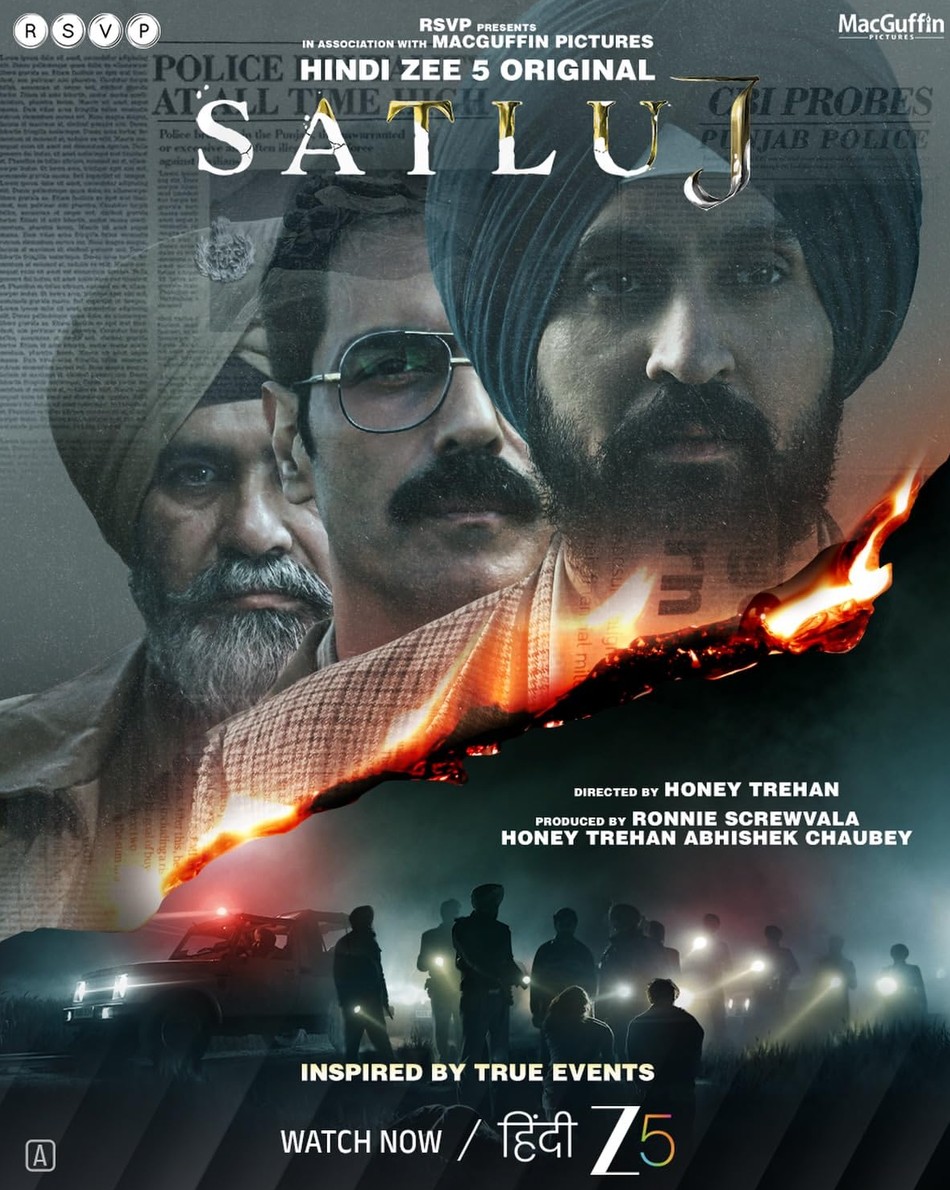
I watched Satluj a few weeks ago and was disappointed by its overall treatment of a complex subject like Punjab’s militancy. Until the movie hit the headlines, I knew next to nothing of Jaswant Singh Khalra. This full-page profile by the Indian Express was one of the best introductions to the case and Khalra’s life.
While the movie took great pains to showcase the police brutality of the late 80s and early 90s in quelling the militancy, I found it weirdly silent on the fanaticism and violence that the Punjab terror unleased on the innocent. According to the film, close to 25,000 people were murdered by the Police-State during this period. It’s a number that has ruffled many feathers.
Hartosh Singh Bal’s argument against this number (written as a defence of KPS Gill’s tenure way back in 2017) was a good effort. I later got to know that a lot of hate directed against him for this piece was the fact that he’s Gill’s nephew.
Shekhar Gupta’s analysis of the movie and his explanations on history of Punjab during this period were riveting. One of his recommendations was Ramesh Inder Singh’s ‘Turmoil in Punjab : An Insider’s Account’ which I read with great interest.
The book traces the entire militancy beginning from Bindranwale’s rise, Operation Blue Star, Operation Black Thunder, the SGPC politics and the complete mess that Delhi made of the entire situation. It was only after the Delhi genocide of the Sikhs in the aftermath of Indira Gandhi’s assassination that the jingoistic militancy blew up into a blood-soaked ‘ehno-national’ movement. The postponement of the ’91 Punjab State Elections by Rao and Seshan, the calculations towards securing a stronger majority in the Parliament and its ripple effect on the spurt in terror were fascinating aspects from the book.
The role of Pakistan in the Khalistani movement is something few remember today, In a telling episode from the book, Singh recounts a story where General Zia flew into a rage on seeing a purported map of Khalistan.
When some of the terrorist organizations published maps of Khalistan that showed parts of Pakistan as an integral part of it, Gen. Zia reportedly went into a rage. Lahore was the capital of Maharaja Ranjit Singh and no Sikh militant outfit could afford not to include it or sacred Sikh sites like Nankana Sahib, the birthplace of Guru Nanak, within the boundaries of imagined Khalistan. Sikhs in their daily prayers, ardas, beseech the Akal Purakh (Almighty) for free darshan of these sacred places in Pakistan-the separatists would lose credibility if they were ever to exclude these holy places from Khalistan.
Discover more from Manish Mohandas
Subscribe to get the latest posts sent to your email.

One thought on “‘Satluj’”