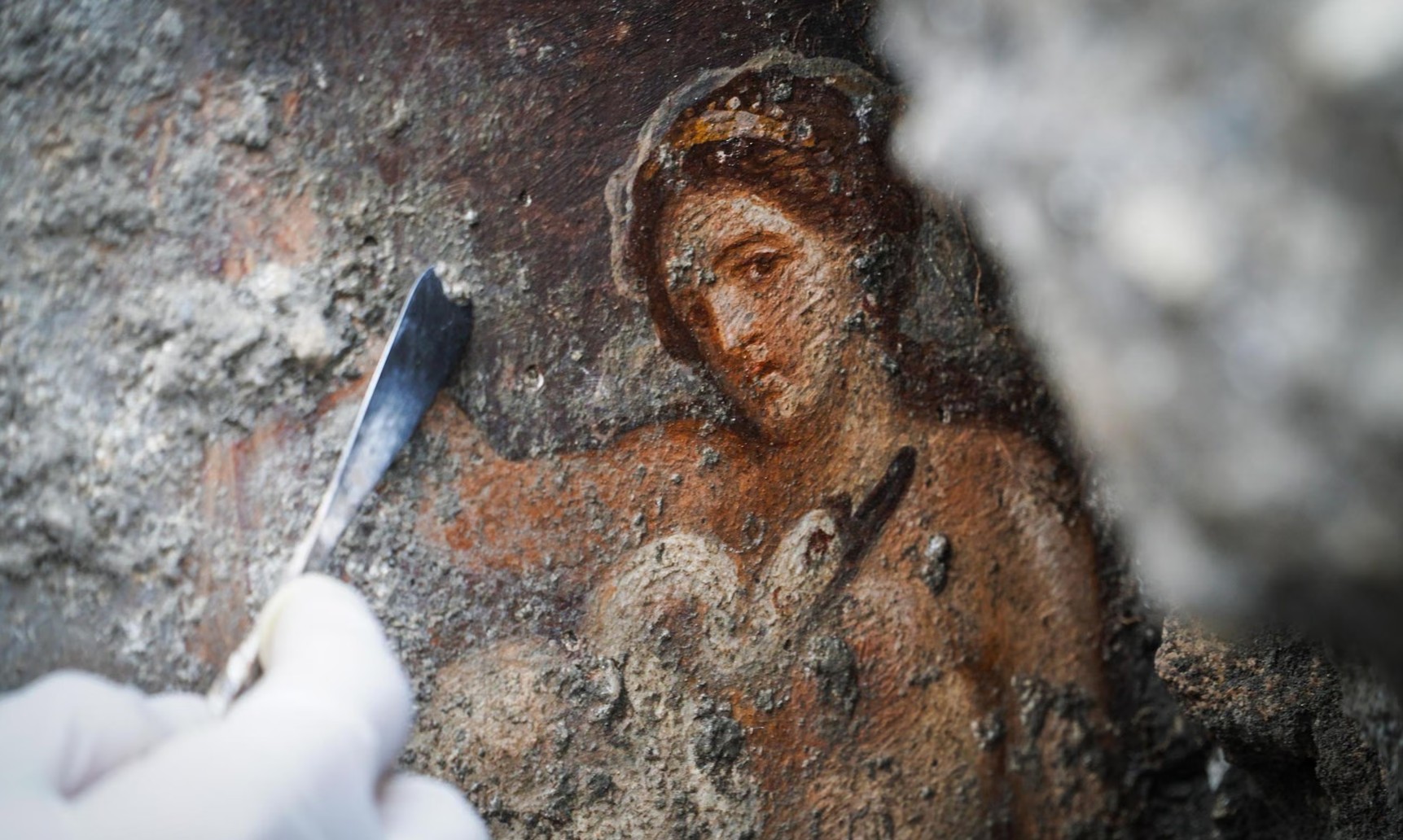
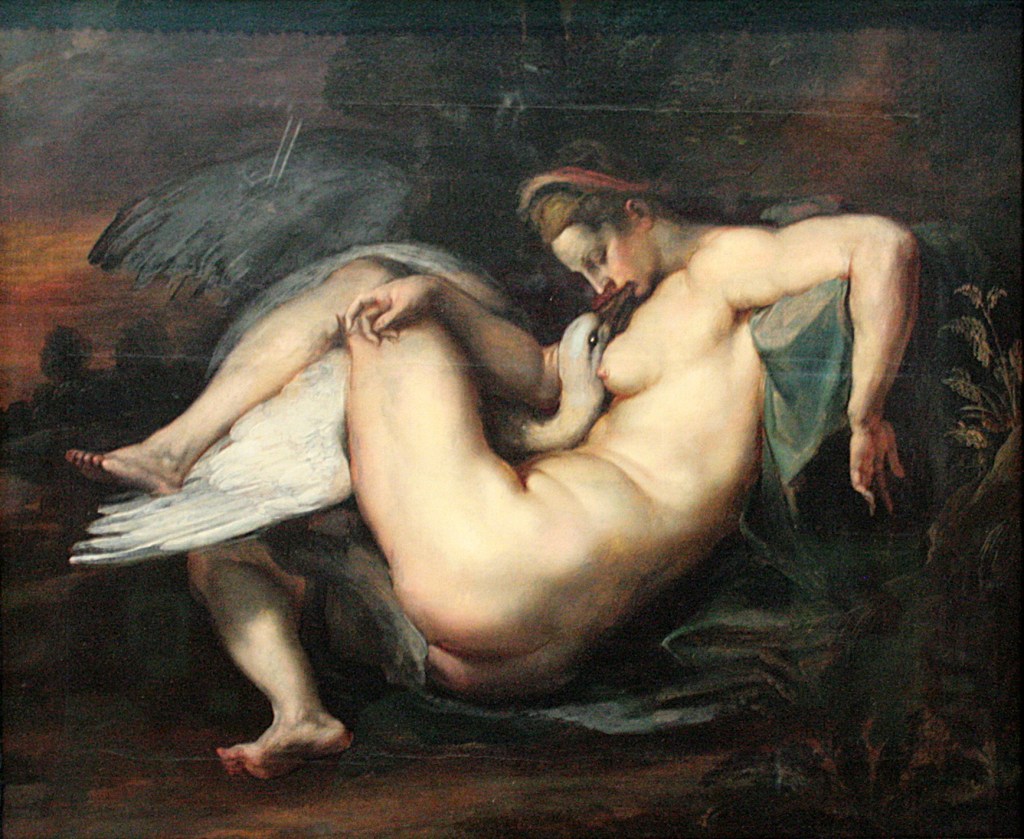
In Greek mythology, Zeus transforms himself into a swan and has sex with Leda. Through the union, Leda lays eggs from which emerge Helen (yes, the Helen of Troy), Castor, Pollux and Clytemnestra. In art, especially during the Renaissance, this copulation (rape is a more appropriate word I guess) was attempted by many artists. Years back, I stumbled upon this myth in an intriguing essay which argued that it was only Michelangelo who got the positioning of the swan accurately. I got reminded of it when I read this paragraph in Martin Gayford’s biography of Michelangelo.
Judging from the surviving copies, for all its weirdness, the Leda was a deeply sensual and mysteriously poetic image. As so often in Michelangelo’s works, the body speaks its own language. Leda’s fingers are relaxed, but curling with pleasure. The impression of avian–human intercourse is at once graphic and surreal: the woman seeming to sleep, perhaps dream, the swan heroically virile. (It was a creature worthy to take a place beside Jonah’s magnificent fish on the Sistine Chapel ceiling in Michelangelo’s bestiary.)


Tintoretto’s swan looks particularly pleased with himself as Leda tries vainly to conceal her birdmance from a maid. She places a hand on the swan’s wing, as though she might be able to pass the rest of him as some sort of elaborate cushion – Natalie Haynes writing in Pandora’s Jar, Women in Greek Myths
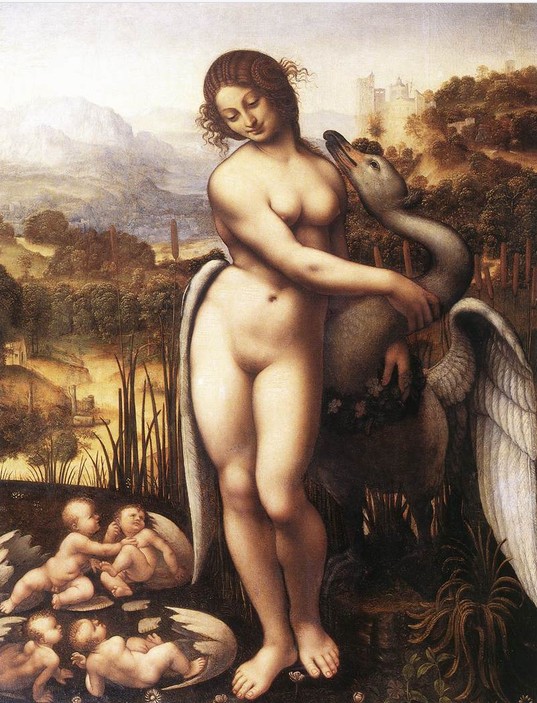
Leonardo’s Leda looks down at the four babies (one of whom is Helen) that have emerged from a pair of cracked eggshells at her feet, and her expression seems to convey that she now rather regrets the whole feathery affair. Only Michelangelo gives the scene an intimacy which seems to have an actual sexual charge: the swan’s neck emerges from between Leda’s embracing thighs and they gaze at one another lovingly, mouth to beak. – Nathalie Haynes in Pandora’s Jar


A few years back, an extraordinary fresco of Leda and the Swan was discovered in Pompei in which Leda, unlike what we are used to, was staring directly at the viewer. It probably must have adorned a rich person’s home only to have gotten buried on what was a perfectly normal day in 79 AD.

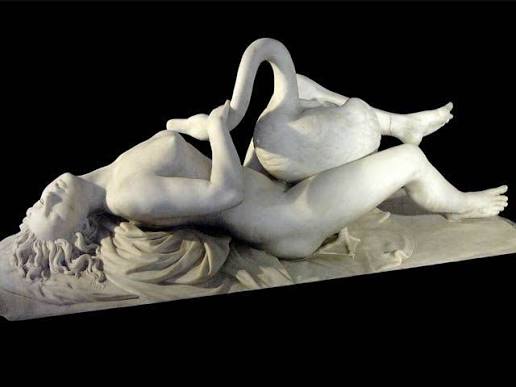
A surprising trivia that I came across was the fact that the Jai Vilas Palace in Gwalior also has a sculpture on the same two characters!
And finally, the great Yeats wrote some astonishingly graphic lines about the myth in his poem ‘Leda and the Swan‘:
A sudden blow: the great wings beating still
Above the staggering girl, her thighs caressed
By the dark webs, her nape caught in his bill,
He holds her helpless breast upon his breast.
How can those terrified vague fingers push
The feathered glory from her loosening thighs?
And how can body, laid in that white rush,
But feel the strange heart beating where it lies?
A shudder in the loins engenders there
The broken wall, the burning roof and tower
And Agamemnon dead.
Being so caught up,
So mastered by the brute blood of the air,
Did she put on his knowledge with his power
Before the indifferent beak could let her drop?
Discover more from Manish Mohandas
Subscribe to get the latest posts sent to your email.
