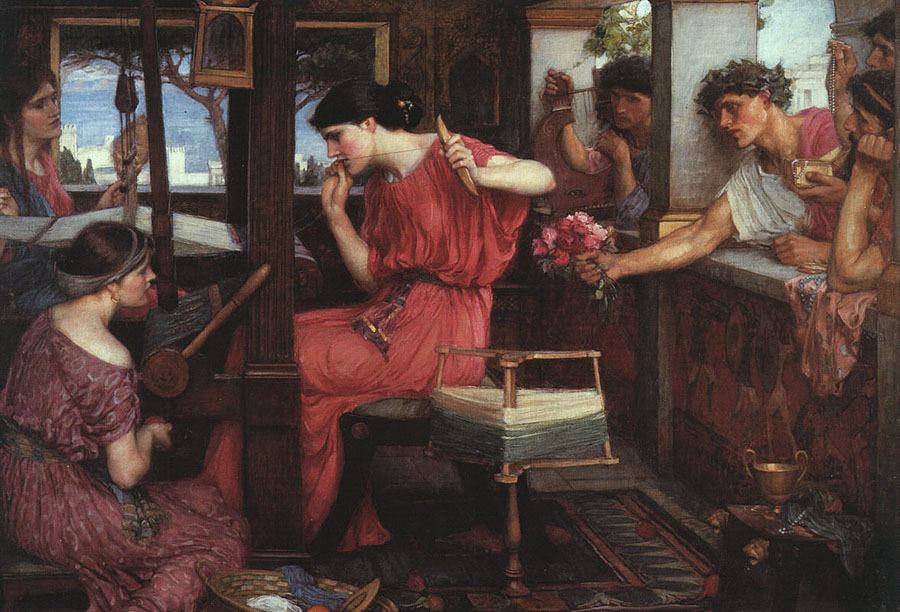
Emily Wilson’s translation of Homers ‘Odyssey’ is excellent and I was engrossed in the epic over the last few days. Around a decade back, I had read the Robert Fagles translation and even after this reading my opinion of the epic hasn’t changed much. The Odyssey is overrated. I also understand that a lot of this comes from the constant comparisons I kept making with the other epic that we’re all familiar with – the Mahabharata.
Some thoughts that came to my mind while reading:
Slavery is big in the epic. Remove slavery and many incidents vanish. Cooking, bathing, washing, weaving, tending to animals, rowing and serving are mostly done by slaves.
Horses make an appearance but they’re not as central as they are in the Mbh. On the other hand boats are everywhere in the epic. The maritime traditions of the Greeks and ofcourse the scattered Greek archipelago is easy to discern. The Mbh presents almost the opposite world. In it, there are hardly any references to the sea or any major expeditions involving water. The entire setting was more or less in the agrarian and pastoral belts of North India where rivers shape the narrative.
Olive oil is a key article of everyday use in the epic. It was used to bathe and rub the guests as a mark of hospitality. It wasn’t hard to discern the central role olive oil played in the Greek economy. (Dairy and pork similarly keep making their economic voice heard regularly). The other olive reference is the living olive tree around which Odysseus built his marriage bed. Knowledge of this bed is how Penelope recognizes that the man standing in front of her was her husband.
Agamemnon’s murder by his wife Clytemnestra and her lover Aegisthus, becomes a common reference point for Odysseus’s own ‘delay’ in reaching home. So much so that he’s advised:
The moral is, you must not stay away too long, dear boy, when those proud suitors lurk inside your house. They may divide your wealth among themselves and make your journey useless
The constant interference of the Olympian Gods in the events is one of the tensions of the epic. Poseidon, Athena and Zeus appear in every key event of the epic and either guide the lost chap or end up wrecking his plans through storms, waves and misery. I imagine this can be seen as an allegory of the free-will vs fate debate. But whatever be the case, its hard to feel sympathetic to Odysseus despite the gods ‘playing’ with him.
The contest staged by Penelope where she demands the suitors to string the bow of Odysseus and shoot the arrow across the lined-up axes has a strong resonance with the similar challenges in our epics – both Sita’s and Draupadi’s swayamawaras have similar dramatic contests.
The slaves of Penelope who turned out to be disloyal to her had the most gruesome punishment meted out to them. After being asked to clean up the blood of the suitors, they were hanged and tortured. Margaret Atwood’s ‘The Penelopiad’ also dwells on this incident.
“I refuse to grant these girls a clean death, since they poured down shame on me and Mother, when they lay beside the suitors.”
just so the girls, their heads all in a row, were strung up with the noose around their necks to make their death an agony. They gasped, feet twitching for a while, but not for long.
During his odyssey, Odysseus ends up sharing a bed with Circe (for a year) and Calypso (for seven years). So its hard to agree that he had a really tough time. In a similar vein, our own Arjuna returns after being with three women during his exile – Ulupi, Chitrangada and Subhadra. Called heroes for a reason?
Odysseus’ visit to Hades and his encounter with his friends and family read as if it was straight out of Yudhistira’s glimpse of hell in the Svargarohanika Parva.
Ralph Fienne’s ‘The Return’ is set in the last scene of the epic – Odysseus and Telemachus’ battle with the suitors and his eventual reunion with Penelope. Will watch it soon, probably even before Nolan’s movie that’s releasing on the 17th of this month
I had earlier written about the great Alberto Moravia’s interpretation of Penelope’s contempt for her husband and Odysseus’ ‘deliberate’ attempts to delay his homecoming. Makes a lot of sense once you read the epic 🙂
Discover more from Manish Mohandas
Subscribe to get the latest posts sent to your email.

One thought on “Some thoughts on ‘The Odyssey’”