
Despite living in Delhi since 2009, there are still numerous historic sites, monuments and museums that I’m yet to visit. So even before landing in Rome – a city with an equally illustrious historical pedigree – I was wise enough to realize that 3 days in the city would just give me a fleeting glimpse into the world of Ancient Rome and Christianity.
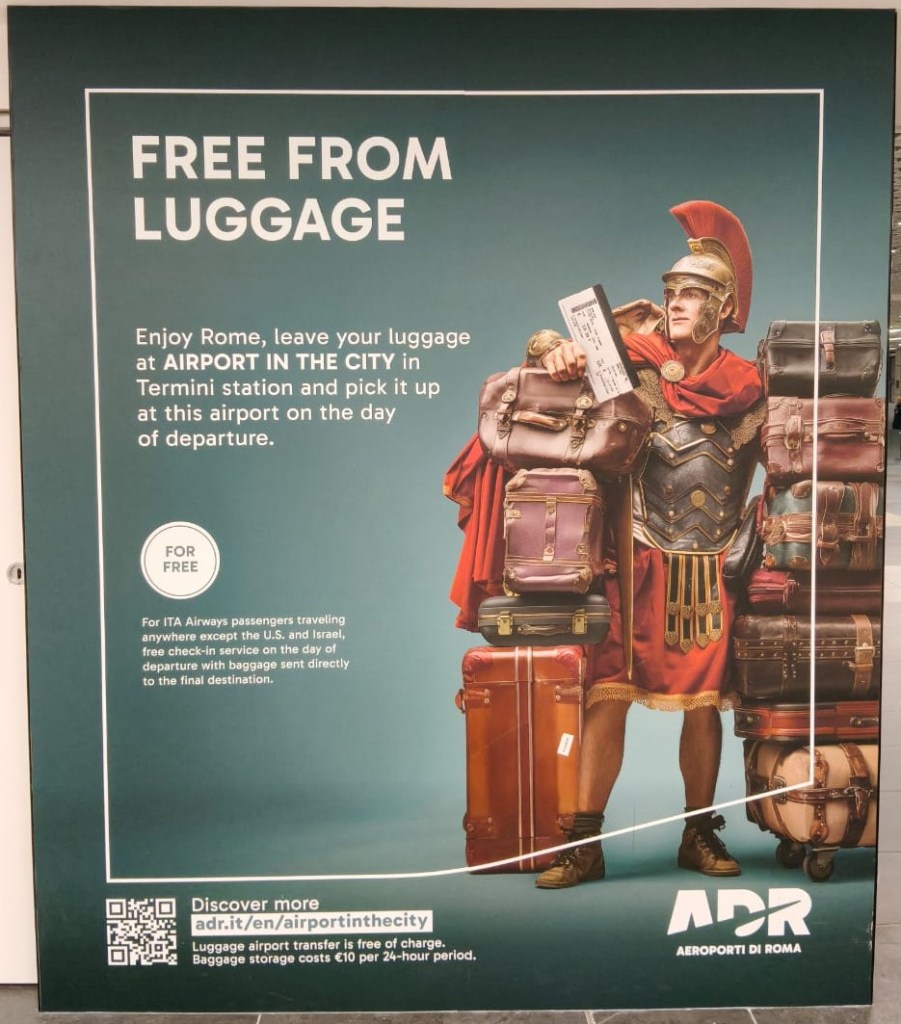
The first ad that greeted me at the airport featured a gladiator. And the airport and the train that whisks us to the city are named after da Vinci. Can a city’s intro be sexier than this?
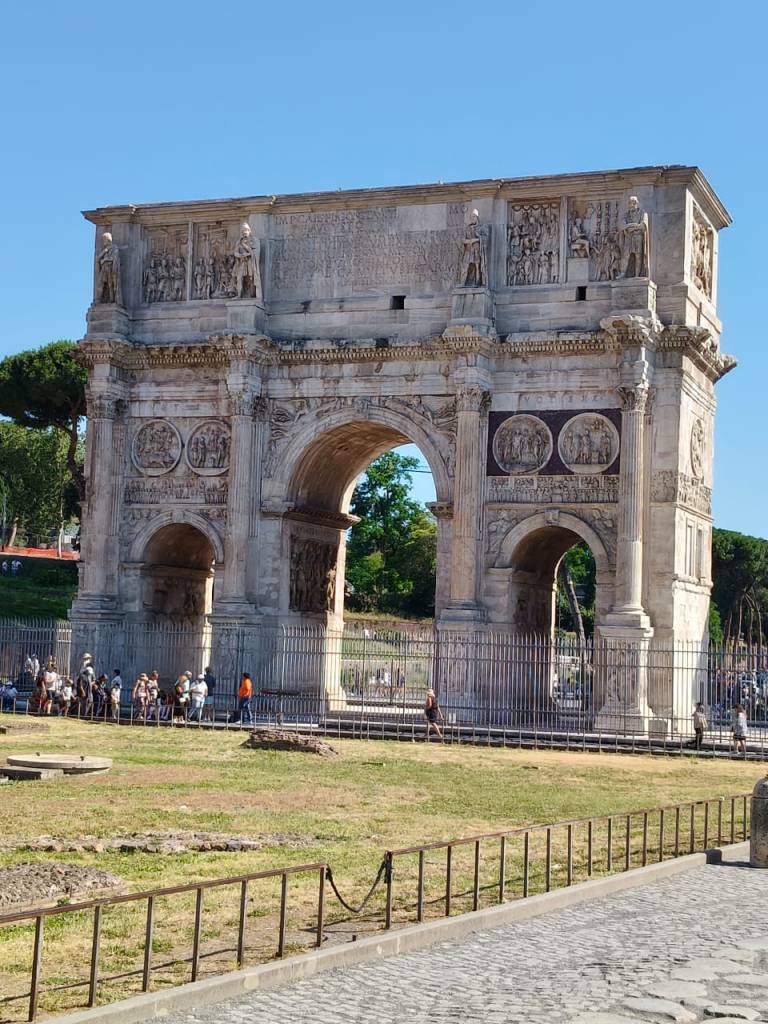
Seeing the Vatican (with St Peter’s Basilica, the Sistine Chapel and the museum) on one side of the Tiber and the ruins of Ancient Rome on the other was a sight for the ages. Standing close to the Colosseum is the Arch of Constantine. It was built to commemorate Constantine’s victory at the Battle of the Milvian Bridge. Legend has it that just before the battle, he had a vision of the Christian Cross. So soon after his victory, he embraced Christianity and with this single decision, Christianity was on its way to becoming a global force from the pagan sect it was at the beginning. Peter, who was killed by Nero and buried in the marshes of the Vatican, on the other side of the Tiber, got a shrine built by Constantine. And from that, rose the global behemoth of Christianity. Every church and artwork that I saw in Italy subsequently, took me back to the Arch of Constantine. No Constantine, no Christianity.
Michelangelo and Raphael are definitely the stars of the Vatican Museum! The stories associated with Michelangelo’s works adorning the Sistine Chapel ceiling, the Judgement Day in the altar wall, seeing the Pieta and marvelling at the dome of St Peters Basilica convinced me its time to pick up a good biography of the man. Maybe, Martin Gayford’s book? Irving Stone’s The Agony and the Ecstasy is a distant memory for me and I don’t want to reread a fictional biography now.
The church itself is like the most expensive junk shop in the world, with that horrible smell of incense. But in the middle of all that there was this beautiful thing, full of feeling.’ – Lucian Freud, on seeing the Pietà in St Peter’s, 2004
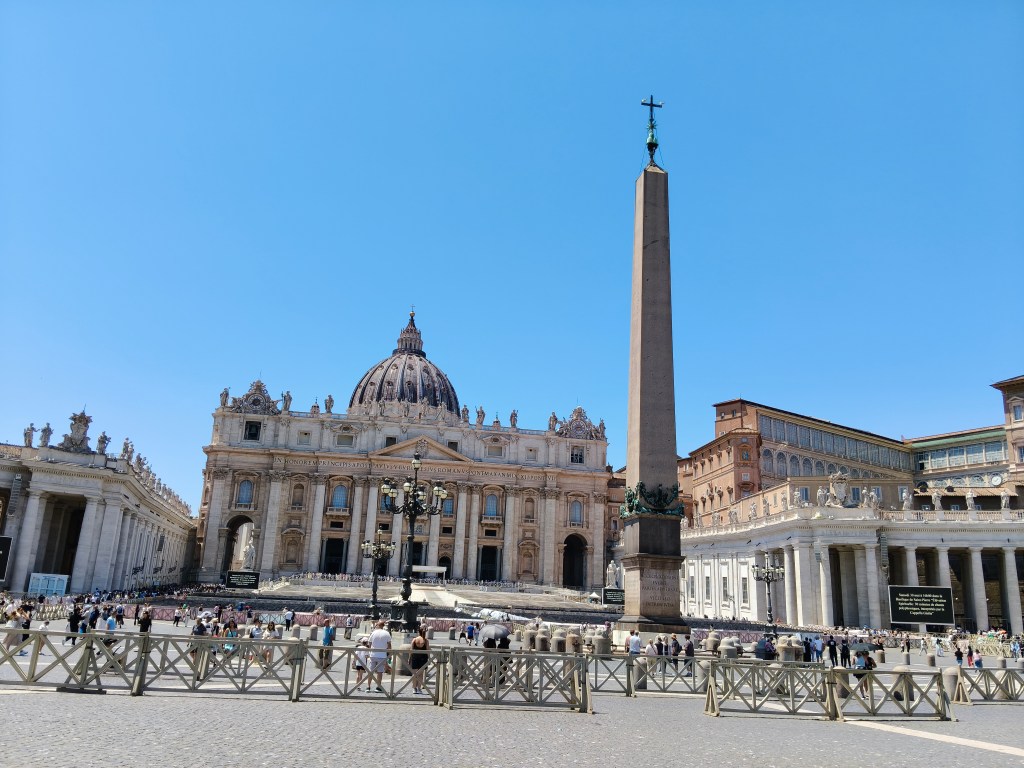
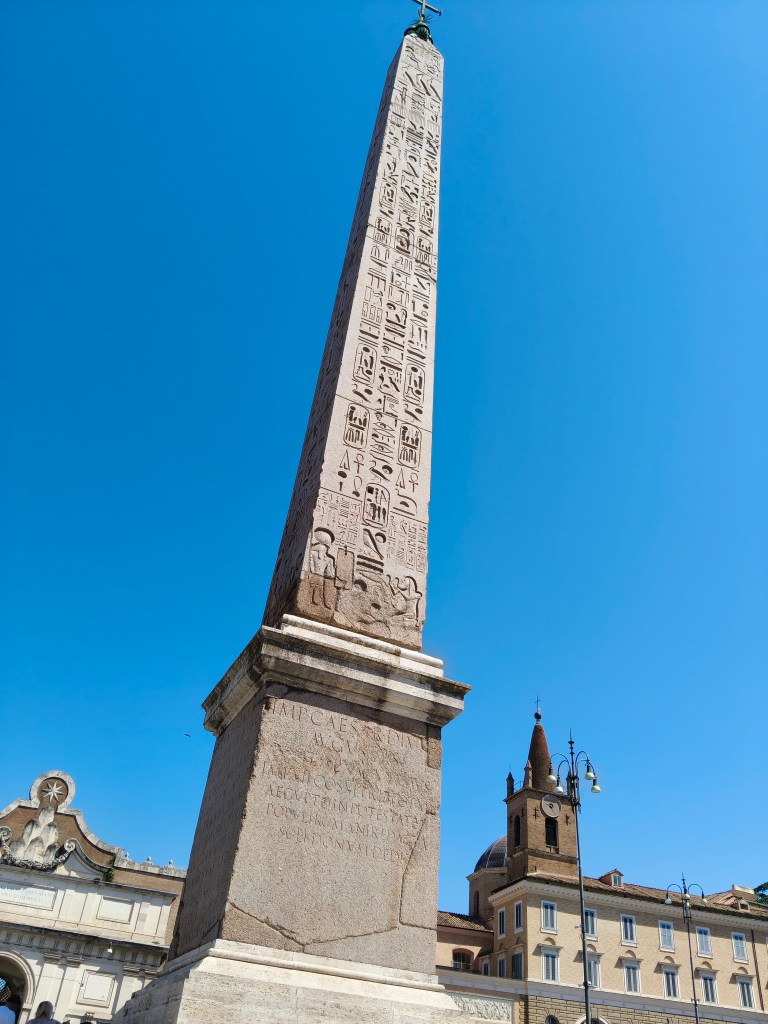
The Egyptian influence in Rome is unmissable thanks to the numerous obelisks that pepper the city. Egypt was the province that literally fed Rome. Its strategic importance for Rome’s food security is what drove Caesar and later Mark Antony into the area and what brought Cleopatra into our imagination. The Vatican obelisk is said to be around 3500 years old and probably a one in a kind piece of art that links Pharaonic Egypt, the Greeks, the Romans, the Early Christians and the modern Vatican state.
But apart from the monuments and the museums, Rome as a city didn’t impress me. The city didn’t have the pulsating energy of a capital. The metro lines commemorate numerous personalities. I could spot Marconi, Fermi, Agricola, Cavour, Victor Emanuelle and Manzoni. Castro Pretorio, the metro which we used from our hotel was apparently, the headquarters of the Roman Praetorian Guard established under Emperor Tiberius. They were notorious as they not just protected but also were chill to finish off emperors whom they weren’t happy with. Claudius, immortalized by Robert Graves’ book and the subsequent Television series, was made emperor by the Pretorian Guards, after they murdered Caligula.
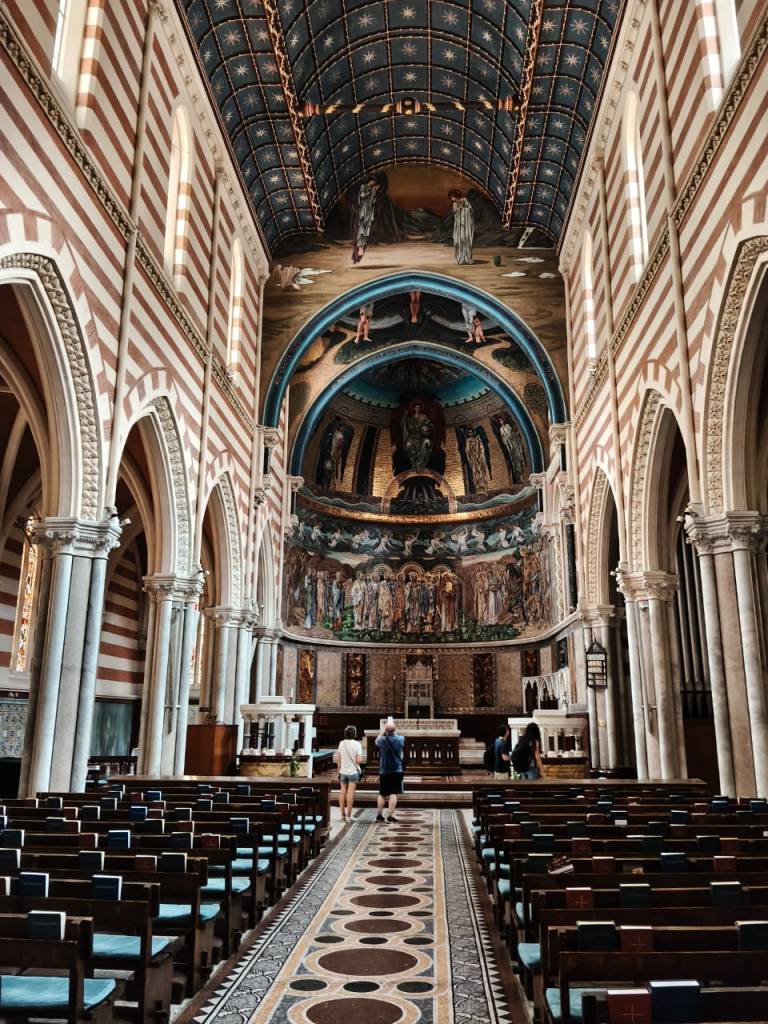
Ironically, the first church that Sruthi and I randomly entered while strolling through the city happened to be Rome’s first non-Catholic (Protestant) church built just as recently as 1880 – St. Paul’s Within the Walls.
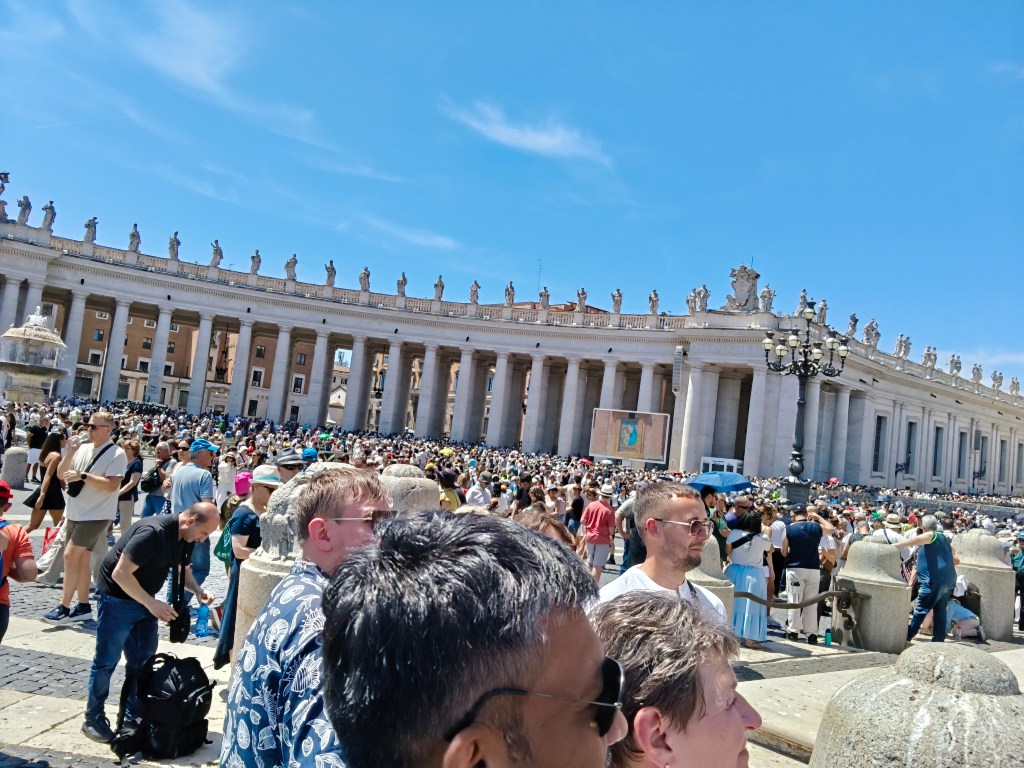
On Sunday, we both trudged along to St. Peter’s square and negotiated the security checks, to catch the Pope’s weekly message. At sharp 12, a window overlooking the square opened and Leo XIV, appeared. He spoke in Latin and the whole arena had a concert-like vibe. Soon after, while having lunch, we ended up chatting with two Native Americans from New Mexico. One of them was into Yoga, got excited about meeting two Indians and in a whisper told us: “When I entered the Basilica earlier today, I thought the roof would fall on me. That’s the kind of stuff ‘they’ do to mess up your minds when you are young and gullible’. Laughed aloud heartily. Same building, different emotions.
Discover more from Manish Mohandas
Subscribe to get the latest posts sent to your email.

One thought on “Rome Notes”