After “A Room with a View’, I felt I had to read Forster’s other famed work – “A Passage to India’. Though I’m late to the party, I’m convinced that this book would rank as one of the best works of fiction written by a foreigner about India. The closest rival to this claim would probably be Kipling’s ‘Kim’ which foregrounds the intrigues of The Great Game. Forster with some remarkable observational prowess accurately shows India for what it was when he visited (in 1912-13 and 1921-22). The British racism, the English-speaking middle class, the Hindu-Muslim discord with references to Alamgir and the Mutiny gets woven so nicely by him.
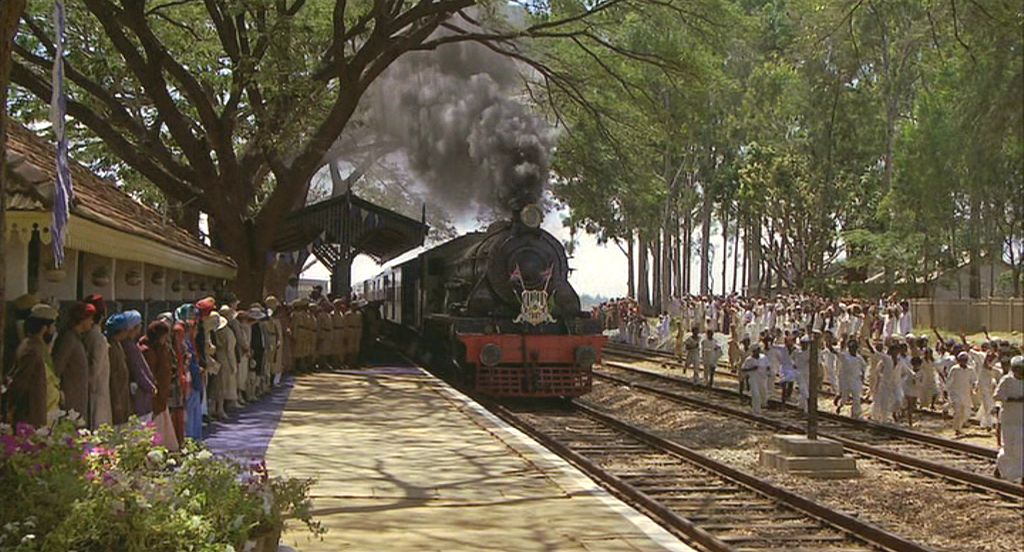
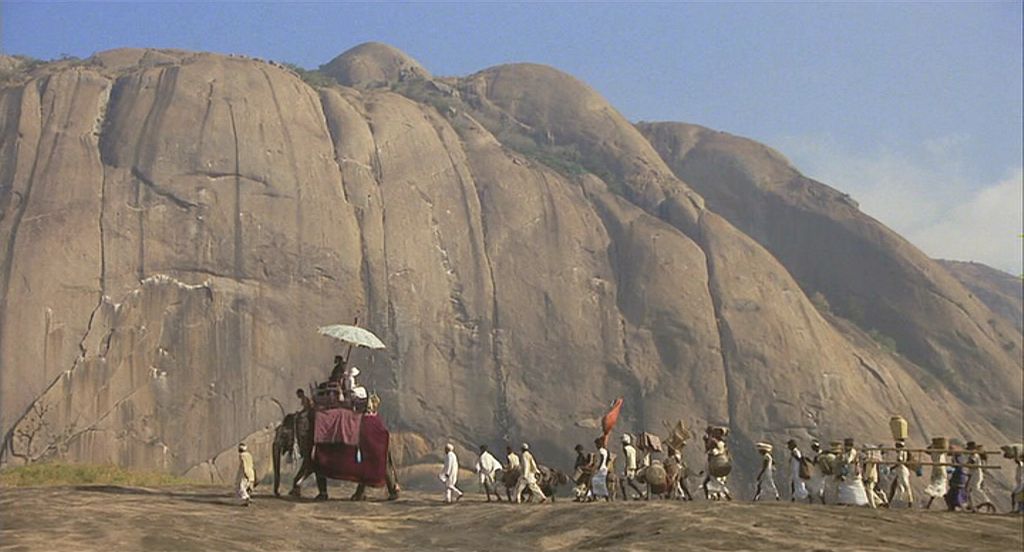
Forster’s novel was adapted by the David Lean and the visuals were as good as his magnum opus – “Lawrence of Arabia”. Victor Bannerjee as Aziz was endearing but for the life of me, I’m still unable to fathom why the character of the Brahmin Professor Godbole was essayed by Alec Guinness. Yes, the same Guinness who immortalized le Carre’s George Smiley in the small screen. The movie was shot in the Nilgiris and Karnataka and had some breathtaking visuals of the country. The procession by elephant to the Marabar Caves and the opening shot of the train journey were a sight to behold.
While checking out the train scene, to my delight, I discovered that there’s a whole page devoted to analyzing the train journey – right from the tech to the signboards to the plausible route!
Two passages from the book that stood out. The first was Forster’s accurate depiction of the India’s ferocious summer:
Making sudden changes of gear, the heat accelerated its advance after Mrs. Moore’s departure until existence had to be endured and crime punished with the thermometer at a hundred and twelve. Electric fans hummed and spat, water splashed on to screens, ice clinked and outside these defenses, between a grayish sky and a yellowish earth, clouds of dust moved hesitatingly. In Europe life retreats out of the cold and exquisite fireside myths have resulted Balder, Persephone but here the retreat is from the source of life, the treacherous sun and no poetry adorns it because disillusionment cannot be beautiful. Men yearn for poetry though they may not confess it; they desire that joy shall be graceful and sorrow august and infinity have a form and India fails to accommodate them. The annual helter-skelter of April, when irritability and lust spread like a canker, is one of her comments on the orderly hopes of humanity. Fish manage better; fish, as the tanks dry, wriggle into the mud and wait for the rains to uncake them. But men try to be harmonious all the year round and the results are occasionally disastrous. The triumphant machine of civilization may suddenly hitch and be immobilized into a car of stone and at such moments the destiny of the English seems to resemble their predecessors’, who also entered the country with intent to refashion it, but were in the end worked into its pattern and covered with its dust.
And in the court scene, the camera zooms in on the Pankhawalla for a few seconds and then forgets about him. But in Forster’s words, the Pankhawalla represents the brutality of our unique contribution to the world – the wretched caste system:
He had the strength and beauty that sometimes come to flower in Indians of low birth. When that strange race nears the dust and is condemned as untouchable, then nature remembers the physical perfection that she accomplished elsewhere, and throws out a god–not many, but one here and there, to prove to society how little its categories impress her. This man would have been notable anywhere: among the thin-hammed, flat-chested mediocrities of Chandrapore he stood out as divine, yet he was of the city, its garbage had nourished him, he would end on its rubbish heaps. Pulling the rope towards him, relaxing it rhythmically, sending swirls of air over others, receiving none himself, he seemed apart from human destinies, a male fate, a winnower of souls.
Another example of how books always triumph over their cinematic adaptations.
Discover more from Manish Mohandas
Subscribe to get the latest posts sent to your email.

2 thoughts on “Forster’s ‘A Passage to India’”