When Napoleon entered Berlin, he is believed to have remarked: “Six months of rain, six months of snow—and this is what these fellows call Fatherland?”. I was in Berlin for a few days earlier this month. While I wasn’t in awe of the city, the sheer sense of history surrounding the place was overpowering.
The entire time that I spent in the city brought back memories of reading about Hitler, East Germany, the Stasi, and of course the Wall and its fall. Like a devoted foot soldier, I kept hopping from site to site to see firsthand the places that have been living in my mind for decades.
Like most German cities, Berlin was more or less built from scratch after being reduced to rubble in the Second World War.
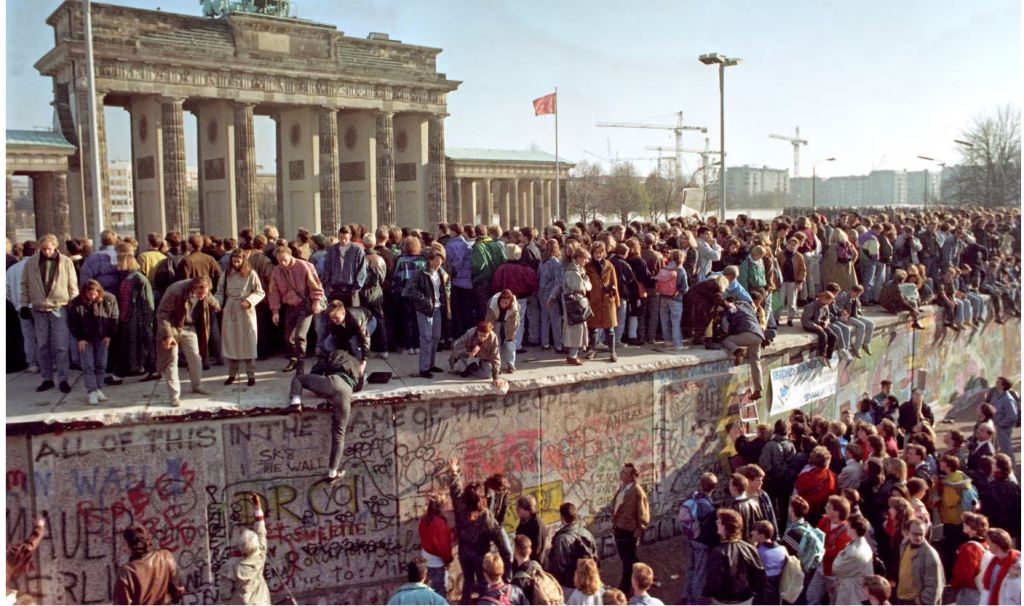
The Brandenburg Gate as a standalone monument may not be as impressive as the Arc de Triomphe or the Champs-Élysées. But standing there, you get to see three embassies on one side – the American, the British, and the French – and a few meters on the other side, the Russian. Can there be a greater built-representation of the Cold War anywhere else in the world? I doubt. The Wall also passed right next to the Brandenburg Gate and I had to google the images, standing there, to believe the absurdity of the whole enterprise. (What was even more shocking was the discovery a few days later that Mahua Moitra had her wedding-shoot at the Gate, the very same day I was visiting. WTF!)

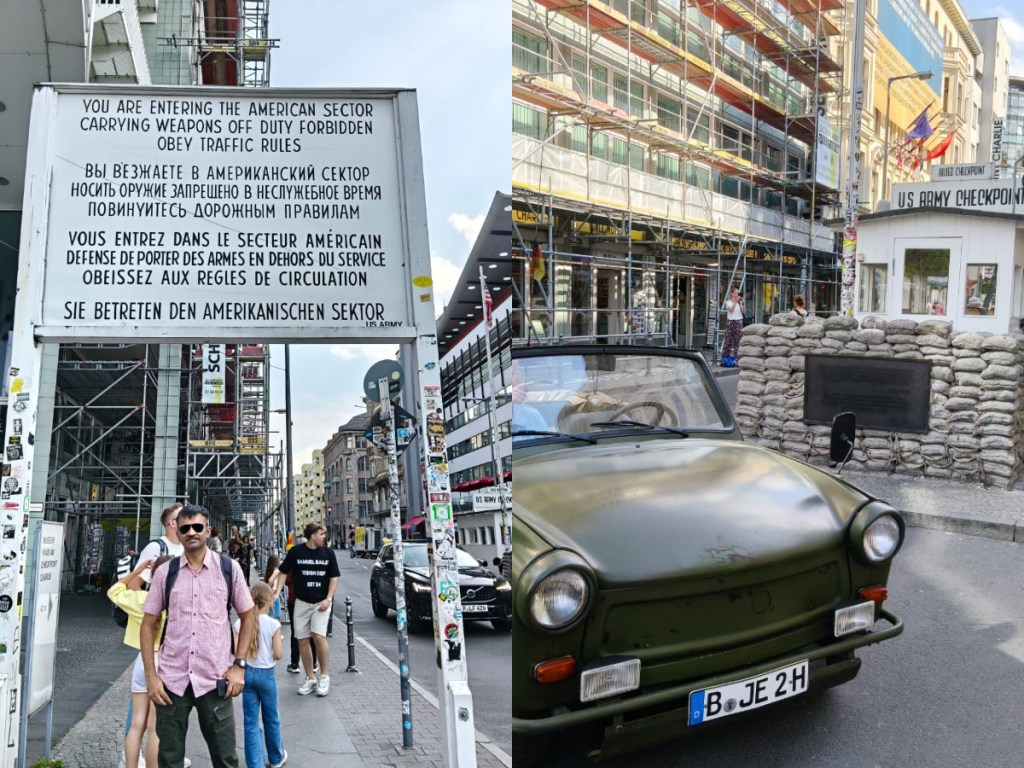
Checkpoint Charlie was buzzing with people queuing up to be clicked next to the model checkpoint. Again, the warning board still preserved was a sight to behold. All the le Carre spy thrillers and the Cold War espionage movies probably were created around this ‘vibe’. Close by was the Friedrichstrasse Station, another landmark of the division – it was the point of entry and exit into West Berlin. For a whole generation of Germans, the station was an unforgettable and distressing emotional experience which explains why it’s also known as ‘The Palace of Tears’.
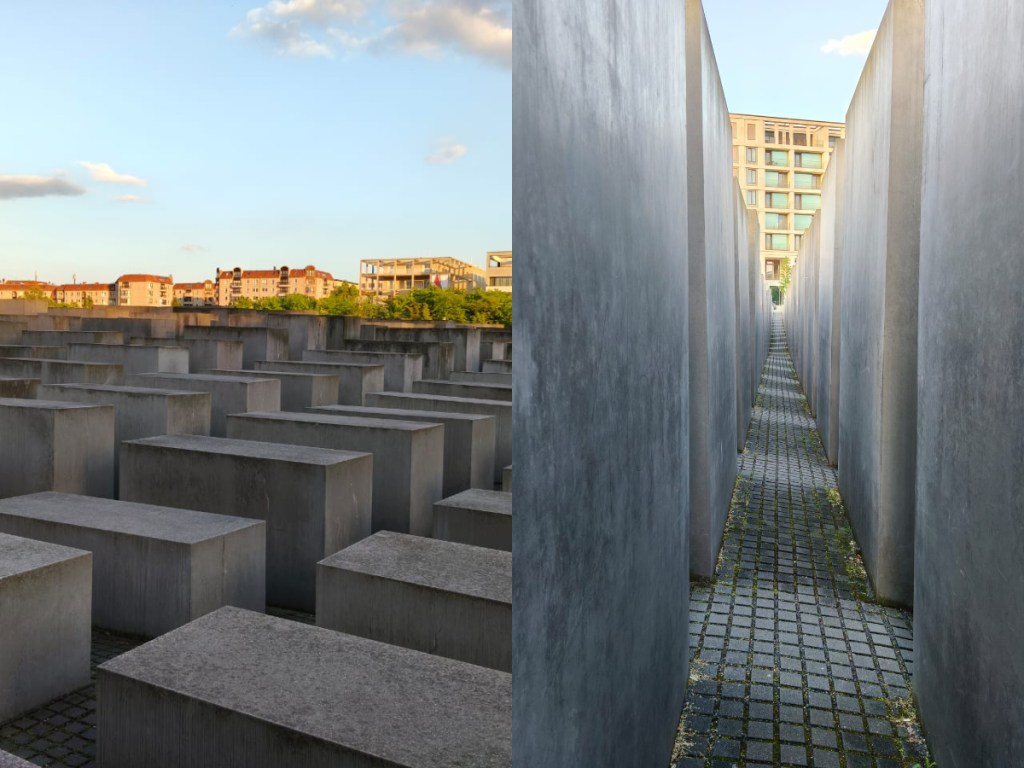
If you know your history, the whole city is a kind of memorial to the Holocaust. Next to the Brandenburg Gate lies the Holocaust Memorial. The memorial is in the form of concrete blocks of varying heights, making it free of any single interpretation.
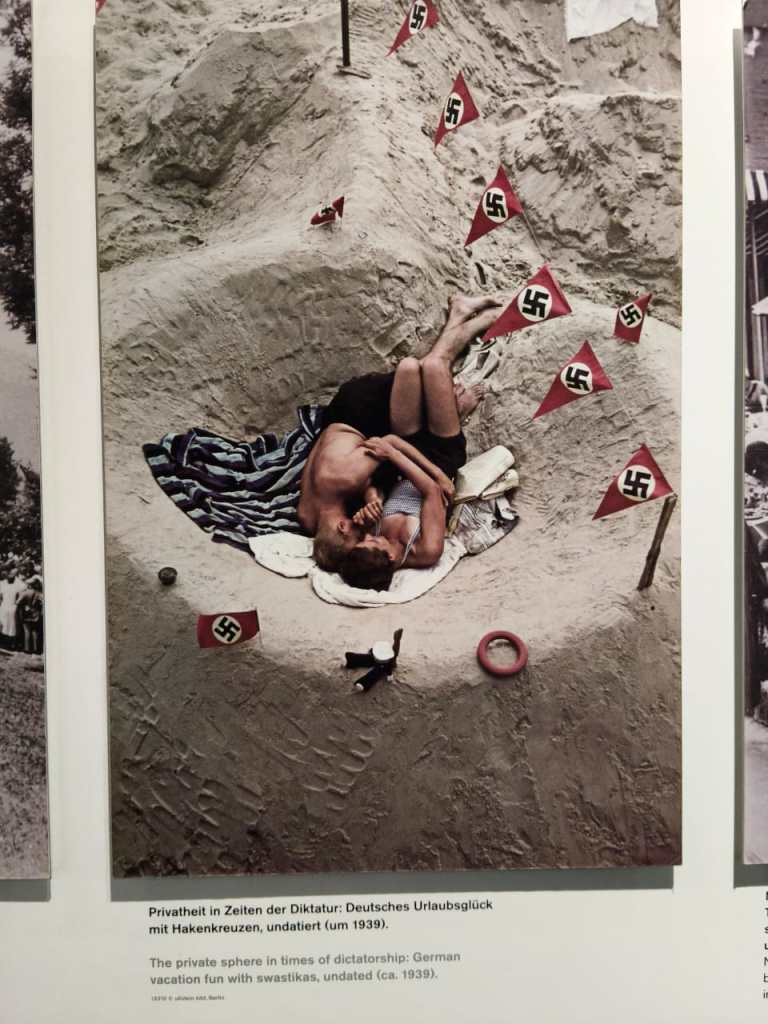
The city made me wonder how hard it must be to be a German. Being in Berlin is a reminder of the pitfalls of unbridled love towards one’s country. How can a German be ‘proud’ of her history with the stuff that Hitler, Stalin and Honecker did. But at the same time, Germany has lessons for the world – on the power of atonement, remembrance and keeping memories alive. The entire zone where the Gestapo and the buildings of the Reich once stood now houses the museum and documentation center called the ‘Topographie des Terrors’ – a startlingly rich center documenting the atrocities of the Third Reich. A fact that amused me was that Berlin today boasts of around 17,000 Israelis who have come to work and live in the city. Wonder if there can be a more potent example of the ‘German miracle’ than this fact.
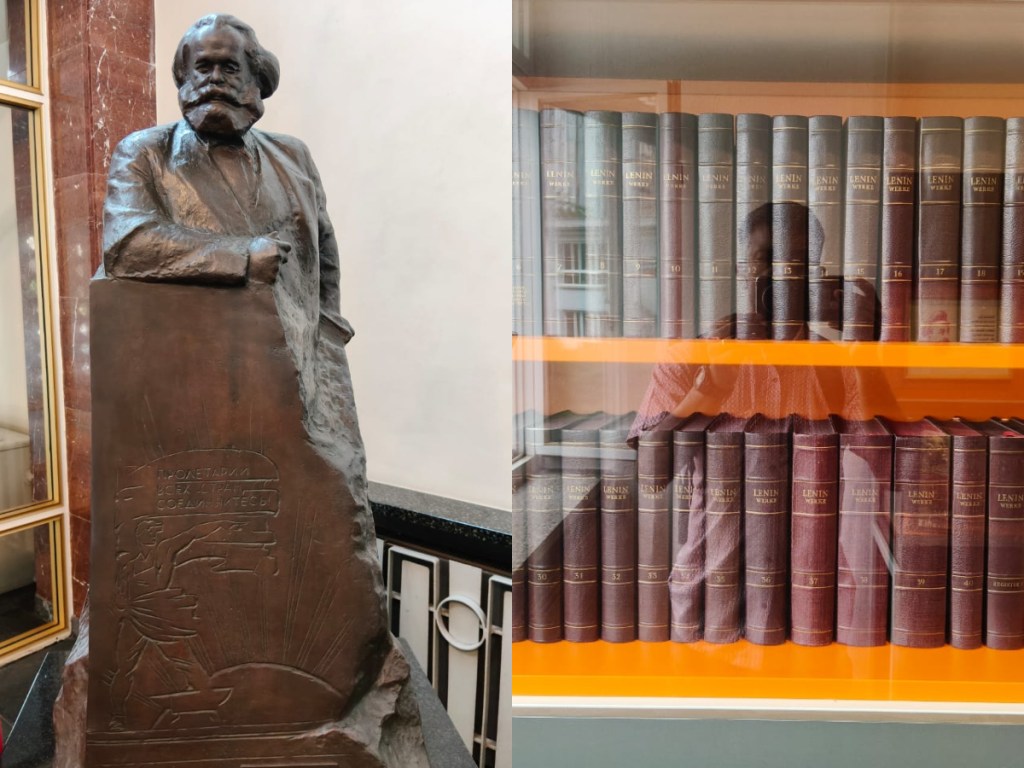
The Stasi Museum was another highlight of my visit. The former headquarters of the Stasi (the East German Secret Police) is now a museum. I expected Sruthi and I to be among a handful of visitors, but I was wrong. The museum had almost a hundred people thronging the galleries and reading up on the mind-numbing cruelty of the East German state. Erich Mielke who headed the Stasi has his office preserved and is the highlight of the museum. (Earlier post on the Stasi’s tentacles over East German life). The 2006 movie ‘Lives of Others’ was on point in capturing the terror of the Stasi. Do try to watch it.
On the food front, I discovered and relished pork knuckle – a massive chunk of tender pork served with potatoes. Berlin’s famous currywurst was also sampled. As the name suggests, it’s just curry and some masala powder splashed over a sausage. Neil MacGregor, in ‘Germany: Memories of a Nation’ explains its origins:
‘Currywurst was invented with the help of an unknown British soldier, who sold curry powder on the black market in Berlin in the late 1940s. They had only very cheap sausages then, so they decided to camouflage them by sprinkling curry powder on them. It was a time when we were frenetically discovering foreign dishes, so it was interesting having something Indian and exotic, and the Currywurst became a symbol of Berlin – a town that had never had excellent sausages. After the Wall fell in 1989, a lot of Germans discovered Berlin and the Currywurst became an emblem of a young, cool Berlin lifestyle. It is a gourmet tragedy that Currywurst has become the national symbol of German food.
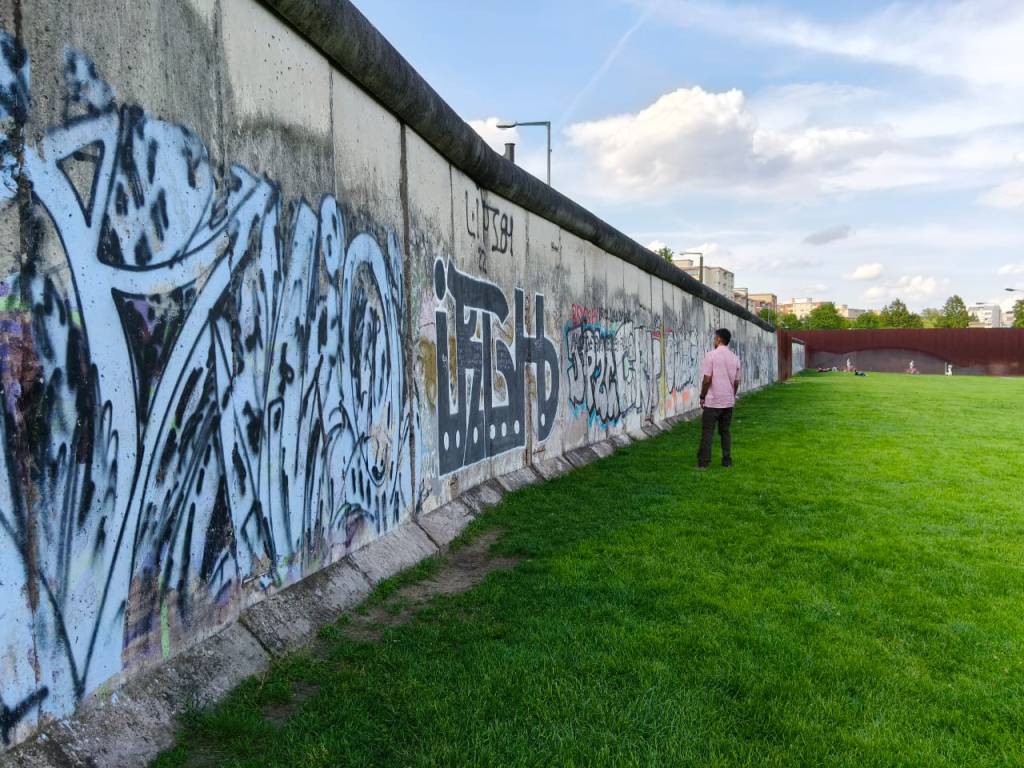
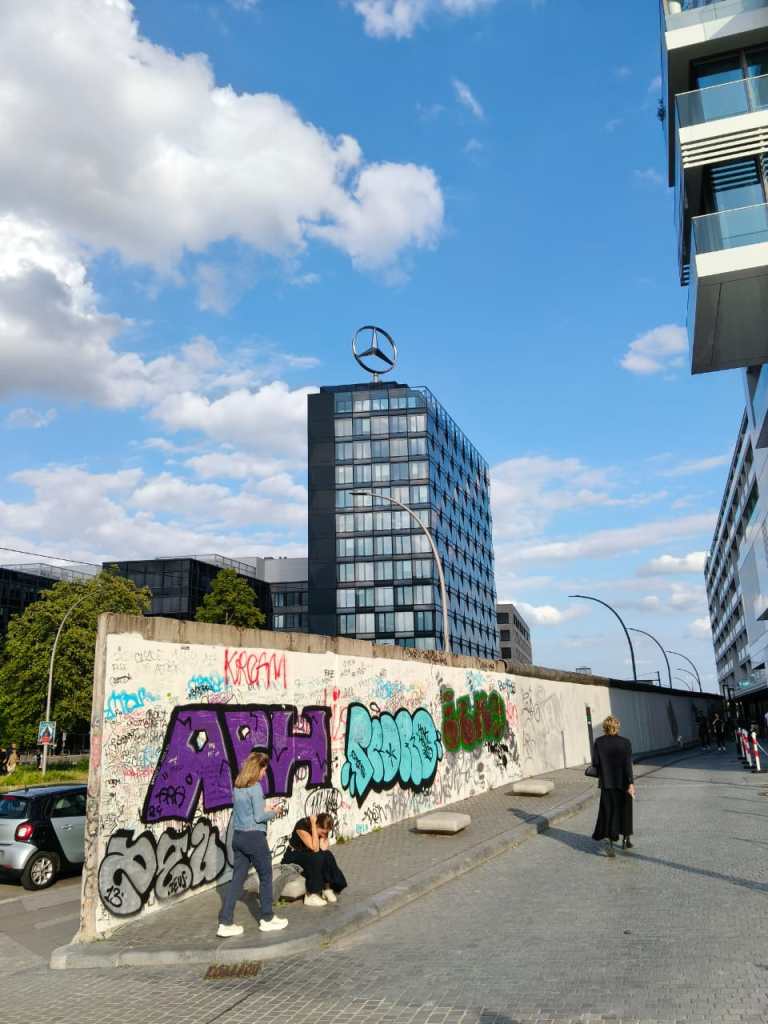
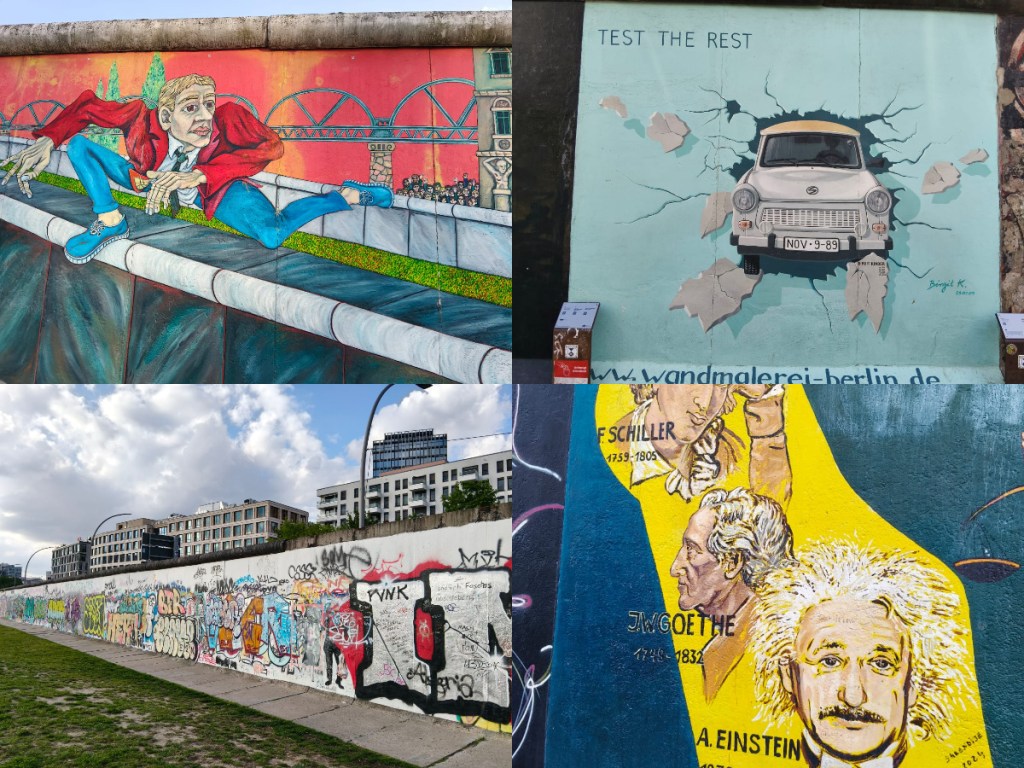
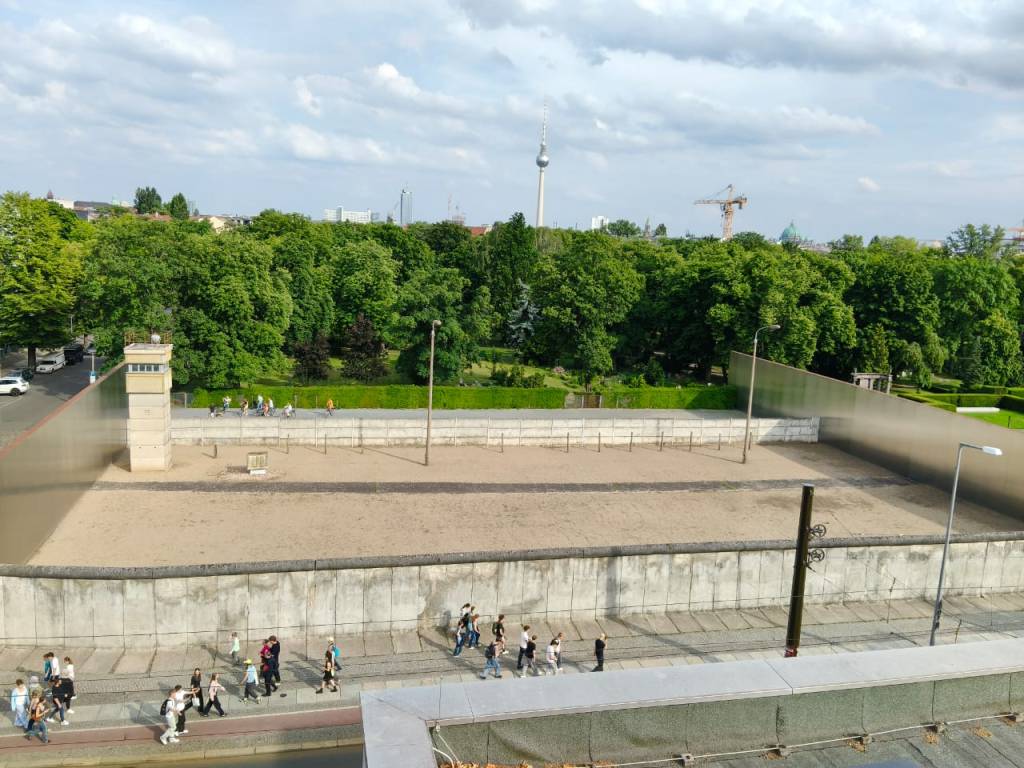
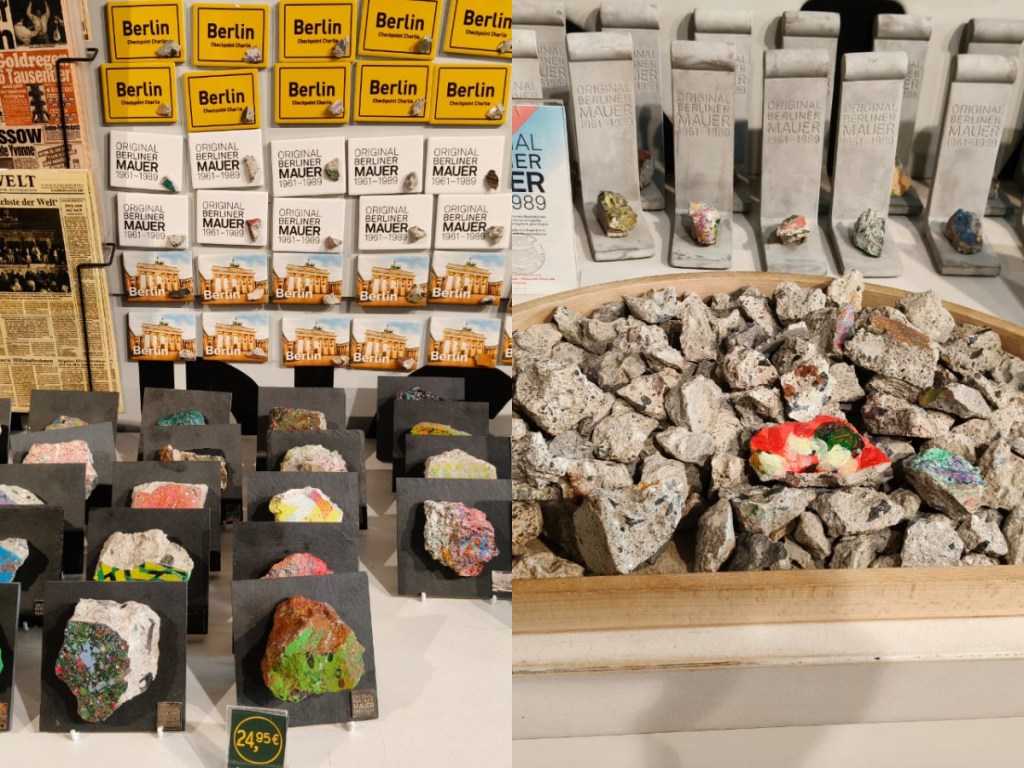
And finally on the Wall. The city has preserved a few segments. The most stunning one is the East Side Gallery, which has graffiti and art across the entire stretch. The Wall Memorial was also moving as it also includes climbing up the roof of a building to get a view of the segment showing the barbed fence, trip wires, checkposts and search lamps. To imagine the whole city being cordoned off for 28 years – all to save the socialist east from the decadent free-market west. And who won in the end? Free market liberalism. Berlin is a nice reminder to all the utopians who believe communism is good.
Potsdam was a nice half-day outing with the palaces of the Prussian empire still standing. Small mercies of being saved from the Allied bombing.
Discover more from Manish Mohandas
Subscribe to get the latest posts sent to your email.

That was quite a note-worthy post! Paints quite a picture of history
LikeLike