In 1971, during the height of the East Pakistan refugee crisis, the philosopher Peter Singer published an essay called Famine, Affluence, and Morality in which the ‘Shallow Pond’ thought experiment - one of philosophy’s most profound thought experiments - made its appearance. On your way to work, you pass a small pond. Children sometimes play … Continue reading The Shallow Pond and the Life You Can Save
Category: Economics
Reflections on Hazard Risk and Vulnerability Assessments
In Disaster Management, assessing risks is foundational towards ‘preparing’ for a disaster and ‘mitigating’ the impacts of a disaster. Intuitively, we all understand risk. Shopping during a pandemic is a high-risk activity, depending on one’s age (vulnerability) and the places visited (exposure). Building a resort on the floodplains of the Ganga is ‘risky’. Being born … Continue reading Reflections on Hazard Risk and Vulnerability Assessments
The Columbian Exchange and the Dawn of the Homogenocene
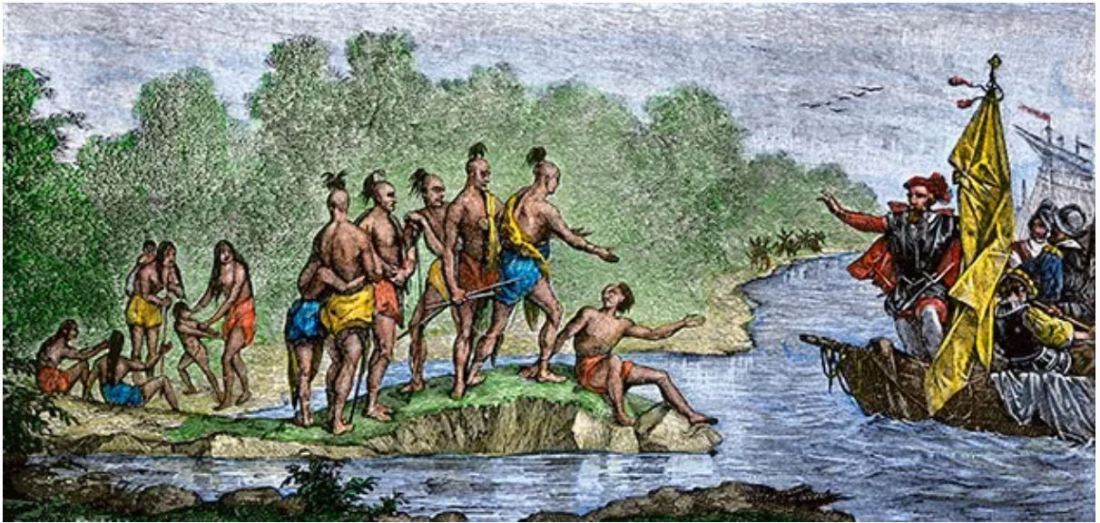
When Columbus reached the Americas in 1492, the ecosystems of the Western and Eastern hemispheres had remained isolated for millennia and were strikingly different. His voyage set in motion what has come to be known as the Columbian Exchange, a vast transfer of plants, animals, people, and diseases between the Old and New Worlds. This … Continue reading The Columbian Exchange and the Dawn of the Homogenocene
‘Comrades and Cash’
You need money to run a country. And if you’re managed by Communist Russia, it’s just a matter of time before the you go bust. In the 80s, East Germany (or the German Democratic Republic (GDR)) faced this predicament and resorted to all possible ways to manage this crisis. Two fascinating exports were arms and … Continue reading ‘Comrades and Cash’
The Real Costs of Chernobyl and Fukushima
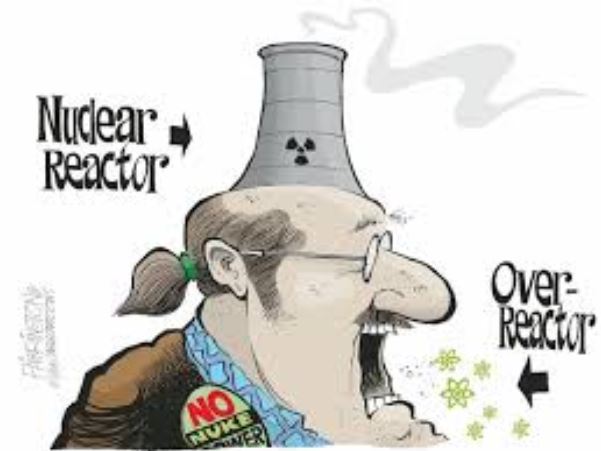
Jean-Marc Jancovici and Christophe Blain’s 'World Without End' – a comic about Climate Change that outsold Asterix in France in the year of its launch was a sharp, engaging introduction to Energy Sources and Climate Change. The panels that caught my attention were the ones explaining the long-term impacts of Chernobyl and Fukushima. According to … Continue reading The Real Costs of Chernobyl and Fukushima
Our Refrigerated World
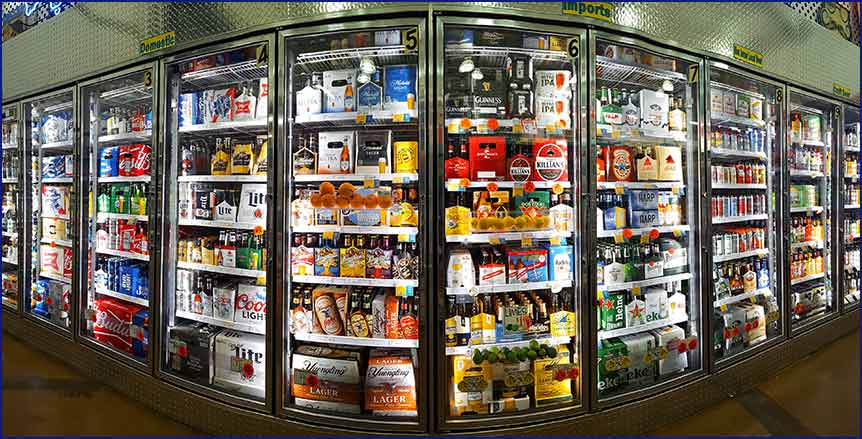
So many of the gastronomical delights of our modern life would be impossible without modern refrigeration. Cheeseburgers, chilled beer, ice cream and of course all the imported exotic items like Norwegian salmon, Swiss cheese and Australian beef would have just remained local delicacies restricted to a few 100 kilometers from their point of origin had … Continue reading Our Refrigerated World
An India-Japan comparison
In ‘Free to Choose,’ Milton Friedman—the poster boy of free markets and the favourite punching back of the left—makes an interesting comparison between India’s 30 years after independence and Japan’s 30 years after the Meiji Revolution. At these respective moments in time, both countries were similar in terms of their rigid feudal/caste structures, limited natural … Continue reading An India-Japan comparison
Luxury Beliefs
Rob Henderson, the psychologist and writer grew up in nine different homes before his eighth birthday. He was born to an unwed drug junkie who died when he was three. His childhood, as described in his memoir ‘Troubled’ was typical of orphans growing up in foster homes in the US – abuse, neglect, teen gangs, … Continue reading Luxury Beliefs
Complex Adaptive Systems
While reading Brian Klaas’ Fluke, I came across the fascinating mental model of ‘Complex Adaptive Systems’. This post is going to be slightly jargon heavy. Please bear with me. A watch is a complicated system of engineering. However, if you remove one spring, the watch won't morph into an unpredictable entity. Its behavior can be … Continue reading Complex Adaptive Systems
How Asia Works
Joe Studwell’s ‘How Asia Works’ is a seminal work examining the different trajectories adopted by the Asian countries in the aftermath of the Second World War. India doesn’t figure in the scope of this work. The focus is mainly on Northeast Asia (Japan, Korea), South East Asia (Malaysia, Indonesia, Vietnam) and of course China. Studwell … Continue reading How Asia Works