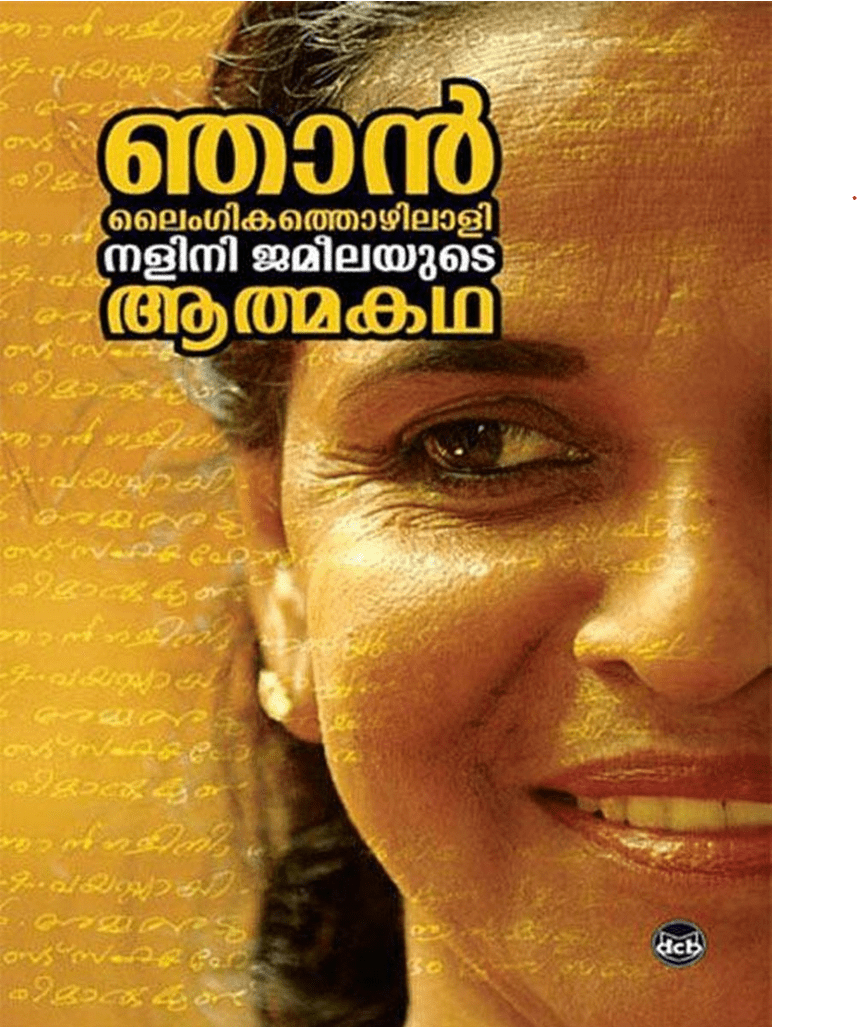
I was skeptical before I began listening to the Malayalam audiobook of Nalini Jameela’s acclaimed autobiography 'Njan Lymgikathozhilali'. The first part of the book dealing with her childhood and initial foray into sex work was a drag. But towards the end, when she began writing of her activism and the socio-political context of the sex … Continue reading Nalini Jameela’s ‘The Autobiography of a Sex Worker’
Category: Economics
The Contemporary Art Market
One of my friends was recently commissioned to write the catalogue for a contemporary art exhibition. In solidarity, I attended the gallery walk-through on the day of the inauguration. I understood very little of what was on display, and I suspect that most in the room were equally flummoxed by the pieces. But what I … Continue reading The Contemporary Art Market
Mokyr’s ‘The Lever of Riches’
When Joel Mokyr won the Economics Nobel this year, the chorus of appreciation for his work on Economic History was too loud to be ignored. So I picked up his ‘The Lever of Riches: Technological Creativity and Economic Progress’ which was published three and half decades ago. Mokyr’s core argument is that economic growth is … Continue reading Mokyr’s ‘The Lever of Riches’
Impressions on China from Wang’s ‘Breakneck’
One of the most mind-boggling statistics that I’ve ever come across in all my reading was the one by Vaclav Smil on China’s cement consumption: In 2018 and 19, China produced nearly as much cement (about 4.4 billion tons) as did the United States during the entire 20th century (4.5 billion tons) Let that sink … Continue reading Impressions on China from Wang’s ‘Breakneck’
The Shallow Pond and the Life You Can Save
In 1971, during the height of the East Pakistan refugee crisis, the philosopher Peter Singer published an essay called Famine, Affluence, and Morality in which the ‘Shallow Pond’ thought experiment - one of philosophy’s most profound thought experiments - made its appearance. On your way to work, you pass a small pond. Children sometimes play … Continue reading The Shallow Pond and the Life You Can Save
Reflections on Hazard Risk and Vulnerability Assessments
In Disaster Management, assessing risks is foundational towards ‘preparing’ for a disaster and ‘mitigating’ the impacts of a disaster. Intuitively, we all understand risk. Shopping during a pandemic is a high-risk activity, depending on one’s age (vulnerability) and the places visited (exposure). Building a resort on the floodplains of the Ganga is ‘risky’. Being born … Continue reading Reflections on Hazard Risk and Vulnerability Assessments
The Columbian Exchange and the Dawn of the Homogenocene
When Columbus reached the Americas in 1492, the ecosystems of the Western and Eastern hemispheres had remained isolated for millennia and were strikingly different. His voyage set in motion what has come to be known as the Columbian Exchange, a vast transfer of plants, animals, people, and diseases between the Old and New Worlds. This … Continue reading The Columbian Exchange and the Dawn of the Homogenocene
‘Comrades and Cash’
You need money to run a country. And if you’re managed by Communist Russia, it’s just a matter of time before the you go bust. In the 80s, East Germany (or the German Democratic Republic (GDR)) faced this predicament and resorted to all possible ways to manage this crisis. Two fascinating exports were arms and … Continue reading ‘Comrades and Cash’
The Real Costs of Chernobyl and Fukushima
Jean-Marc Jancovici and Christophe Blain’s 'World Without End' – a comic about Climate Change that outsold Asterix in France in the year of its launch was a sharp, engaging introduction to Energy Sources and Climate Change. The panels that caught my attention were the ones explaining the long-term impacts of Chernobyl and Fukushima. According to … Continue reading The Real Costs of Chernobyl and Fukushima
Our Refrigerated World
So many of the gastronomical delights of our modern life would be impossible without modern refrigeration. Cheeseburgers, chilled beer, ice cream and of course all the imported exotic items like Norwegian salmon, Swiss cheese and Australian beef would have just remained local delicacies restricted to a few 100 kilometers from their point of origin had … Continue reading Our Refrigerated World