To him, Plath was ‘Laurentian’, not ‘women’s lib’ – that is, a disciple of D. H. Lawrence’s sexually liberated creative philosophy, not a campaigner for women’s rights.
This line in Heather Clarke’s highly engrossing biography of Sylvia Plath, Red Comet: The Short Life and Blazing Art of Sylvia Plath, stumped me. I had no clue what Laurentian feminism was. I did some digging and am better informed now.
D. H. Lawrence’s works are known for its sexually provocative scenes. Lady Chatterley’s Lover was banned by the British government for obscenity and the lifting of the ban and long drawn trial was a watershed moment for free speech. When I read it four years ago, I was struck by Lawrence’s graphic and explicit descriptions of sex.
The Oedipal complex which he explored in ‘Sons and Lovers’ is still fresh in my memory though I read the book more than twenty years ago. Similarly ‘Women in Love’ too had a strong sexual undercurrent that I vaguely remember. Now, his works, for women encountering them for the first time in the early 20th century, were a revelation. For once, women were able to read about female desire and its unabashed pursuit without being subject to the moral conventions of the times. For many, including Plath, DH Lawrence was a trailblazer. Plath’s journals, in places, echoes some of these impulses:
Although she valued her virginity, she also longed for the “blind burning irresponsible delight of being crushed against a man’s body.” She already aestheticized sex as Lawrentian conflict: “I want to be ravished…to hear a man groan hoarsely, for in that moment I am the victor. In that moment only the man becomes the child, while I, yet concious [sic] of the stars, of the twilight, possess the wisdom of Eve, before abandoning myself to the lovely flame that eats at my insides with warm, spilling heat.” That fall she often cut her necking sessions with Bob Riedeman short, but doing so was a struggle. “I could kiss him forever, but I’ve got to be conventional, darn it
Visiting the shrine at Lawrence’s former ranch in New Mexico in 1939, WH Auden mocked the “cars of women pilgrims” traipsing “to stand reverently there and wonder what it would have been like to sleep with him” (Source).
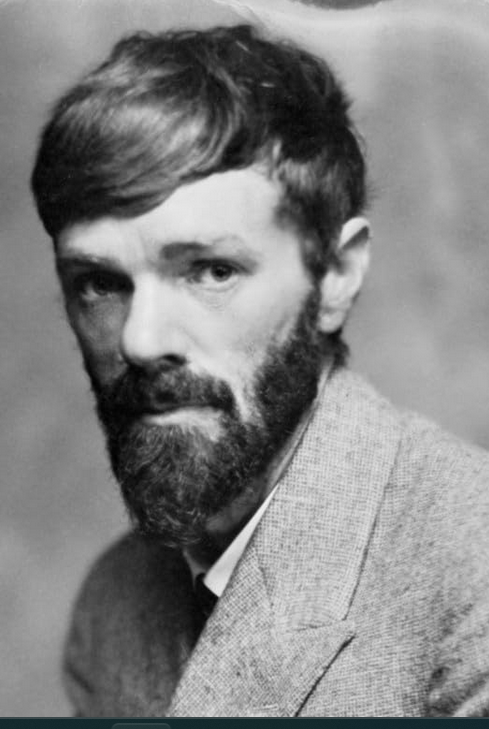
Now the feminist critique of DH Lawrence. Kate Millet in her groundbreaking ‘Sexual Politics’ reads his work as far less liberating than it appears. She argues that, despite his reputation for sexual openness, Lawrence ultimately imagines female liberation in terms that depend on submission to a dominant male presence. In her view, he presents male authority as something natural and often necessary, while women are shown to find fulfillment within that hierarchy rather than outside it. It’s hard to ‘like’ Lawrence once you read Millet’s powerful essay. MIllet reminds us that de Beauvoir too saw Lawrence as a writer inclined to prescribe how women ought to feel, desire, and behave in relation to men
Simone de Beauvoir shrewdly observed that Lawrence spent his life writing guidebooks for women.
Despite this, I found myself resisting the temptation to accept Kate Millett’s arguments wholesale. Whatever his limitations, D. H. Lawrence’s works like Lady Chatterley’s Lover, for instance, remind us that the female gaze is just as real and forceful as the male gaze that is so often associated with objectifying the opposite sex.
So, calling a woman’s expression of desire as ‘Laurentian’ can be tricky and can land you in trouble. Tread carefully.
PS: The ‘him’ in the opening quote was Plath’s husband – Ted Hughes – the greatest red flag in Feminist Literary History. Again a deeply misunderstood man. Will write about him soon as I’ve just finished Jonathan Bate’s magnificent biography of Hughes.
Discover more from Manish Mohandas
Subscribe to get the latest posts sent to your email.
