Will Eisner, is often credited to be the first person who introduced the term ‘Graphic Novel’. Today, the Eisner Awards, named after him, are the most coveted recognition for artists and publishers of comics and graphic novels. But a little known aspect of his career is the fact that before venturing into commercial comics, his earliest foray into illustration was in designing and drawing maintenance manuals for the US military. And a crappy piece of equipment is what led him to it-the M16 rifle of the US Army.
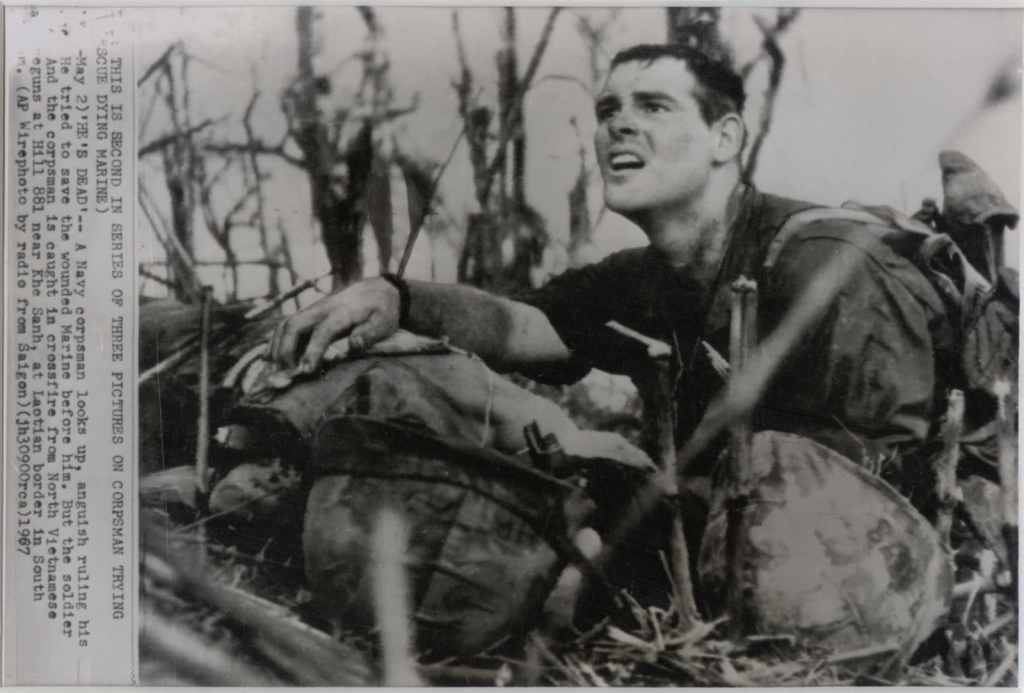
The Kalashnikov, probably one of Russia’s most identifiable exports, is so popular among gun-wielders, not just for its lethality but also for its ease of use and maintenance. On the other hand, the M16 introduced by the US military with little field-testing, ended up killing hundreds of service men during active duty in Vietnam due to its poor engineering. In 1967, the French photojournalist Catherine Leroy, who was embedded with the US Marines in Vietnam clicked a couple of photographs showing a wounded soldier being treated by Navy Corpsman Vernon Wike. As soon as Wike realizes that his efforts were futile, he gives out a cry of anguish – which Leroy captured. In two weeks, when Leroy’s photographs were splashed across Life magazine, the US Congress took notice to fix the flawed M16s, which by then had become the standard infrantry fare of the US military.
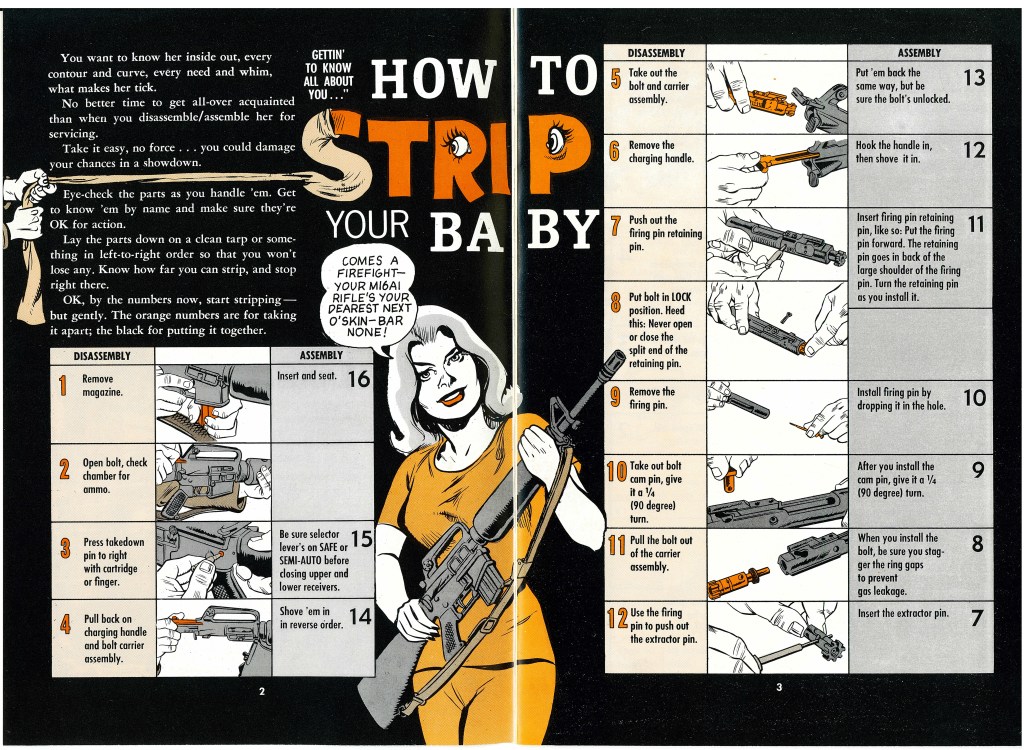
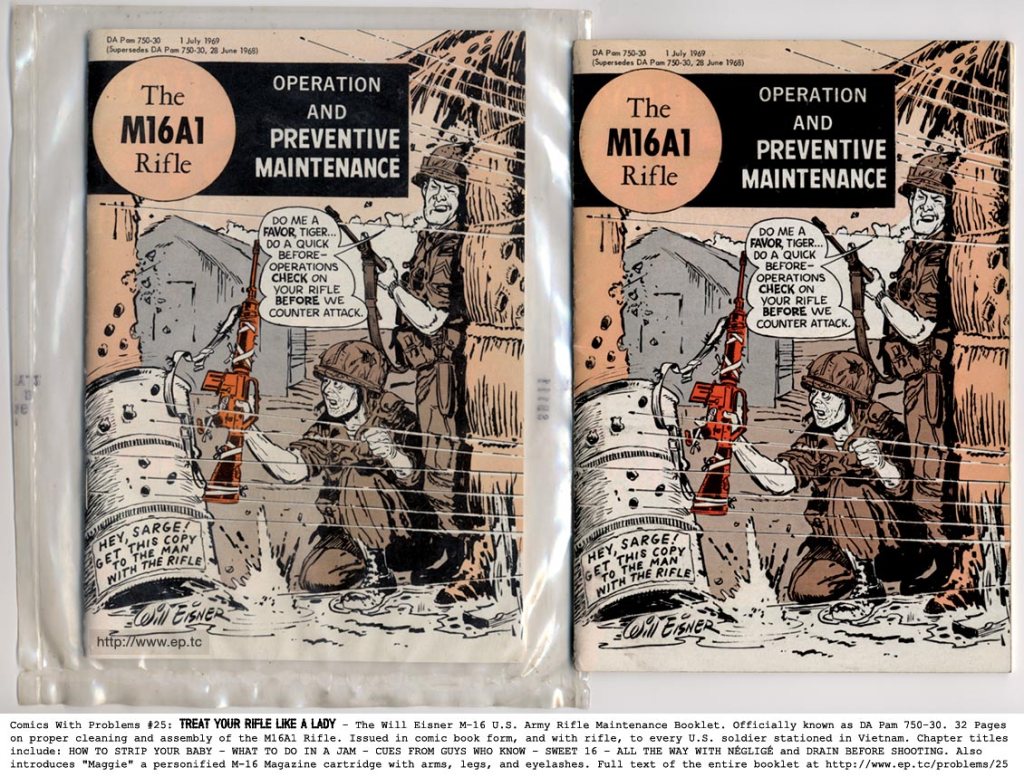
And in came Will Eisner with his illustrated manuals. In 1951, he ended up becoming the artistic director of PS :The Preventive Maintenance Monthly for the US Army.
Postscript: Catherine Leroy went on to have a distinguished career covering multiple conflicts. Some of her work can be accessed here. In 2005, Paris-Match which had also published her pics of Wike, sent her on a mission to track him down. As Stewart Brand writes in Maintenance: Of Everything:
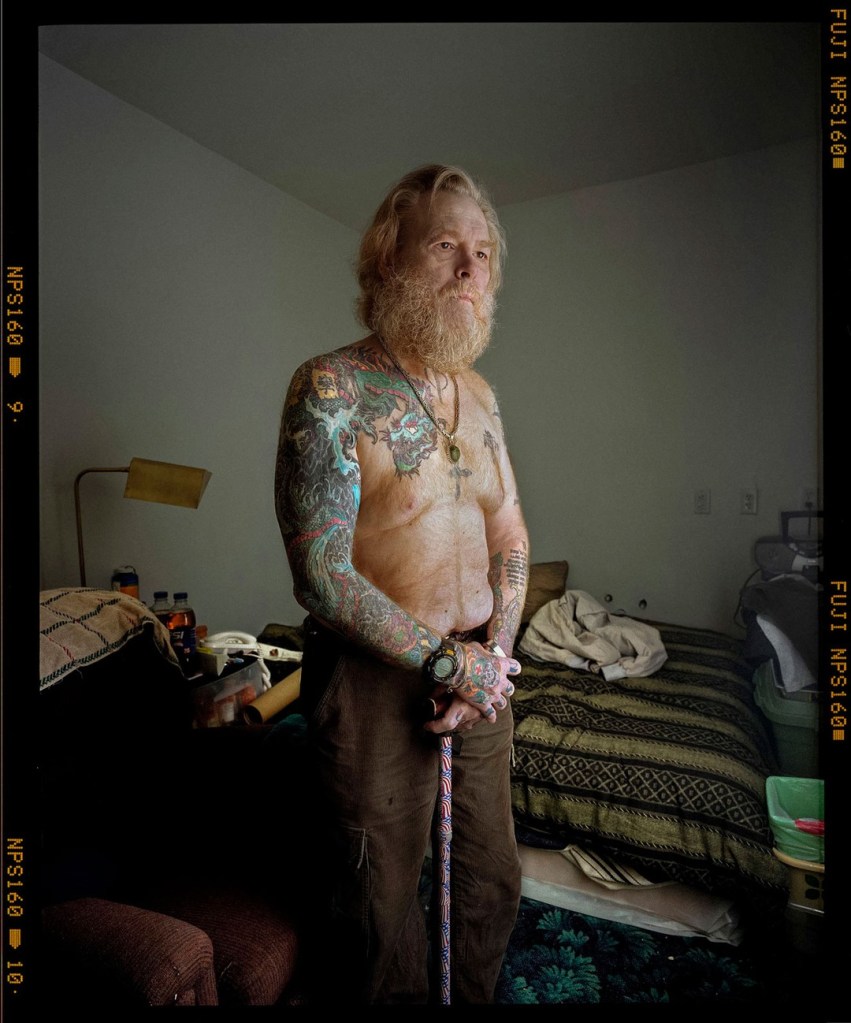
Leroy found Wike in Prescott, Arizona, in bad shape but delighted to see her again. He looked much older than his 58 years. On his body were 19 warrior tattoos, including the names of comrades who had died in Vietnam. He had burned through four marriages and had two sons who wouldn’t speak to him. Once, after he had collected a horde of weapons, he had an armed standoff with police at his remote cabin. Later, the cabin burned down, and Wike lived alone in a tiny room in town when Leroy found him. Two days after she photographed him, he had a stroke that blinded him and paralyzed half his body. He died soon after. It was Catherine Leroy’s last commission. She died a year later in California, age 61.
Discover more from Manish Mohandas
Subscribe to get the latest posts sent to your email.
