When Pinochet was arrested in London in 1998 for crimes committed during his military dictatorship, there was no precedent for such an act anywhere in the world. No former head of state had ever been arrested in another country for an international crime. And it was this arrest that paved the way for the future arrest of Milosevic and the mortal fear that many current heads of state have while travelling abroad.
The notion that heads of state enjoyed complete immunity began to erode after the First World War. The Treaty of Versailles signaled a shift by proposing that former German Kaiser Wilhelm II could be tried for initiating war. Although he ultimately found refuge in the Netherlands and was never prosecuted, the principle had been introduced: immunity is not a given for the mighty. The Nuremberg trials and the Tokyo tribunal further chipped away at the concept of complete immunity for heads of states. In the 1990s when new international tribunals for Yugoslavia and Rwanda were created, their statutes confirmed that even sitting or former heads of state could be tried for genocide, and war crimes. The same doctrine was embedded in the statute establishing the International Criminal Court.
Pinochet was a rabid anti-communist and Germanophile. He was anointed as head of a four-man Military Junta, and later President of Chile, with the blessings of Kissinger and Nixon. It is widely believed that close to 40,000 people were illegally detained or tortured, and more than 3,000 murdered during his reign. One of his admirers was the great Borges, and this is believed to have cost him the Nobel. After his arrest, the only prominent leader who spoke out in his defense was Margaret Thatcher. Chile’s support during the Falklands War wasn’t something she was willing to forget,
Anyways, a lot of this wasn’t really news to me while reading Philippe Sands’ ‘38 Londres Street: On Impunity, Pinochet in England, and a Nazi in Patagonia’. The most intriguing titbit was Chile’s connection with a Nazi war criminal on the run – Walter Rauff.
Rauff was the brain behind the mobile gas vans that the Nazis used with devastating consequences. After the war, he was arrested but managed to break free from a prison in Naples and went on the run. Despite the CIA and the Mossad on his heels, Rauf managed to work with the Syrian regime before finding his way to Chile. An Eichmann-style kidnapping attempt by the Mossad didn’t work out and Rauff ended up running a marine processing company in Punta Arenas that sold tinned crabs! An extradition attempt by West Germany failed as Chilean law prohibited any such acts once the statutory period of 15 years had passed. Though widely believed to have worked for the Chilean military — possibly as chief advisor to its intelligence services or even as its head — the claim remains unproven, with no conclusive evidence that he assisted Pinochet.
Rauff was featured in Bruce Chatwin’s legendary travelogue ‘In Patagonia’, published in 1977. He died of natural caused in 1984 and his obituary in the NYT described him as Himmler’s former ‘deputy’ and one of the world’s ‘three most wanted war criminals’.
Punta Arenas, at the tip of Patagonia, where he settled, was once a thriving city before the Panama Canal made it a ghost town.
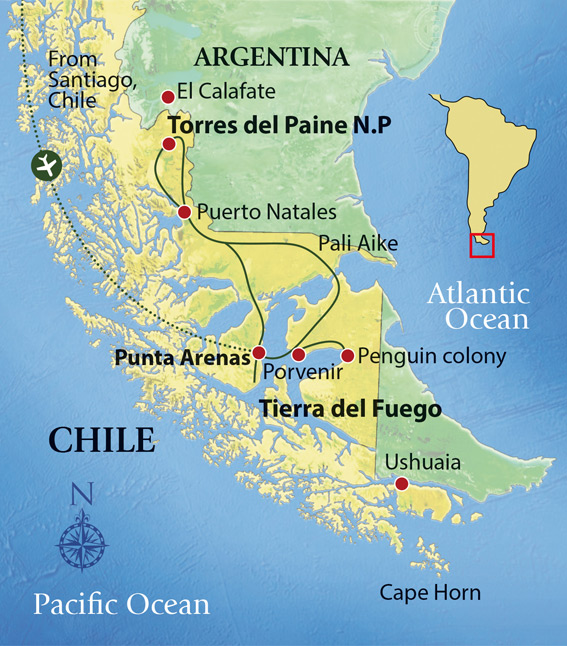
Punta Arenas is ‘utterly to my taste’, Chatwin wrote, with ‘overtones’ of Edgbaston, Birmingham, his father’s city. The Patagonian town was a nineteenth-century construct, a colonial settlement of log huts, wooden stockades and convicts. A century on, it was a place of vibrant trade and commerce, as the Straits of Magellan offered a direct route between the Atlantic and Pacific, until the Panama Canal opened in 1914. After that the town returned to greater obscurity, inhabited by people of many backgrounds, including Croats, English and the Germans who welcomed Rauff.
Discover more from Manish Mohandas
Subscribe to get the latest posts sent to your email.
