An astonishing trivia about Vienna is that sometime in 1913, Hitler, Stalin, Freud, Trotsky and Archduke Franz Ferdinand lived in the same city. It’s irresistible to speculate if Hitler and Stalin had bumped into each other in a café or exchanged smiles while sipping an espresso or an Einspänner.

Vienna was the most beautiful place I visited during my two-week trip. Walking around the city is an exercise in art history. The baroque architecture, cathedrals, statues and streets can draw you in like no other city. It’s not hard to imagine why this city was so central to the Western world of ideas and culture in the 18th and 19th centuries. The best portrayal of Vienna before the First World War is hands down Stefan Zweig’s ‘The World of Yesterday’. For a portrayal of the social norms and the waning power of the Austro-Hungarian empire of which Vienna was the center, I would recommend Joseph Roth’s ‘The Radetzky March‘

My first stop in Vienna was Berggasse 19, the home of Sigmund Freud – the place where he lived, worked and single-handedly created the field of psychotherapy by relying only on the power of his observation, imagination, intellect, and writing. Freud, being a Jew, was forced to flee to England in 1938 where he died a year later. So his home in Vienna, which now houses the Sigmund Freud museum, is an empty building which eerily recreates the original articles and furniture through photographs. I could feel the presence of Hitler, the entire time I spent in the building. The most memorable room was undoubtedly his office, where his legendary therapy couch and collection of idols once dominated. (An earlier piece on Freud)


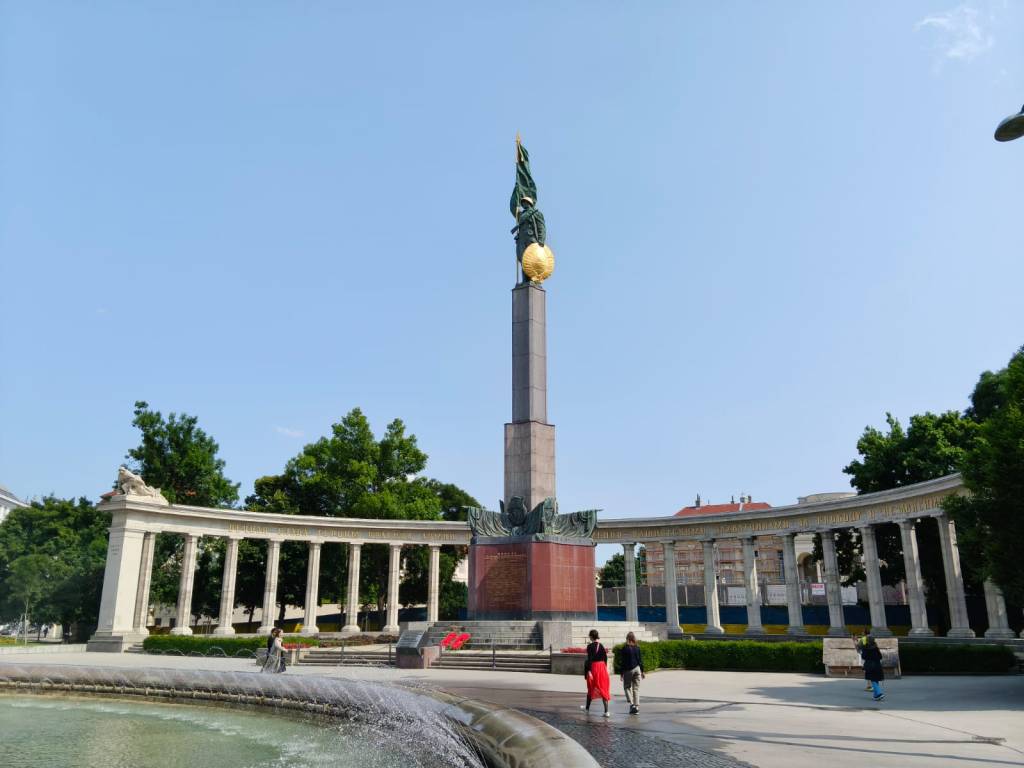
The Soviet War Memorial in Vienna was also an imposing structure. 17,000 Red Army soldiers perished in the push towards Vienna. While Austria was also divided amongst the allied powers, it escaped Germany’s fate by deciding to be perpetually neutral. Austria never joined the NATO or the Warsaw pact and hosted no military bases. This explains why it today houses the headquarters of numerous global institutions, the most notable being the IAEA.
On the food front, I sampled the Schnitzel which turned out to be nothing better than the fried chicken sold in India. Tafelspitz was better – a soupy, broth like dish with chunks of beef and the apple strudel was just like the apple pie we get here. The Käsekrainer sausages were out of this world. It was only after reaching Vienna that I came to know that the Viennese Coffee House Culture is a part of UNESCO’s Intangible Heritage List.
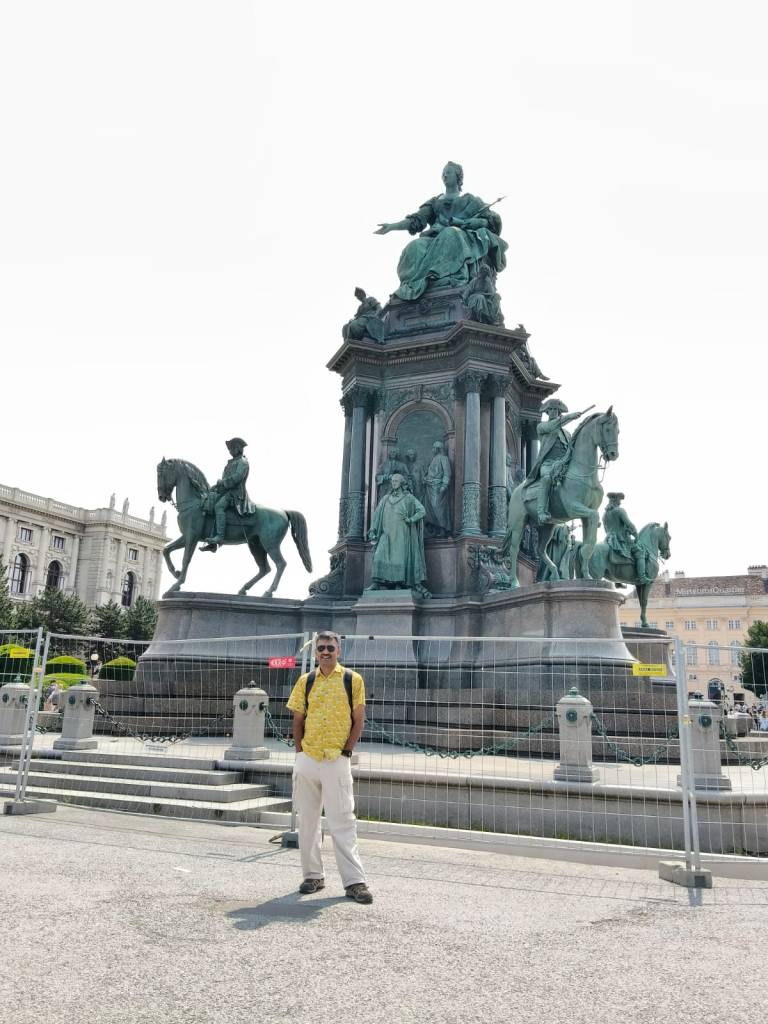
Maria Theresa‘s role in establishing the Hapsburg Empire as the center of European dynastic politics is also something that I need to read up more on. Vienna has an impressive statue of hers. Apart from knowing that she was the mother of the doomed Marie Antoinette, I knew next to nothing about her. Apparently her 16 children were instrumental in establishing links with the key political families of Europe. Her administrative reforms were also far-reaching and well ahead for the times she reigned. (A new biography of hers was published in February this year)
Salzburg was a few hours away from Vienna. For some reason, cities and places that boast of ‘breathtaking beauty’ rarely impress me. Salzburg was no different.
Discover more from Manish Mohandas
Subscribe to get the latest posts sent to your email.
