Prague was one of the few cities of Central Europe that was untouched by the destruction of the Second World War. During the Cold War, the city became synonymous with the Prague Spring – a series of reforms by the Communist Party to make communism more palatable – reduced censorship, more autonomy, decentralization of power etc. But in no time, the USSR dispatched troops and tanks and restored the Party’s iron grip.
Though Prague has a picture postcard beauty – a fairy tale skyline of spires, cobblestone streets, and the grandeur of Prague Castle – I found the whole place to be dull and nothing more than a tourist trap.
I spent a day and managed to walk around (in pouring rain) and see its most famous sites. Even the museum dedicated to Kafka, the most famous export of Prague, felt like it was established just to cash in on the global frenzy around Kafka’s works. The museum shop had numerous overpriced Kafka souvenirs ranging from bottles to stationery to mouse pads to T-shirts. I picked up a fridge magnet.
When walking around Prague, one has to remember that Czechoslovakia has a unique distinction for being one of the few countries in the world to have transitioned between so many empires and forms of government. Mary Heimann in Czechoslovakia: The State That Failed puts it well:
Czechoslovakia lasted for just seventy-four years, the span of an average person’s lifetime. In these years it was federalized, centralized, dissolved and reconstituted; and went through every kind of political regime, from military dictatorship to parliamentary democracy, and from Nazi colony to Soviet satellite. From its improbable creation at the end of the First World War until its unexpected collapse at the end of 1992, Czechoslovakia was caught up in the most dramatic political crises of the twentieth century. This was a place where it was not only possible, but normal, for a single person to have all the varied experiences of being born a subject of the Habsburg Empire; brought up with the ideals of Wilsonian democracy; come of age under Nazism; joined in the postwar quest for social equality; been indoctrinated with Stalinism; successively re-educated in the ways of reform and neo-conservative Communism; converted to free-market capitalism; and, all along, stubbornly clung to old-fashioned, Romantic nationalism.
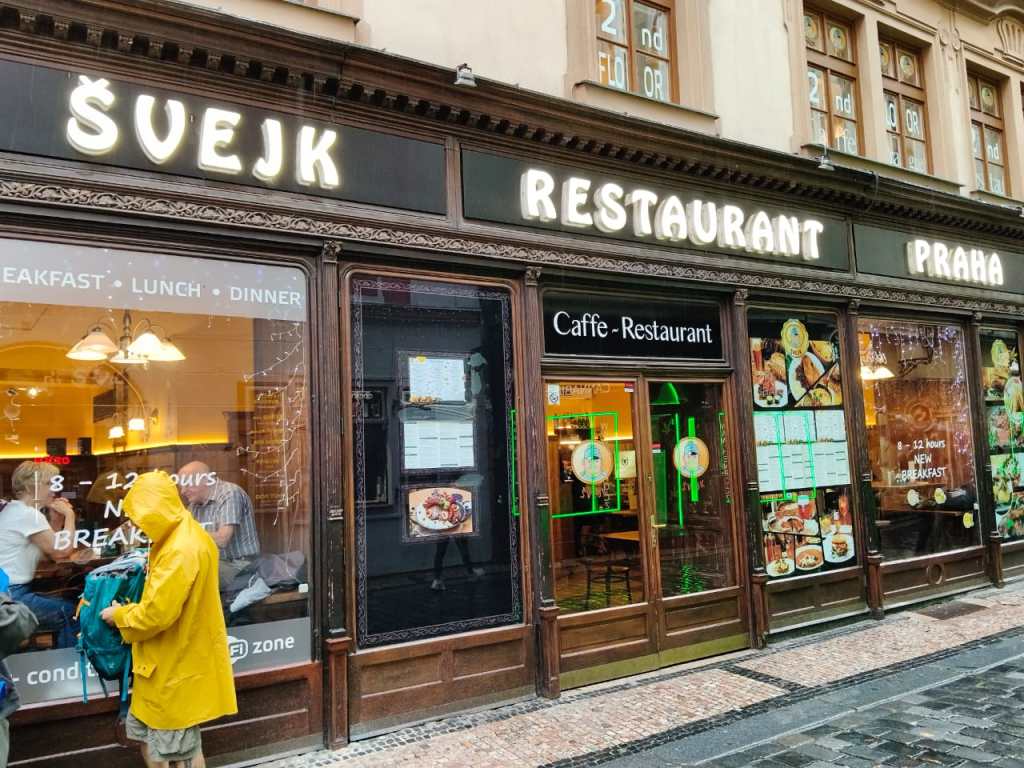
The Good Soldier Švejk is probably the most famous Czech book known internationally. I was amused to find that a popular restaurant chain has been named after Swejk, the hero of this satire. Sampled ghoulash from there and found it to be like the beef curry sold in every nook and corner of Kerala.
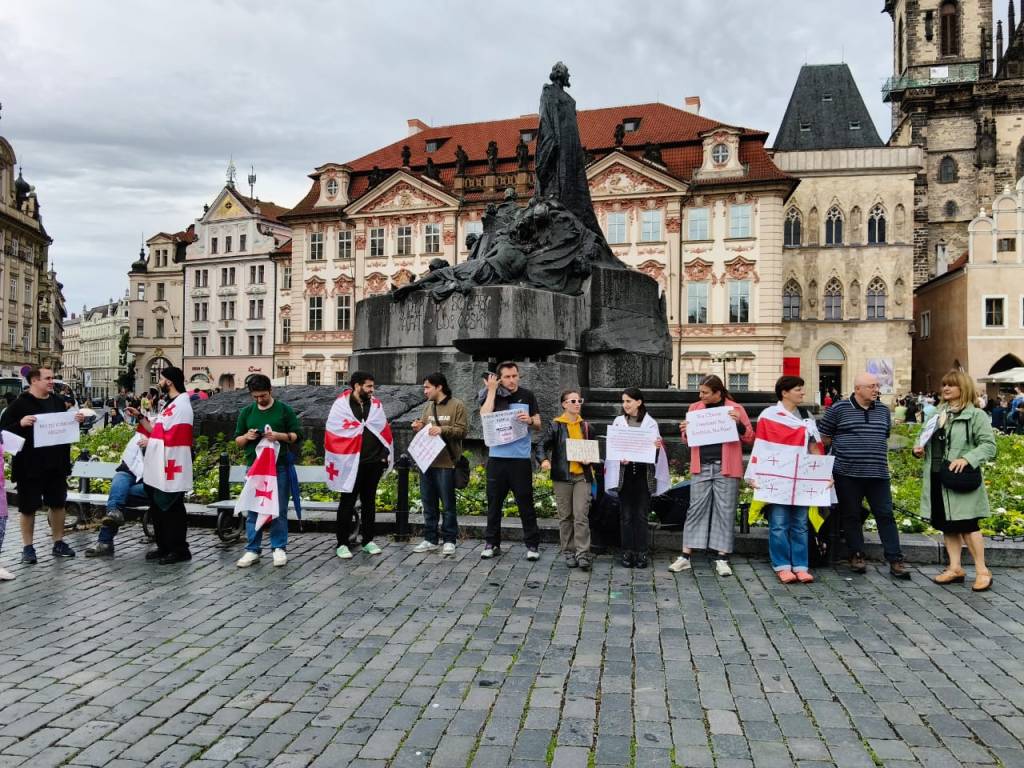
Almost a century before Luther, the Czechs had a reform movement against the Catholic Church led by John Hus. Hus was burned at the stake and his followers – the Hussites managed to keep their protest alive for a few more years. 500 years after his death, in 1915, an impressive statue of Hus was placed in the Markey Square of Prague.

Just as I was impressed with the amber stores of Poland, the stores selling garnet in Prague caught my attention. Apparently the Czech garnet is a thing and is known for its deep red features. The official producer across the country is a cooperative that endorses the ‘authentic’ ones as compared to the cheap imitations sold in most souvenir shops.
On the train to Vienna, when discussing the touristy vibe of Prague with an Australian gentleman, his response was: “Wait for July. The whole of Europe will be descending here”.
Discover more from Manish Mohandas
Subscribe to get the latest posts sent to your email.

Very interesting. I agree about the tourist trap. I had wanted to go to Prague for so long and when I got there a couple of years ago, it was a bit underwhelming. It was still nice, but walking on the cobblestone streets didn’t feel like walking through history. It felt like walking through a movie set. It felt too staged. I have to disagree about the Kafka museum though. For a small space, I think they did a pretty good job of both informing the visitors and keeping the dark Kafkaesque vibe alive. We also picked up a fridge magnet for the gift shop. But if you think the gift shop there was a money grabbing scam, I wonder what you’d think about the museum gift shops in Vienna and Paris.
I had never heard of the Good Soldier Švejk, so I was a bit confused about it’s omnipresence in Prague. You didn’t say anything about the Jewish quarter in Prague. Did you go there? In addition to all the history, they also have one of the world’s oldest Jewish bakeries that makes a mean chocolate babka.
Thanks for the very nice post. I’m off to read your Vienna notes now!
P. S. Super disagree about the trdelnik. It’s awesome when stuffed with ice cream and toppings. Sugar is life! 😁 Vienna also had a version of trdelnik that was sold everywhere. I forget what it was called.
LikeLike
(Forgot to say Hi from Pallavi and Hemant 😁)
LikeLiked by 1 person
Good to know that we share more or less the same opinion about Prague. I couldn’t visit the Jewish quarter as I just had a day in Prague. It was also pouring the day we were there. Maybe next time, if I ever go again 🙂 The Kafka museum could have been better. I felt they just dimmed the lights to represent the ‘darkness’ of his writings and could have made the exhibit a bit more lively. But with Kafka, I guess that’s all one can do….
I wanted to try the trdelnk but yaar, the sugar was so scary! 🙂
LikeLiked by 1 person