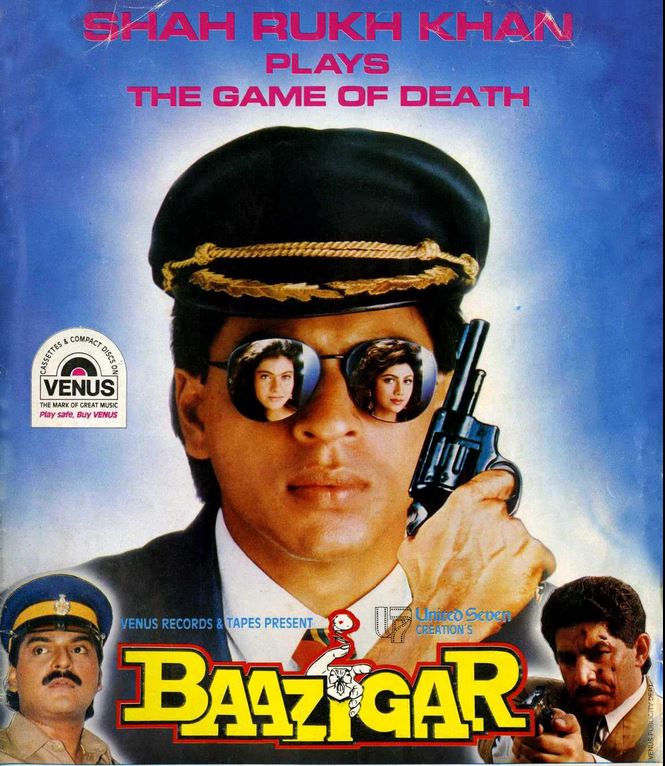
Whatever little Hindi I knew as a child came from the Bollywood movies of the 90s. When SRK’s ‘Baazigar’ came out in ’93, the ten-year-old me learnt a new word which I then thought meant ‘Magician’. It was only when 32 years later, that I discovered that the word was far more layered than I … Continue reading Baazigars & The Brits
Month: February 2025
Gates’ Source Code
Today, Bill Gates is known more for his sage-like utterings on global development and the groundbreaking work of his foundation than for his technological prowess. But for someone who grew up in the ’90s, Gates was undoubtedly the towering giant of the tech world. The PC revolution that had been underway since the ’80s, the … Continue reading Gates’ Source Code
Macbeth
I’ve embarked on a new multi-year project: reading Shakespeare. Over the coming years, I plan to tackle all his 39 plays. I began with Macbeth and it wasn't too hard to discern why he’s claimed to be the deepest thinker the human race has ever produced. If you’re daunted by the language of Shakespeare, I … Continue reading Macbeth
The Tragedy of Free Parking
In the beginning the earth was without parking. The planner said, Let there be parking, and there was parking. And the planner saw that it was good. And the planner then said, Let there be off-street parking for each land use, according to its kind. And developers provided off-street parking for each land use according … Continue reading The Tragedy of Free Parking
The Hebrew Calendar
Today, while watching Shtisel, I learned about the Hebrew calendar. It begins in 3761 BC, a date calculated in the 2nd century CE based on a theological interpretation of the Book of Genesis. Jewish scholars chronologically mapped out key biblical events, such as Adam’s creation, Noah’s Ark, Solomon’s reign, the Exodus, etc. leading to the … Continue reading The Hebrew Calendar
Agnes Callard and the Socratic Life
Socrates was known for engaging people in conversation and, through a series of probing follow-up questions, exposing flaws in their reasoning. Using what is now called Socratic questioning, he challenged their assumptions by prompting them to clarify their beliefs, examine their evidence, and explore logical consequences. This often led them to recognize contradictions in their … Continue reading Agnes Callard and the Socratic Life
Twain in India
Mark Twain kept me busy for the last two weeks. Tom Sawyer was a fun read but I found the going hard with Huckleberry Finn. The bulk of the book employed the dialect of the blacks of late 19th century America. I followed up the books with Ken Burns’ 2001 documentary on Twain. In it, … Continue reading Twain in India
Superagency
In Superagency: What Could Possibly Go Right with Our AI Future, Reid Hoffman and Greg Beato celebrate the potential of AI to transform our lives. Hoffman was the co-founder of LinkedIn, was on the board of PayPal, and was an early philanthropic investor in OpenAI. While he makes a passionate case for AI, the work … Continue reading Superagency
‘A Savage War of Peace’ – The Roots of the Algerian War
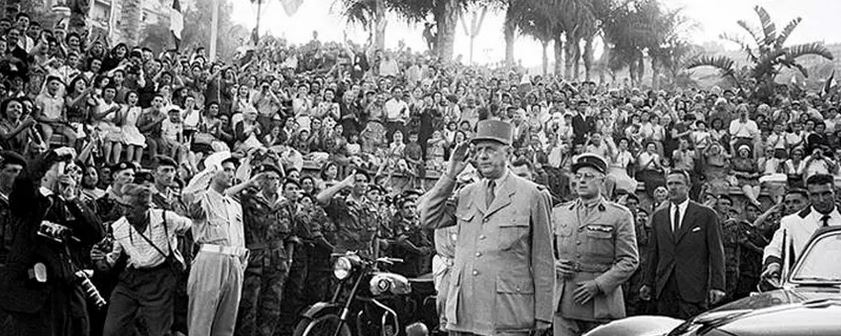
Alistair Horne’s magisterial ‘A Savage War of Peace: Algeria 1954-62’ is a masterpiece and has been a gripping read so far. The Algerians never had a national identity until the beginning of their discontent with the French. The land was ruled by the Carthaginians for seven centuries who were then replaced by the Romans, the … Continue reading ‘A Savage War of Peace’ – The Roots of the Algerian War
On Settler Colonialism
Just as including He/She/They in your bio was recently considered an ‘in’ thing (at least until a few months ago), the term ‘Settler’ is also laden with symbolism, solidarity, and wokeness. But like many academic constructs, it does not always hold up to strong scrutiny. Settler colonialism originally referred to the process by which colonial … Continue reading On Settler Colonialism