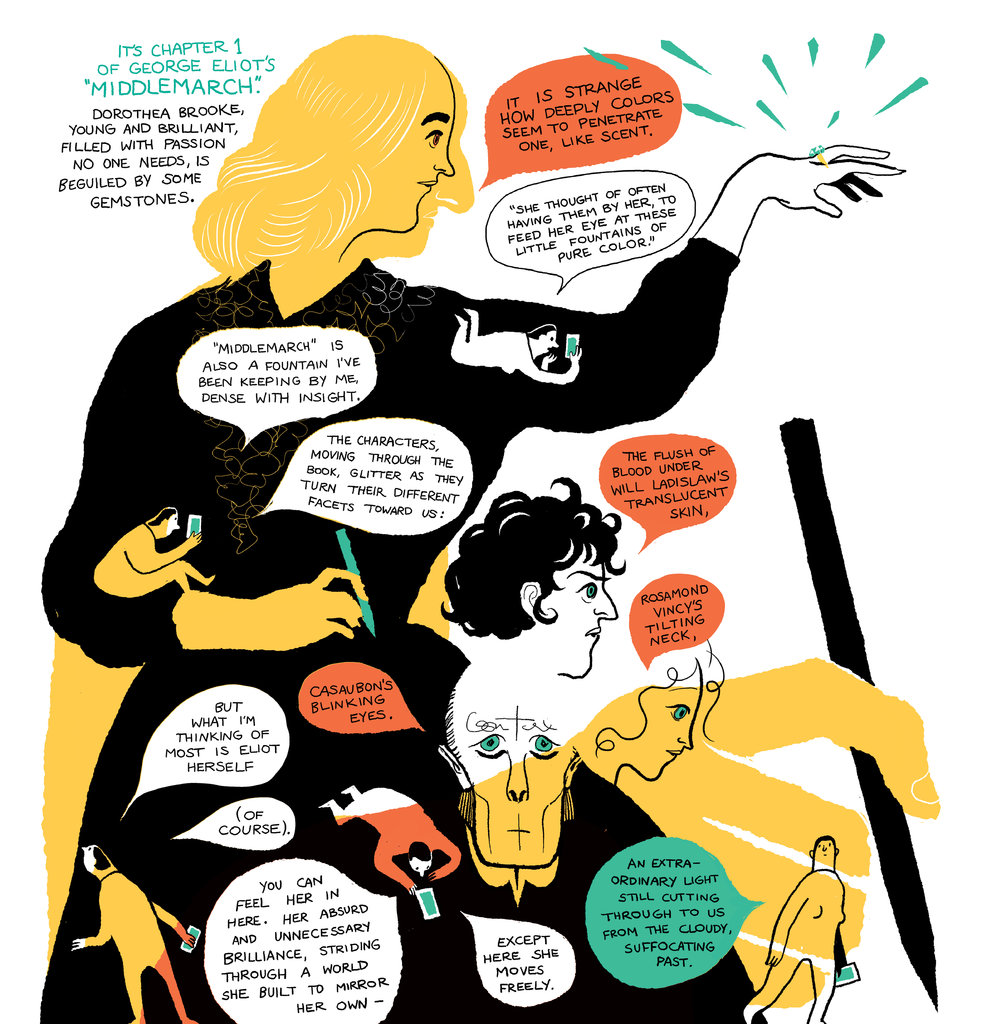
The Kindle is great to read huge tomes. The ‘minutes remaining’ indicator for each chapter provides a reference point for the time needed to finish a book. Nothing like it to make slow and steady progress with the classics. I read Eliot’s ‘Middlemarch’ over the last two months with no trouble with motivation.
Eliot’s philosophical grounding is often overlooked, yet it profoundly shaped her work. Before writing Middlemarch, she translated Spinoza’s Ethics into English, delving deeply into his vision of nature as a web of interconnectedness. Spinoza’s idea that human lives are inherently linked underpins his belief that moral dilemmas are central to leading a good life—a theme Eliot masterfully explores in her fiction. Rather than writing traditional philosophical treatises, Eliot used the novel as a vehicle for her ideas, with Middlemarch standing as her most compelling testament. For Eliot, life is a complex mesh of interconnected relationships, and the path to a happy and moral existence lies in navigating this web with empathy and an awareness of the need for harmony. (Earlier post on Spinoza)
Women confronting unhappy marriages, shame and guilt wrecking one’s mental peace, empathy and compassion restoring happiness and the suffocation of leading lives in an interconnected society with constant social scrutiny, make Middlemarch what it is.
The book, set in the 1830s, also makes references to the larger changes happening in Britain and the world. Eliot weaves and writes about the expanding railway network, the conflict of modern science with traditional medicine, Britain’s imperial trading networks, Adam Smith’s theories of economic growth, urbanization and its ills and also makes a reference to Warren Hastings’ corruption.
The last line of the novel summarizing the grandeur of ordinary lives and small acts of kindness:
But the effect of her being on those around her was incalculably diffusive: for the growing good of the world is partly dependent on unhistoric acts; and that things are not so ill with you and me as they might have been, is half owing to the number who lived faithfully a hidden life, and rest in unvisited tombs.
Middlemarch was also the first classic for which I used ChatGPT extensively. The background of the novel, along with its themes, family trees, and subtexts, was readily available for the taking. Even prompts worth asking were provided! What a time to be alive. (The imperfect cover image of the characters of the novel was GPT generated)
Discover more from Manish Mohandas
Subscribe to get the latest posts sent to your email.

One thought on “Eliot’s Middlemarch and ChatGPT”