Had it not been for the bombing of Hiroshima, Richard Flanagan would never have been born. The bomb led to Japan’s surrender. His father, a POW, who would never have survived another winter in Japan, was released and years later, Flanagan was born. His reckoning with this absurd fact is the kernel for his genre-defining ‘Question 7’. The title comes from Chekov’s short story in which he poses a bizarre puzzling question:
“Wednesday, June 17, 1881, a train had to leave station A at 3 a.m. in order to reach station B at 11 p.m.; just as the train was about to depart, however, an order came that the train had to reach station B by 7 p.m. Who loves longer, a man or a woman?”
Flanagan reframes this and asks:
If Thomas Ferebee releases a lever at 8:15 am, says, ‘Bomb away!’, and a bomb falls six miles before exploding, how many people need to die in order that you might read this book?
(Ferebee was the pilot of Enola Gay, the Boeing B-29 Superfortress bomber that dropped the bomb on Hiroshima. An earlier related piece)
As a butterfly flapping its wings in Brazil can potentially cause a hurricane in Texas, Flanagan tries to trace out all the butterfly flaps that led to his birth. And in the process tells us about HG Wells, his lover Rebecca West, Leo Szilard and Thomas Ferebee.
When he was forty one, and at the peak of his fame, HG Wells meets Rebecca West who had panned one his novels in a review. The meeting led to sparks flying and a raging affair ensued. Like most affairs (Wells was also known for his promiscuity), things go downhill and to recover from his sanity, he moves to Switzerland and in 1914 writes a now-forgotten book called ‘The World Set Free’. In it, atomic weapons get discovered in 1933 and in a war in 1950, the bomb gets dropped from a plane destroying the world. (All this written in an era when planes were just a rudimentary piece of engineering).
Years later, the Hungarian physicist Leo Szilard, reading the book, gets inspired enough and eventually conceives the idea of a nuclear chain reaction. On his prodding, he convinces Einstein to write to Roosevelt to highlight the risk of Germany going nuclear. The Manhattan Project gets launched and the rest, as they say, is history.
All that is known is this: in front of his bookcase, while talking about matters of literary style, they kissed. That kiss would, in time, beget death which would, in turn, beget me and the circumstances of my life that lead to the book you now hold, a chain reaction which began over a century ago, and all of which will lead to the unlikely figure of my father, unlikely in that he is to appear in a story with, among others unknown to him, H. G. Wells and Rebecca West.
Without Rebecca West’s kiss H. G. Wells would not have run off to Switzerland to write a book in which everything burns, and without H. G. Wells’s book Leo Szilard would never have conceived of a nuclear chain reaction and without conceiving of a nuclear chain reaction he would never have grown terrified and without growing terrified Leo Szilard would never have persuaded Einstein to lobby Roosevelt and without Einstein lobbying Roosevelt there would have been no Manhattan Project and without the Manhattan Project there is no lever at 8.15 am on 6 August 1945 for Thomas Ferebee to release 31,000 feet over Hiroshima, there is no bomb on Hiroshima and no bomb on Nagasaki and 100,000 people or 160,000 people or 200,000 people live and my father dies. Poetry may make nothing happen, but a novel destroyed Hiroshima and without Hiroshima there is no me and these words erase themselves and me with them.
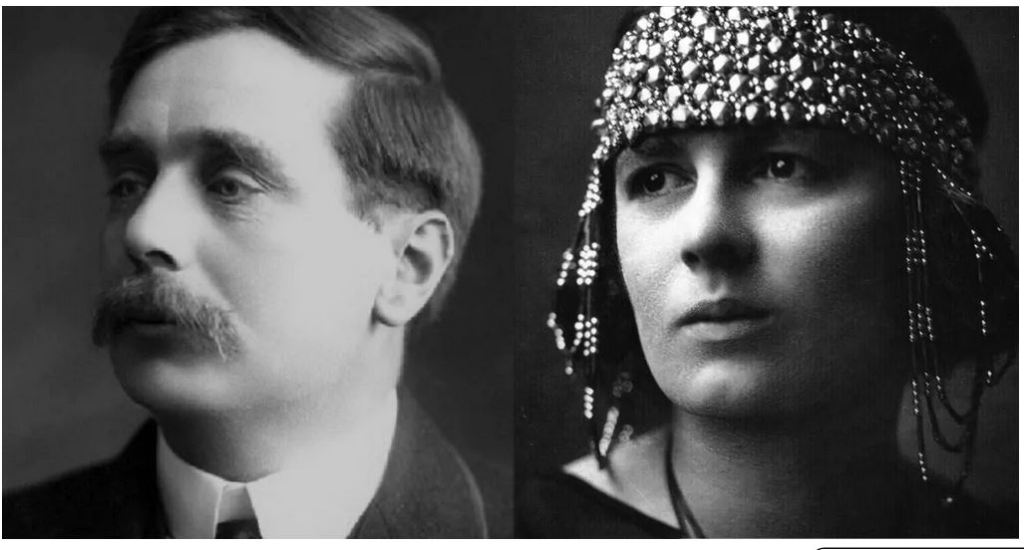
Flanagan also gives us glimpses into his childhood in Tasmania, the Aborigine genocide, the simplicity of his parents and other such random tid bits that make ordinary lives appear so moving and ‘grand’.
Discover more from Manish Mohandas
Subscribe to get the latest posts sent to your email.

One thought on “Question 7”