The Tughlaqs are seen as a relatively minor dynasty that ruled India from Delhi. But when you think of it, their 90-year reign from 1320 was greater than the age of the modern Indian Republic. Today, all that reminds us of their grandeur are their monuments still standing in various corners of Delhi and of course the city of Tughlaqabad built by the first Tughlaq – Ghiyasuddin.
I checked it out a few weeks back and the abandoned city truly lives up to its reputation of being a spooky, deserted, sprawling ruin surrounded by massive walls. At its zenith, the city and the ramparts of the fort were probably the most protected structure of the land.
Ghiyasuddin was the governor of Multan when the last of the Khiljis was overthrown. The story is that he had once recommended the site of Tughlaqabad as a potential location to build a massive city to which Mubarak Khilji retorted that he could do so when he became the king, which is what he went on to do once he became king.


While the city was being built, Ghiyasuddin had his legendary showdown with Delhi’s most powerful mystic – Sheikh Nizammudin Auliya.
To raise money for his military campaigns and for the construction of his city, Ghiyasuddin banned all other construction in Delhi which included the the baoli of Nizammudin that was being built. This incenses the saint which makes him curse Tughlaqabad; “Ya rahe ujjar ya base gujjar” which loosely translates to ‘Either it will be left desolate or occupied by the nomadic gujjars’. (Standing at the site today, you may find yourself reluctantly acknowledging that the Sheikh was probably not a fraud.)
Later, when Ghiyassudin hears of the saint’s transgressions, he marches to Delhi with the intent to act. Nizammudin, when alerted of the king’s wrath, calmly replies with another of his legendary aphorisms – ‘Dilli dur ast’ meaning ‘Delhi is still far away’. On nearing the capital, Ghiyassudin stops by to inspect a victory pavilion assembled to welcome him from his campaign. The structure collapses crushing him to death. His son and successor, Mohammed bin Tughlaq, a staunch devotee of Nizammuddin was rumoured to have plotted against his father.
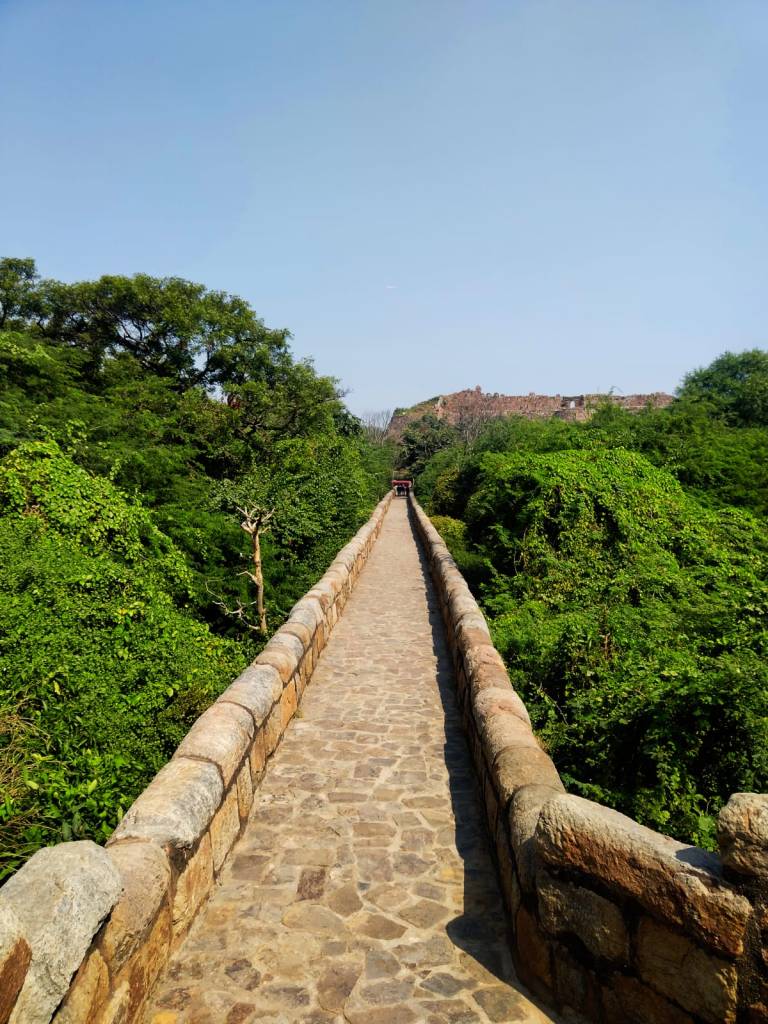
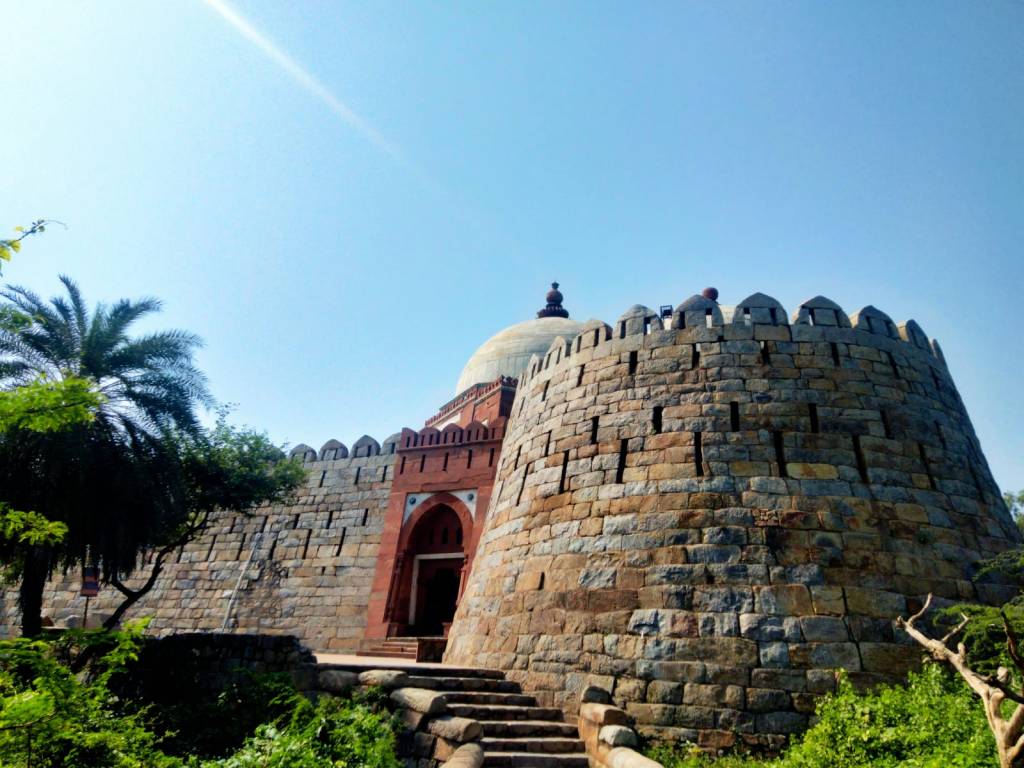
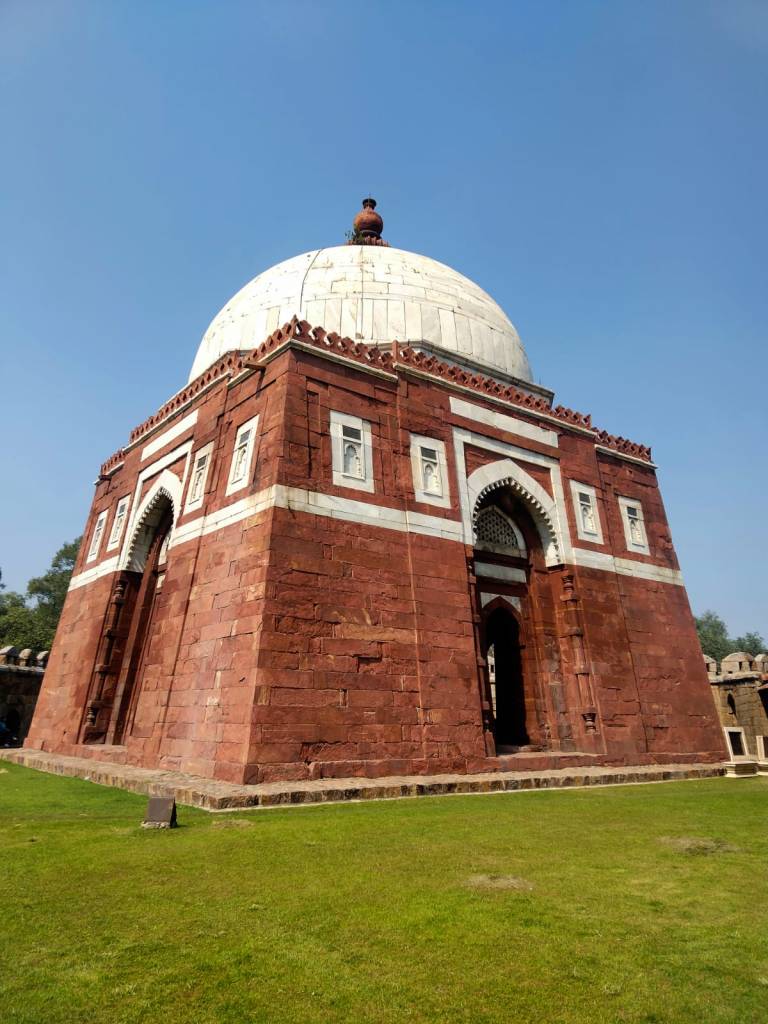
Anyways, like all powerful monarchs, Ghiyassudin planned out his resting place, which is today across the road from Tughlaqabad. But during the 15th century, the tomb was surrounded by water and could only be entered by a causeway.
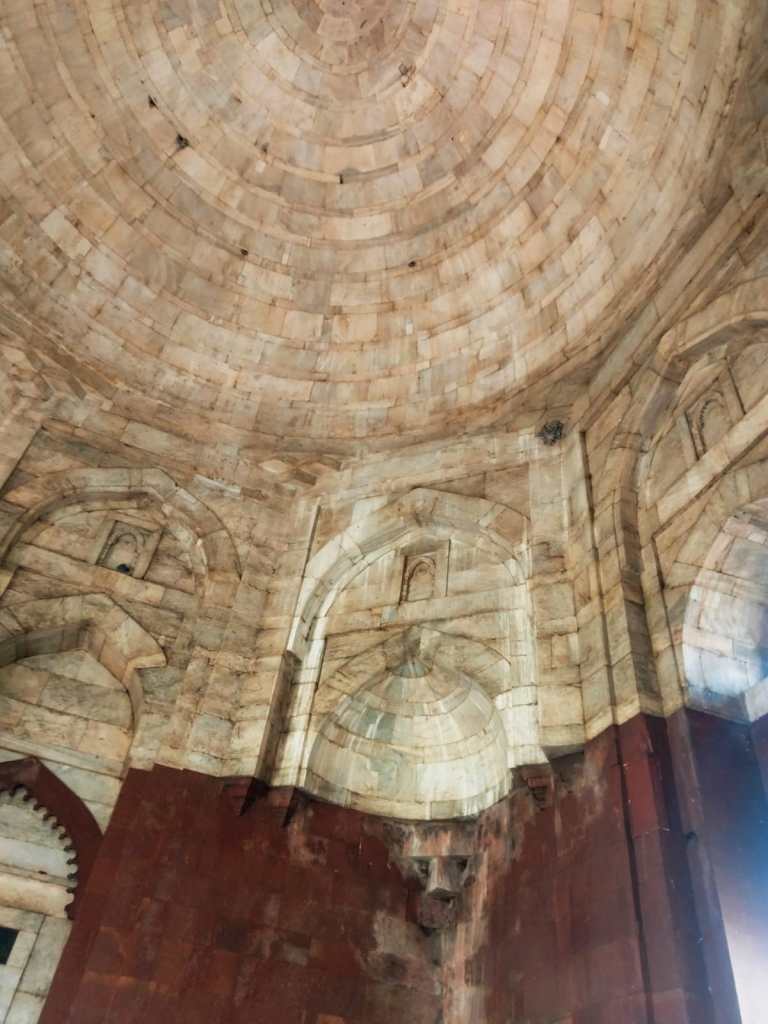
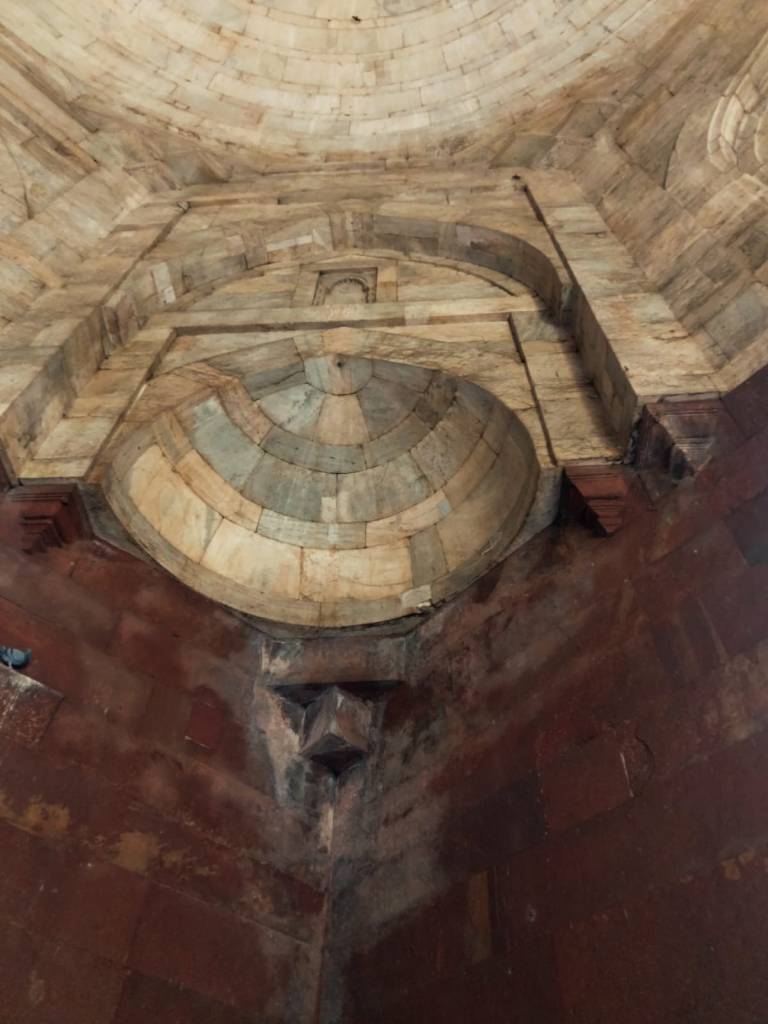
The tomb is pretty. What caught my eye was the square plan of the base which then marvellously merges into an octagonal structure midway culminating in a perfect dome.

Discover more from Manish Mohandas
Subscribe to get the latest posts sent to your email.
