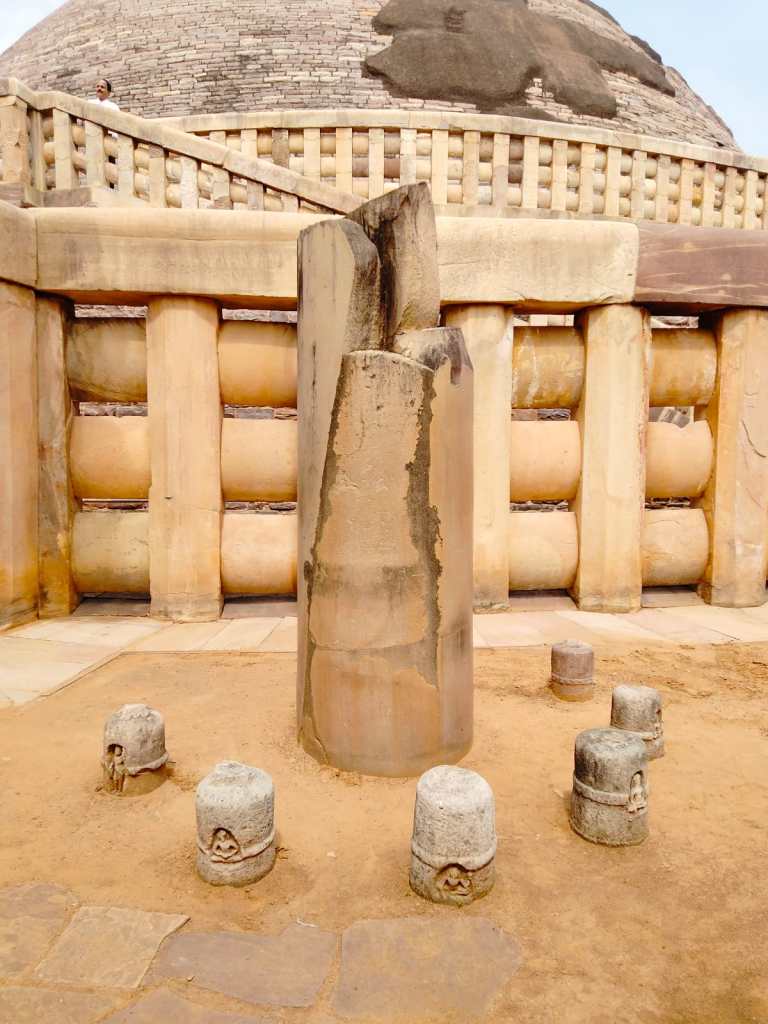
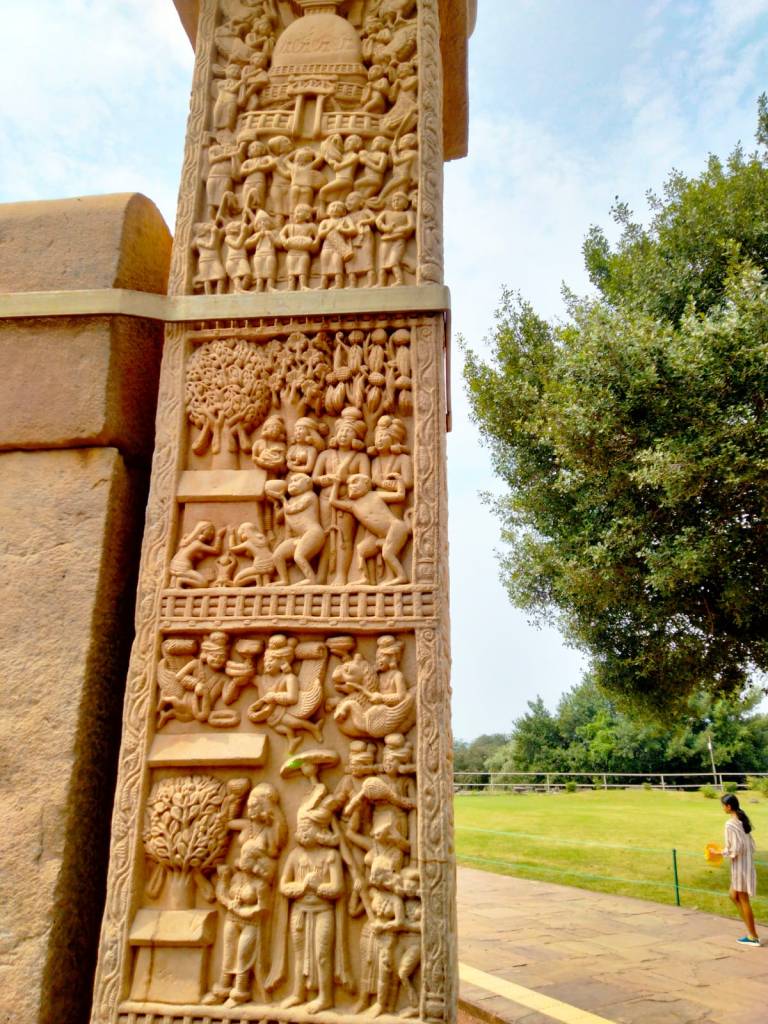
The Sanchi stupa is a spectacular Buddhist monument. It’s address is an unusual one as Sanchi was a city that the Buddha never visited during his lifetime. Hiuen Tsang who spent 15 years in India checking out all the major Buddhist sites makes no reference to Sanchi in his writings. The stupa is believed to have been constructed by Ashoka as his wife was from nearby Vidisha. The presence of a thriving merchant community in the vicinity led to the growth of the city. (As Buddha was pro-market, Buddhism thrived in commercial centers and the symbiotic relationship between the monks and the traders was one reason for its explosive growth in ancient India).
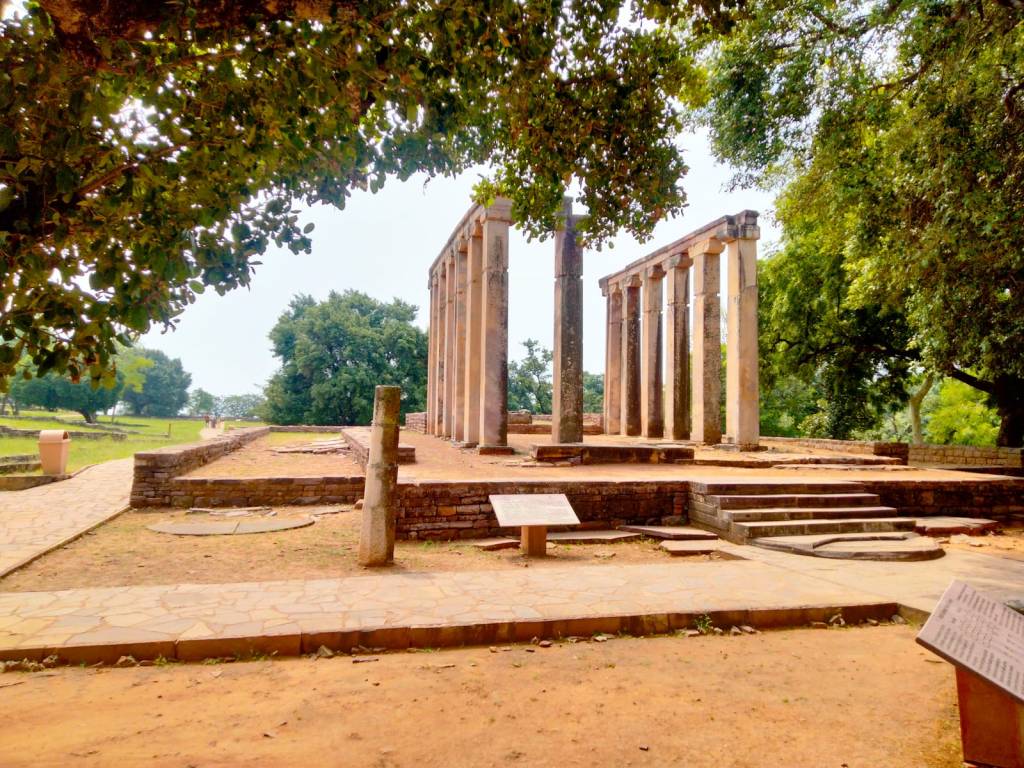
The site reminded me of the Qutb complex in Delhi, with different dynasties contributing to the architecture. Sanchi boasts of Maurya, Satavahana. Gupta and Greek influences.
The story of its excavation is also a fascinating one. Cunningham, the first DG of the ASI was one of the first official excavators of the site. Later, when John Marshall took over as the DG at the age of 25, Sanchi was one of his major projects. But his initial foray into the project was not smooth sailing thanks to the intimidating presence of the formidable Begum of Bhopal Sultan Jahan.
Marshall’s initial suggestion was to replace the Muslim caretakers of the site with Buddhist workers funded by the Maha Bodhi Society – a Ceylonese NGO. The politics behind a similar arrangement in Bodh Gaya irked the Begum and she was against any such system in Bhopal. Agreeing to it would also have been a tacit acknowledgment of her own administration’s inability to maintain a Buddhist monument. Though their relationship began on a sour note, things soon improved.
Sanchi was a place that had an emotional resonance with the Begum. Her son Hamidullah Khan (the great-grandfather of Saif Ali Khan) and his bride were first brought here after their wedding, before proceeding to Bhopal. In 1911, when Bhopal witnessed a plague epidemic, the Begum, returning from Europe, stayed in Sanchi, from where she then left to attend the Delhi Darbar of George V.
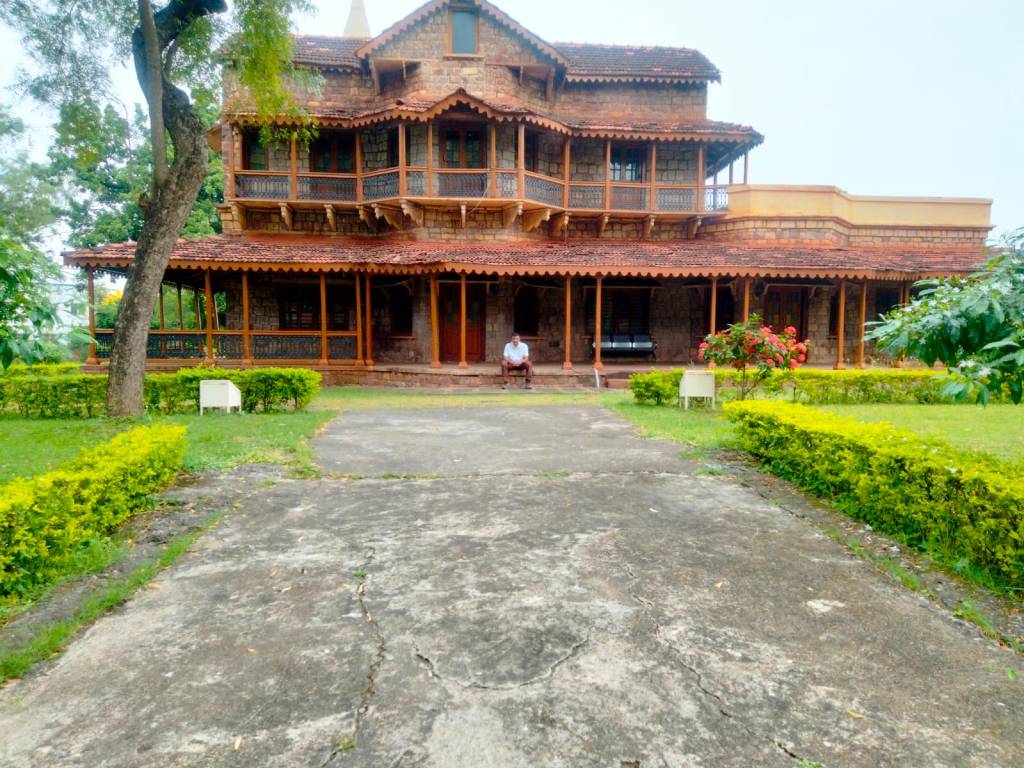
When the Begum requested for a monograph on Sanchi, Marshall pitched the idea of launching a conservation project. The Begum acceded to the request. A bungalow was constructed for Marshall (which is still intact in the compound of the archaeological museum) and work commenced.
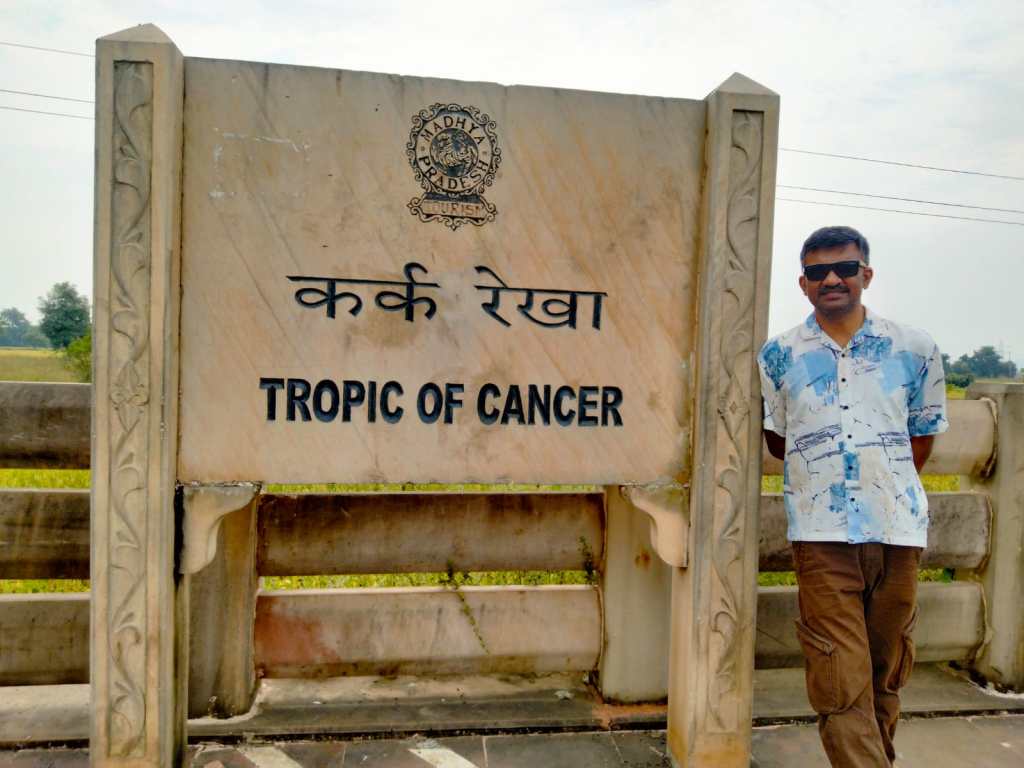
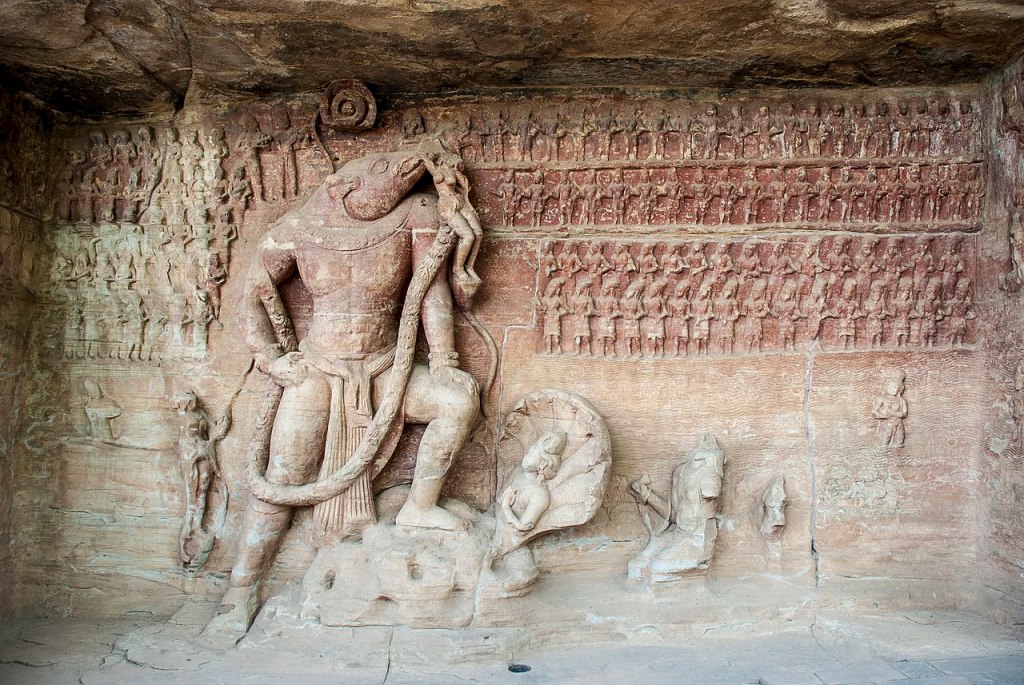
A short auto ride away from Sanchi are the Udayagiri Caves. These rock-cut caves are considered to be the oldest temple iconography in India and was constructed by the Guptas sometime between 300 and 500 AD. The highlight is the Varaha avatar of Vishnu – an imposing standing boar lifting Bhudevi from the ocean!
One more Qutb Minar reference: The iron pillar found in the complex today is believed to have been brought to Delhi by the Sultanate rulers from distant Udayagiri!
Discover more from Manish Mohandas
Subscribe to get the latest posts sent to your email.

2 thoughts on “Sanchi Notes”