I spent a few days in Amsterdam earlier this month. Being my second visit to the city, I wasn’t overawed. (Awe has diminishing returns which is one of the key criticisms of travel).
The Netherlands is proof that sea-level rise due to climate change is not going to be the end of the world. If the Dutch could push away the sea more than five centuries ago, we should be ok today (and tomorrow). Tax breaks and economic incentives motivated farmers, merchants and traders move to Amsterdam and incentivized them to make the marshy land habitable. Windmills pumped out the water, cows and dairying thrived in the marshy bogs, milk was safer than contaminated water, nutrition and average height increased consequently, farmers used wooden shoes to walk over the bog and the population cycled across the flat terrain. Everything that we see as quintessentially Dutch emerged from their battle with water. To understand what they’ve pulled out in farming today, check out this WaPo piece.
‘Dutch Tolerance’ is a term the Dutch love and use to explain their country. While drugs are technically illegal, their sale and consumption is tolerated. Every street of Amsterdam has a coffeeshop (with great interest I learnt that a café is where one gets coffee and a coffeeshop is where one gets high) and if you want to know who supplies the drugs – it’s the mafia. More details here.
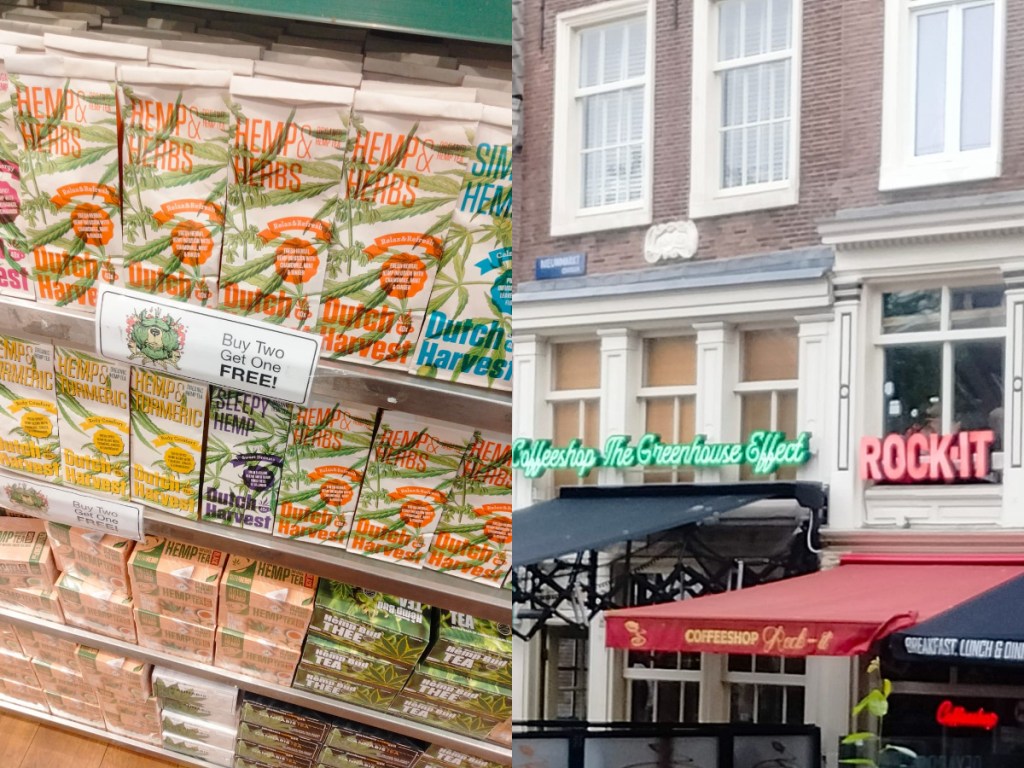
The famous Red Light street looked run down and was, well ‘touristy’. Plans are afoot to shift the entire industry to a skyscraper which is to be called, hold your breath, a Sex-Scraper. But NIMBYism is still a bottleneck for the project.
Zandaam, on the outskirts, is a well preserved village where one can still see a functioning windmill-powered carpentry saw. Once upon a time, this technological marvel, brought Peter the Great to come and stay here to study the shipbuilding industry. The Dutch was once upon a time one of the largest maritime colonial powers and for a brief period ruled large parts of my home – Kerala. Despite the hordes of tourists, the landscape was something to behold and was sufficient to conjure up an image of what 17th century Netherlands would have looked like. The impact of the Dutch Golden Age on Amsterdam is very much visible today – in their architecture, the gable stones, their art and the diamond business. I had recently written on the Dutch contribution to the liberal order.
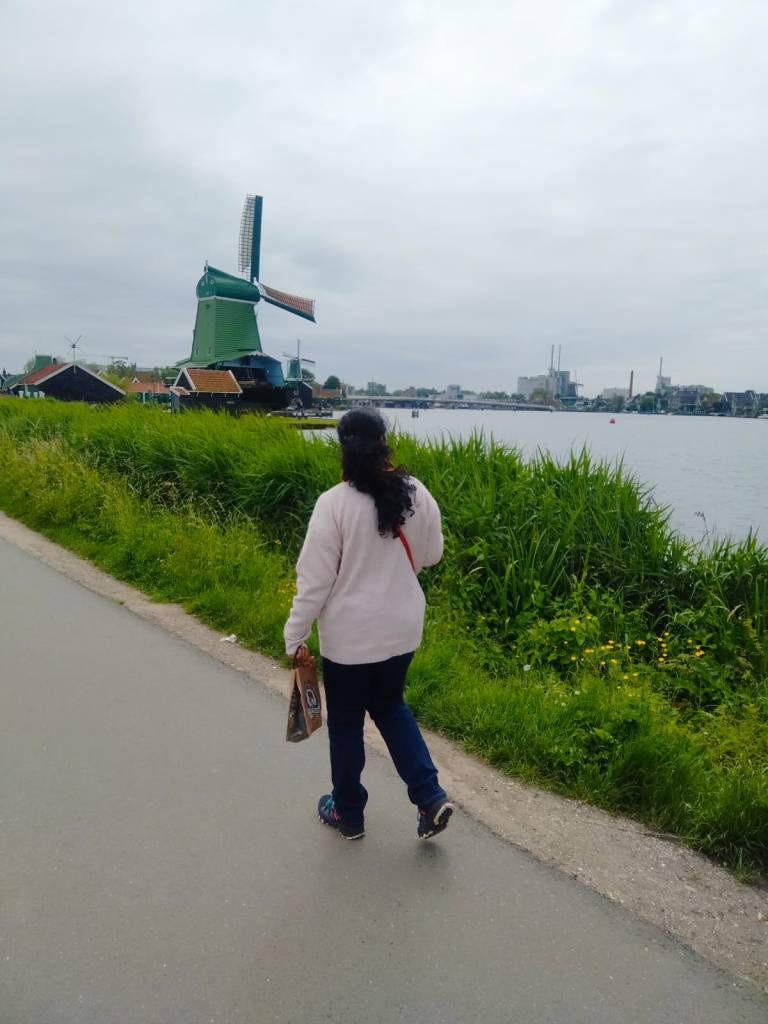
The canals are still a pleasing sight. Though Camus described them as the circles of hell, I spent a considerable amount of time admiring the network and the way the Dutch live with the water. The sight never fails to impress.
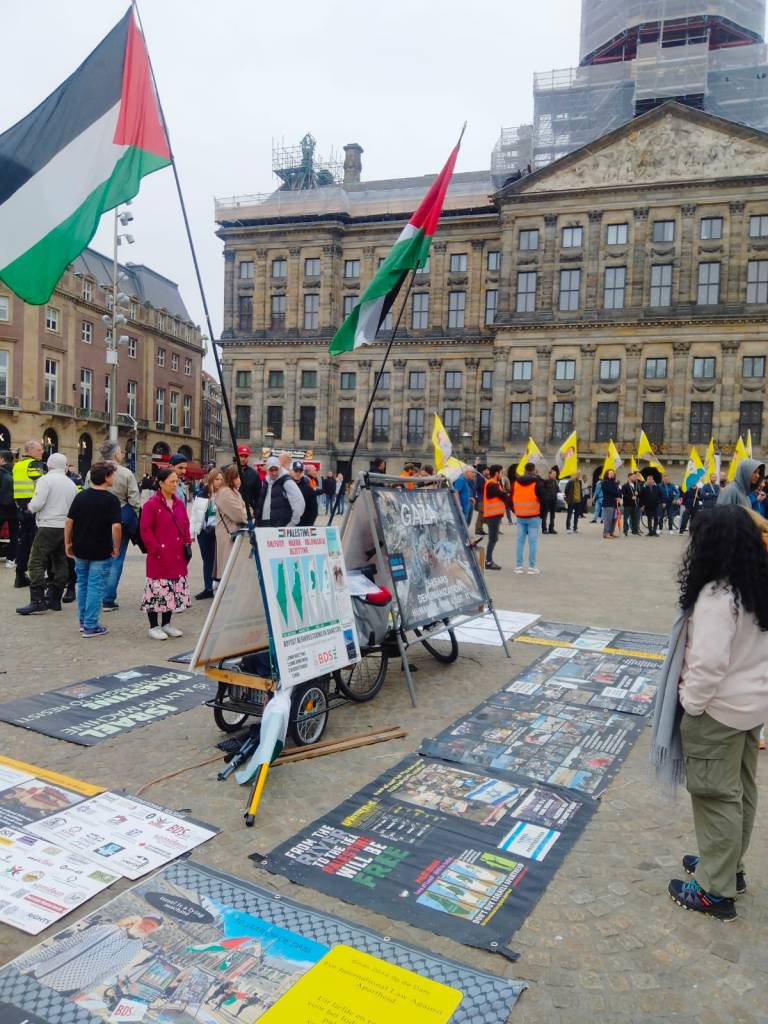
The Gaza war is very much a live issue. I could see the Palestinian flag in many balconies (though Im not sure if it’s also due to the large Muslim immigrant population in the Netherlands). The irony was that no other country lost as many Jews as a proportion to their populations as the Dutch did during the Holocaust. The Anne Frank Haus is still as moving and powerful as ever. The Jewish quarter has a very modern vibe. After liberation, the Netherlands was in the grip of a famine. People pulled out the the wood from the foundations of the abandoned homes to keep themselves warm and alive.
While the Rembrandts, Vermeers and Van Goghs were impressive at the Rijks Museum, the most visual spectacle was the Doll’ Houses in display. The gallery on the Dutch forays into Japan was also an eye-opener. (Until the mid-19th century, the Dutch were the only Westerners with exclusive access to Japanese goods and culture).
When a supermarket has a section on cycle accessories, you can safely predict that you are in the Netherlands

Despite all the cuteness and liberal vibe of the city, it’s important to note that the Dutch have moved to the Right. This thread is a good summary of some of the new government’s recent policies:
Discover more from Manish Mohandas
Subscribe to get the latest posts sent to your email.

One thought on “Amsterdam Notes”