Patrick Olivelle’s ‘Ashoka’ is the first volume of the ‘Indian Lives’ series of Harper Collins, edited and put together by Ramchandra Guha. The work adopts a scholarly approach towards the man and his ideas.
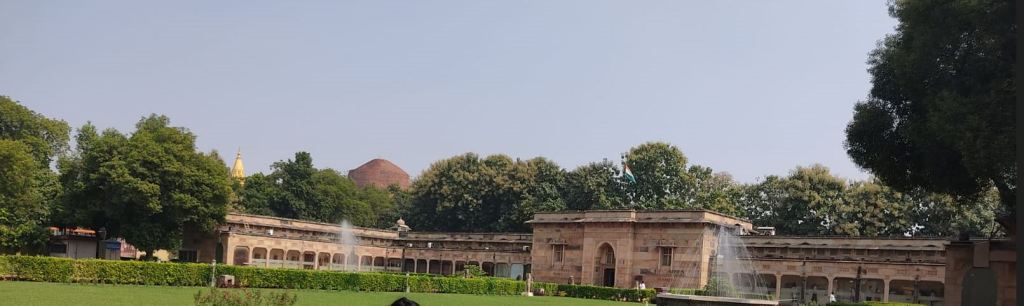
Re-reading aspects of his life is a great way to be reminded of Ashoka’s greatness. The only Indian empire to match the size of his was the British-Indian empire. The State Emblem of the Government of India was adapted from the Sarnath Lion Capital of Ashoka. (The Sarnath museum housing the capital is worth a visit and is one of the prettiest ASI museum’s I’ve visited). His principles of non-violence and the message of pluralism resonated with both Gandhi and Nehru. Ashok is also a popular name in India even today.
Thanks to Alexander’s inroads into North-West India, the age in which Ashoka grew up was a cosmopolitan one with close contact with the Greeks. The exchange of artists, artisans and ideas was the norm. It was James Prinsep’s deciphering of the Brahmi script in 1837 that opened up the ideas of the man who addressed himself as Devanamapriya (Beloved of the Gods) and Priyadashi (humane). None of the Ashokan edicts refer to the Varna system. The idea of karma is also conspicuously absent. ‘Dharma’ – a concept which has its genesis in the Vedas composed sometime in the second millennium – on the other hand takes center stage in Ashoka’s edicts. According to Olivelle:
As opposed to the Brahmanical version, Ashoka’s dharma is a system of moral behaviour that is based on—for want of a better word—reason, and is universally applicable to both the rich and the poor, both the eminent and the lowly, both in his territory and across the world; what Upinder Singh has called ‘soteriological socialism’. There cannot be one dharma for Brahmins and another for the rest, one dharma for the rich and the upper classes and another for the poor and the lower echelons of society. Ashoka dismisses the notion of a specific dharma for specific people, the notion of svadharma so prominent within the Brahmanical tradition. This universality of dharma is a feature that he shared with—and probably inherited from—Buddhism
The Brahmanical response to the Ashokan state’s ecumenical approach was to popularize their idea of the ideal king – someone for whom Dharma revolved around reverence for the Brahmins. Hence, both Yudhishtira and Rama from the Mahabharata and the Ramayana followed this template. For Olivelle, both the heroes of the two epics were modelled as a Brahmanical response to the historic Ashoka. Ashoka’s remorse after the Kalinga war is probably his most enduring image in popular imagination. Even the crappy Bollywood biopic of Ashoka (in which Kareena Kapoor fights for Kalinga wearing a skimpy garment) ends by showing a forlorn dejected Ashoka. In an online essay, Olivelle wonderfully refers to the impact of this phenomenon as: a ‘new ethic intervened—an ethic of interiority forging a sensitive conscience’. For the first time, we had a philosopher king deeply pained by his actions and deciding to change course. This same aspect of remorse also appears in the Mahabharata. Arjuna crumbling before the Kurukshetra War and Yudhisthira feeling remorseful on seeing the burning pyres are believed to have been modelled on the template of Ashoka’s emotions after the Kalinga War.
Quoting the scholar Fritzgerald, Olivelle writes:
“It seems fair to conjecture that the emergence of the Mauryan empire generally and Aśoka’s dharma campaign in particular were profound challenges to many pious brahmins, and these events may well have been a strong stimulus to the creation of the apocalyptic Mahabharata narrative.
The Mauryan challenge to the Brahmanical ideas of society and kingship was played out over the centuries following Ashoka’s death and, in the end, it was the Brahmanical vision which prevailed. The enduring pull of the two epics is a testament to this.
P.S: TM Krishna has rendered a few of Ashoka’s edicts and the whole project is on YouTube. It’s quite moving to be able to listen to ‘Ashoka’s words
Discover more from Manish Mohandas
Subscribe to get the latest posts sent to your email.

Established in 1904 under the auspices of the Government of India, the Sarnath Museum stands as a testament to India’s rich cultural heritage, particularly its profound Buddhist legacy. Located adjacent to the excavated site at Sarnath, Uttar Pradesh, this institution is more than just a repository of antiquities; it is a custodian of history, meticulously preserving and showcasing artifacts that date back centuries.
https://www.indianetzone.com/2/sarnath_museum.htm
LikeLike