St. Helena is an island in the middle of nowhere. Being situated in the direct line of the South East Trade Winds, it was just a matter of time for it to be discovered in the 16th century. For that was when the Portuguese began crossing the Cape of Good Hope on their way to India and the East.
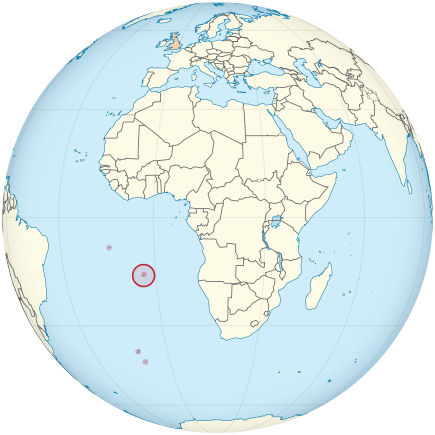
The first resident of St. Helena was a freak. Fernando Lopez initially landed in Goa when the Portuguese conquered it. Later, due to treason, he gets punished by having his right hand chopped, left thumb chopped, ears chopped, nose chopped and his beard and eyebrows plucked. On his way back to Portugal, his ship stops by at St. Helena when Lopez decides to get down and stay back. Not too hard to imagine why would he not want to get back to Portugal. Soon, literally single-handedly, he goes about ‘cultivating’ the island. His legend spreads far and wide and ships stopping by supply him with seeds, plants, peacocks, turkeys, cats, dogs, cows, goats and pigs.
In the 17th century, the island comes into the control of the East India Company. Britain adopts the strategy it used for populating Australia – sending miserable destitutes with no possessions to inhabit the island by marketing it as an island paradise. People who opted to move were offered twenty acres of land, two cows, seeds and plants, breeding stock, slave labour, and enough biscuits, salt beef and oil to last them for 9 months.
It was in this sleepy backdrop in 1815, that St. Helena gets news of the arrival of its most famous resident – Napoleon Bonaparte.
After his defeat at Waterloo, Bonaparte assumed that the British would house him honourably in a country house with a handsome pension. But what he’s offered was the bleak island that Lopez painstakingly managed three hundred years earlier. Overnight, the prices of essentials in the island shoots up. St. Helena becomes a military enclave, two thousand soldiers are shipped to protect the island and a flotilla of gunships patrol the waters.
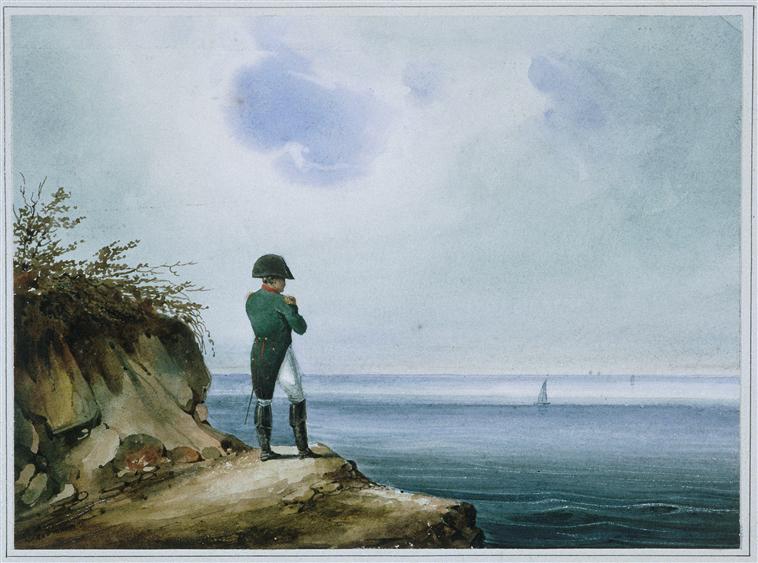
Napoleon ends up spending six years of life in the island until his death in 1821 – dying lonely, bored, ailing and depressed in a cold, damp and rat infested bungalow. In The Emperor’s Last Island: A Journey to St. Helena, his autopsy is described as follows:
Dr. Henry notes that the head of the deceased is large in proportion to the body and the face has an expression of intense tranquillity. The skin is white and delicate, the hands and the feet are small, the hair is fine and silky, the shoulders are straight, the hips are broad. The sexual organs are extremely small, something which he thinks might help to explain the absence of sexual desire which the deceased had shown throughout the time of his captivity. When Antommarchi has opened the cavity of the chest he takes note of the fact that the kidneys and the heart are loaded with fat, and the heart is smaller than might have been expected. The inside of the stomach is in a very unhealthy state, but the liver about which Napoleon has so often complained appears to be quite normal, if a little on the large side. Sir Hudson Lowe’s second-in-command, Sir Thomas Reade, was especially anxious to see the liver because there had been so much talk of the climate of the island causing hepatitis and other fatal diseases, and so Antommarchi held it, red in his hands, and slit it open with one deft movement, saying, ‘See, it’s perfectly good, perfectly sound, there is nothing extraordinary about it.’
The more intriguing aspect of the autopsy of the emperor who was arguably responsible for three to six million deaths, was that his penis gets squirreled away, passes through various collectors and allegedly ended up in the possession of an American urologist – Dr. Lattimer. The eccentric Lattimer boasted of having in his possession among other esoteric military equipment, Herman Goring’s suicide vials, a blood-stained collar that Lincoln wore on the day of his assassination and the upholstery of the car in which Kennedy was shot dead.
Discover more from Manish Mohandas
Subscribe to get the latest posts sent to your email.

One thought on “Saint Helena and its two iconic residents”