Look around yourself and observe all the objects you see. Every one of them will one day be categorized as waste and either end up in a landfill, get decomposed, broken down, recycled or end up in the oceans. Everything we touch was created by generating waste; and will some day end up becoming waste. Like karma, this is an inescapable part of modern life.
Oliver Frankin-Wallis’s Wasteland is a good primer to get a grip on the complexity of this issue. I’ve now begun to think about waste through the following categories:
Landfills
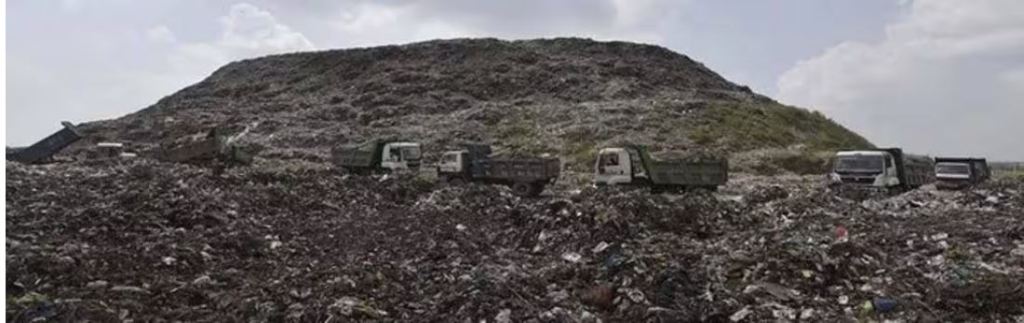
The most unaesthetic sight in Delhi must be the Gazipur Landfill. Even before reaching the site, you can spot the eagles hovering above it. The recent fire in the Brahmapuram garbage dump in Kochi was another example of the perils of these sites. Landfills of the global south are poorly managed and have a disproportionate impact on the poor. In low-income countries, 93 per cent of waste ends up dumped while in high-income countries, the figure is only 2 per cent. “We dump our waste on the margins, and on the marginalised.”
While reading up on landfills, I came across the fascinating Garbage Project of Professor Rathje of the University of Arizona. Running from 1973 until 2005, it was a anthropological examination of landfills and garbage to identify the cultural norms and habits of humans. This excerpt from the NY Times archives sums it well:
The garbage project is based on an arresting premise: “That what people have owned — and thrown away — can speak more eloquently, informatively, and truthfully about the lives they lead than they themselves ever may.” The idea that garbage is a useful source of cultural information about the past is hardly novel; after all, middens, the sites of many archeological digs, are rubbish heaps under another name, and the pottery shards and flint scraps that we look at in museums are really just very old garbage. But can we actually learn something useful about the modern world by scrutinizing its rubbish?
Recycling
Recycling is probably the most touted solution to the problem of Waste. A lot of stuff in the West is recycled – from paper to cardboards and metals. But the biggest challenge has been plastics. When you think about it, we are born surrounded with plastic – the gloves of the doctors that pull us out – and when we die, we’re again mostly going to be surrounded by plastic – the syringes and tubes sticking out of us. So there’s no point demonizing plastic. What we need are solutions to manage them and that’s something we still haven’t cracked convincingly.
Exporting Waste

Until China launched Operation National Sword – its initiative to crackdown on waste imports, it was the leading destination worldwide for waste steel, copper, aluminum, paper – and eventually, plastics. By 2016, the United States alone was sending 1,500 shipping containers full of waste to China every day. Of all of the plastic waste exported since 1992, China has received half. The worldwide appetite for ‘Made in China’ goods was could only be fueled by the perverse reverse movement of waste that was extracted and re-funneled to poorly regulated manufacturing enterprises. The ban in China has predictably opened up other South East Asian countries as a destination of choice for the West. (Read more)
Incineration
Widely seen to be an inefficient way to manage waste. Denmark burns close of 80% of its household waste and has to import waste to run its Waste-to-energy plants. Medical incineration is also slowly moving towards autoclaves (in which medical waste is sterilized with high-pressure steam) or microwave treatment, and sending more medical waste such as plastics for recycling.
Used Clothes

Ever wondered about all the clothes you’ve discarded in your life so far? Like all waste products, they end up in a second hand market somewhere or the other. Kantamanto in Accra is the world’s largest second-hand clothes market. There’s enough documentation of the impact of the second hand cloth market on the Ghanian economy. Every Tuesday, my own local market runs a second hand cloth bazaar from which most of my most stylish and appreciated winter wear was purchased (and also those of my children and my wife 😉). Often for a little more than a dollar!


An important fact to note about fabrics blended with recycled polyester or PET is that clothing made from such blends are typically less recyclable than those made from a single fibre; while a PET bottle can be easily recycled into a T-shirt, a T-shirt cannot be recycled back into another T-shirt, or even a bottle. So you end up adding more to the problem of waste with such blended ‘green’ fabrics. In short, don’t fall for the bait.
Sewage
Until the creation of modern sewage systems and the advent of automobiles replacing horses, human beings since time immemorial have always lived with the all-pervading smell of shit. In fact the first modern sewage system built in London was due to the famous Great Stink!
Sewage Epidemiology or Waste Based Epidemiology (WBE) approach is now an increasingly used Early Warning system for catching outbreaks of pathogenic viruses such as Hepatitis A, Poliovirus and Norovirus.
Food Waste
When you waste food and throw stuff into the garbage, often the food stuff has reached our plates from far off lands. Ever wondered about the opportunity cost of growing that wasted item? The land used to cultivate a discarded tomato could instead have been put to use to grow wheat or say, millets!
Extreme environment consciousness has also spurred a movement called Freeganism. Freegans not only practice minimal consumerism, they are also known to scavenge waste bins for rejected food which they pick, harvest and consume in the form of pickles and smoothies. I kid you not!

Composting
South Korea now recycles 95 per cent of its food waste – up from just 2 per cent in 1995 – via a combination of biogas and compost, the result of which is used to feed a blossoming network of rooftop gardens and urban farms. My dad has a biogas plant installed at our home in Kerala. But can this be done at scale without subsidies is the more vexing question.
Effluent Discharge
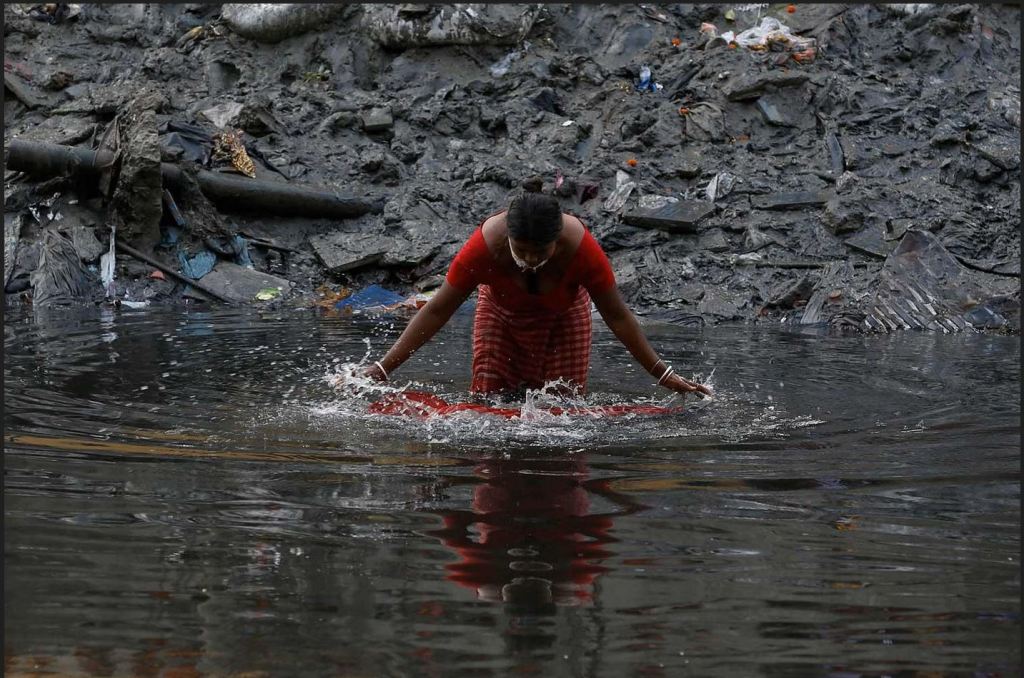
The Yamuna frothing and the tanneries of Kanpur causing havoc in the Ganges are two standout examples of this category.
E-Waste

E-Waste has a fancy acronym called WEEE which stands for Waste Electrical and Electronic Equipment. It’s the fastest growing waste stream in the world. I got to know that every iphone contains:
0.018 g of gold, 0.34g of silver, 0.015g of palladium, and a tiny fraction of platinum. That might seem small, but in metals terms, you’ll find ten to fifty times more copper in a tonne of electronics than in a tonne of copper ore, and 100 times more gold per tonne of smartphones than ore from even the most productive mine. Multiply by the sheer quantity of devices, and the impact is vast: a single e-waste recycler in China, GEM, produces more cobalt than the country’s mines each year. By one estimate, up to 7 per cent of the world’s gold reserves may currently be contained in e-waste.
A large part of e-waste is also driven by the concept of planned obsolescence. A smartphone slowing down and becoming incompatible with the latest apps is something we all know first hand. For someone who considers himself a non-gadget freak, I myself have used close to 8 mobiles over the last two decades. Multiply this with a couple of billion people and imagine the scale! Many luxury brands prefer destroying unsold inventory rather than selling them at discount to prevent brand dilution. And the sheet complexity of a smartphone’s functioning makes it easier to discard them rather than get it fixed.
Industrial Waste
A favorite statistic quoted by waste campaigners is the fact that “97 per cent of all waste is produced by industry, not households”. While this is hard to verify, the sheer scale of waste that goes into manufacturing anything can be mind boggling. A deep dive into the issue may prove all individual action as pointless. Think of tailing dams – an essential feature of mining. A 2019 collapse in Brazil which was its worst industrial disaster killed more than 275 persons . Watch the video below of the terrifying footage:
Loos-en-Gohelle in Paris and West Lothian in Edinburgh are marked by enormous spoil heaps – the legacy of year of open cast mining which has now been categorized as UNESCO world heritage sites. Cal Fyn’s recent work Islands of Abandonment is an exploration of how such sites are now emerging as unexpected harbingers of biodiversity and wildlife.

Nuclear Waste:
Often touted as the scariest hazardous waste to be created by man, nuclear waste is grossly under-researched and relatively unexplored in the public media. Fear mongering apart, check out the pro-nuclear campaigner Mad Hillys Twitter thread on the safety of nuclear waste disposal:
While minimalism is the new rage of our times, remember that while discarding stuff may spark joy, you’re in fact contributing to the global problem of waste. Minimizing your purchases may be a more worthwhile approach!
Discover more from Manish Mohandas
Subscribe to get the latest posts sent to your email.

3 thoughts on “Thinking about Waste”