We live in a world that places a premium on creativity. Companies expect their employees to be creative, parents want their children to become creative, mayors want to convert their cities to creative hubs, translators want to be acknowledged for their creative skills and artists strive to express their unique visions through creative work.
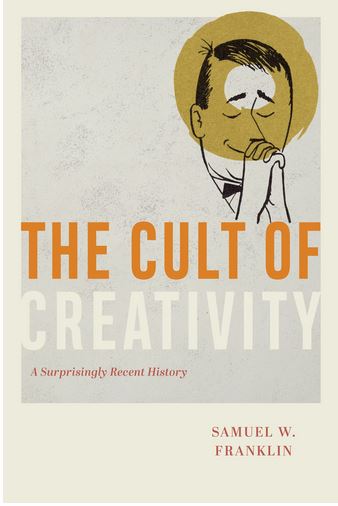
But what is often overlooked is the fact that creativity was a word that was hardly used by a Vyasa, a Shakespeare, a Shelly or an Edison. It was a concept that exploded in the post WWII era. What brought about this revolution and how did this undefinable concept emerge as the centerpiece of our modern life. For someone like me with no creative skills to speak of, Samuel W. Franklin’s ‘The Cult of Creativity‘ answered a lot of these questions.
The post WWII era in America was a unique period. This period was marked by the explosion of mass consumerism on a scale never witnessed before in human history, the Cold War with the USSR and the emergence of Psychology as a formidable science.
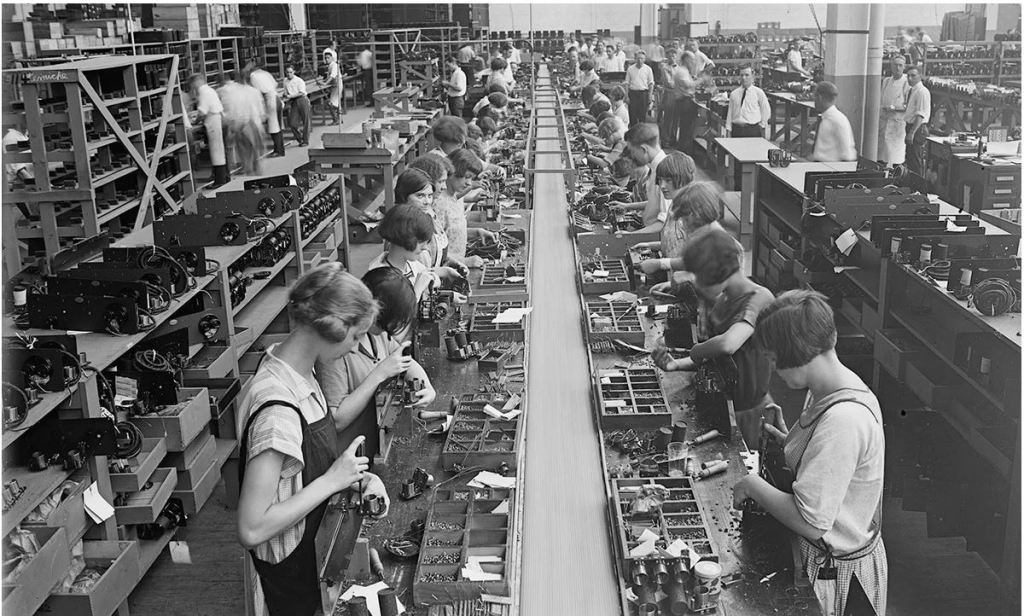
The Taylorean world of production-line and conveyor-belt driven factories was one in which workers toiled as alienated entities to produce products for mass consumption. How could an emerging economic giant address this creeping sense of alienation among millions. How could companies convince customers that the products that had to be purchased and consumed to keep the economy ticking, were relevant and ‘meaningful’ for their lives? How could the technological race with the authoritarian USSR driven by the military-industry complex be packaged in a more humane and ‘exciting’ manner?
The answer to all the above emerged in the idea of ‘creativity’.
While genius was seen as a god-given gift and originality as a less inclusive trait, creativity was packaged as something that could be nurtured and encouraged within everyone. It was democratic. All employees could aspire to join in the collective pursuit of the company’s goals without disturbing the apple cart. If Communist USSR was dystopian and insensitive to the human potential, America was a land where each individual’s creative juice could be tapped into for a larger cause. To balance technological progress with individual freedom, creativity was the solution. Creativity thus saved society from exploring the structural causes of alienation and led to a preference for psychological explanations of each individual’s issues. Maslow’s work on Self-Actualization and his pyramid of human needs evolved and became a rage in this backdrop.
Creative pursuits like ‘brainstorming’ became convenient exercises for companies to encourage employee engagement. It fell into the category of what the philosopher Mikhail Bakhtin has called the carnivalesque –
a special occasion in which the traditional order is temporary upended so that those at the bottom can get their resentments out of their system before the traditional order is finally restored.
For the feminist movement, a lot of the discourse around women joining the mainstream labor force was also centered on the debates on what constituted creative work. Was raising a child at home creative? Was it not? Was working in an office creative?
Creativity cannot exist as a powerful idea in a world without capitalism. But also pertinent to note is that fact that the Left has been one of the key wielders of this cult to rage against the excesses of capitalism. TM Krishna singing Poromboke, the graphic novels of Joe Sacco and the digital art of Molly Crabapple are some examples. Creative minds are often associated with democratic ideals and liberalism. Their tolerance for ambiguity and ability to see through chaos are the defining hallmarks that differentiate a liberal from a conservative. But I’m not too convinced if creativity alone could explain this trait. Am sure there are creative conservatives too.
Postscript: I’m still going to continue buying art supplies for my children. Why stop their creativity being honed?
Discover more from Manish Mohandas
Subscribe to get the latest posts sent to your email.
