Between 1917 and 1934, Gandhi’s base in Mumbai was a pretty mansion which now houses a museum dedicated to preserving the memories of this period. Mani Bhawan is relatively unknown in the tourist circuit but did manage to attract the attention of Martin Luther King and Obama during their visits to the city. I visited the museum last month and would recommend this in case you have time to spare in Bombay.
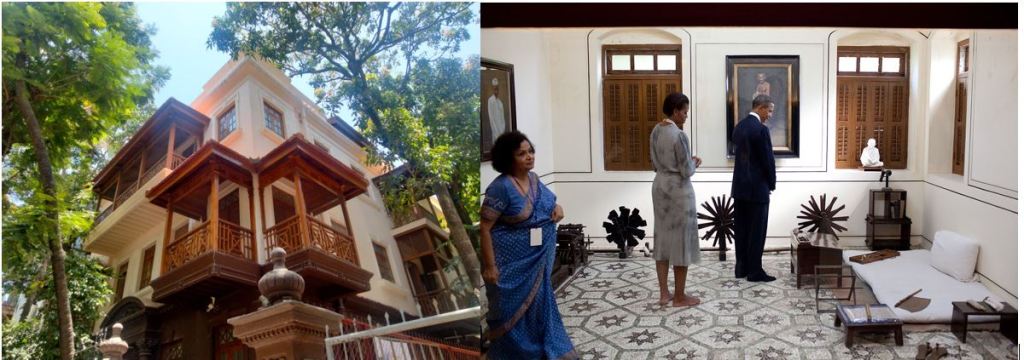
But the focus of this post is not on the significance of the museum, but on a document which was on display and caught my attention.
The Gandhi-Irwin Pact of 1931 called for the suspension of the Civil Disobedience Movement and more importantly paved the way for Gandhi’s participation in the Second Round Table Conference to be held in London later that year. It was during this visit to Europe that some of Gandhi’s iconic photographs such as those of his visit to the Lancashire cotton mill (Cotton was a global commodity in that era), meetings with Romain Roland, Einstein etc were taken. However, before the 61-year old Gandhi could embark on this momentous journey, there was one issue to be taken care of by him – getting a passport issued!
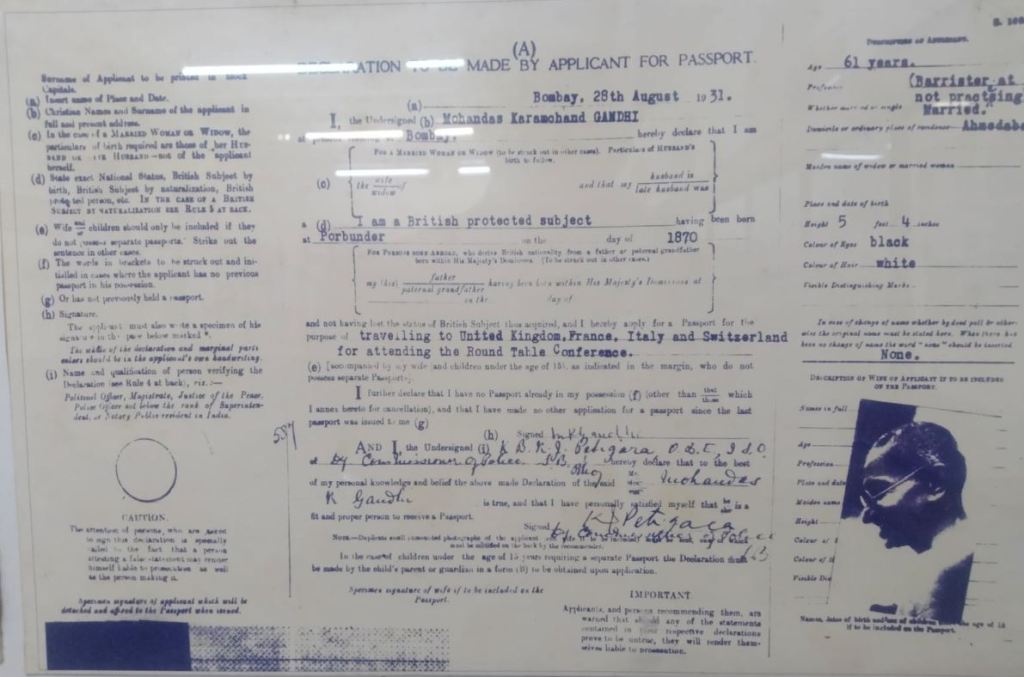
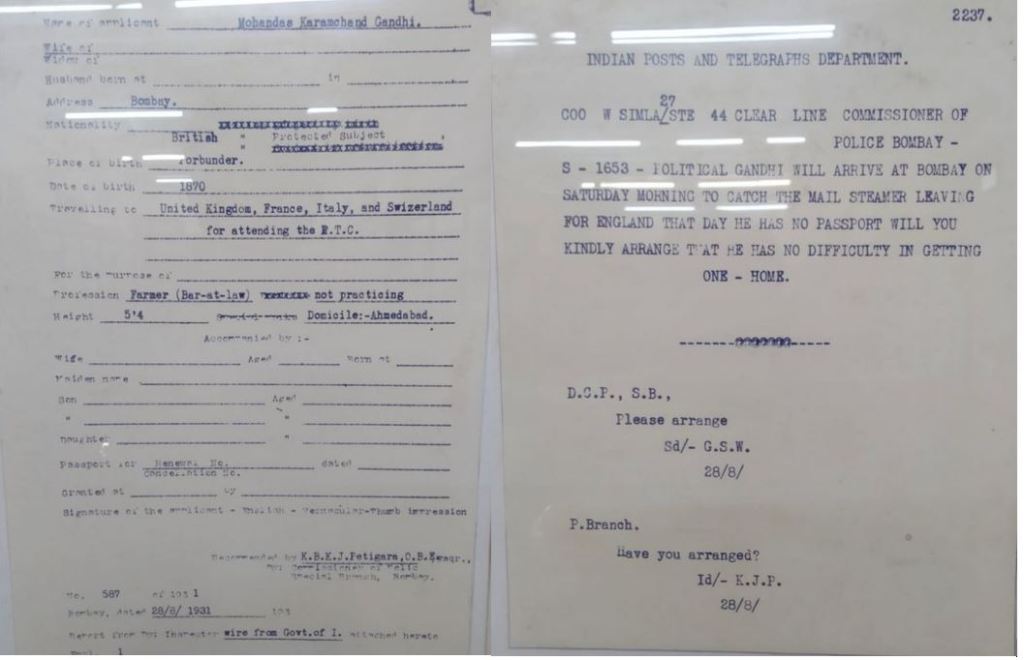
Mani Bhavan has the original passport application framed and it got me wondering about how important a document the passport is for the idea of a country. Gandhi, here, is mentioned as a British protected subject. While the idea of a document attesting the region of one’s origin has been around since time immemorial, it was Henry V who created a precursor to the modern system of issuing travel documents to his subjects. With the rise of the railways and steamer ships, mass transportation boomed making it cumbersome to enforce immigration checks. But this changed with the First World War.
Calls for improving security and the burgeoning idea of nationalism (of which I wrote here), led to the newly formed League of Nations organizing a Conference on Passports & Customs Formalities and Through Tickets that paved the way for the form of passports as we know it today. The conference achieved consensus towards ensuring that a passport had to be 15.5 cms by 3.5 cms, 32 pages thick, bound in cardboard and having a photograph. Remarkably little has changed since then!
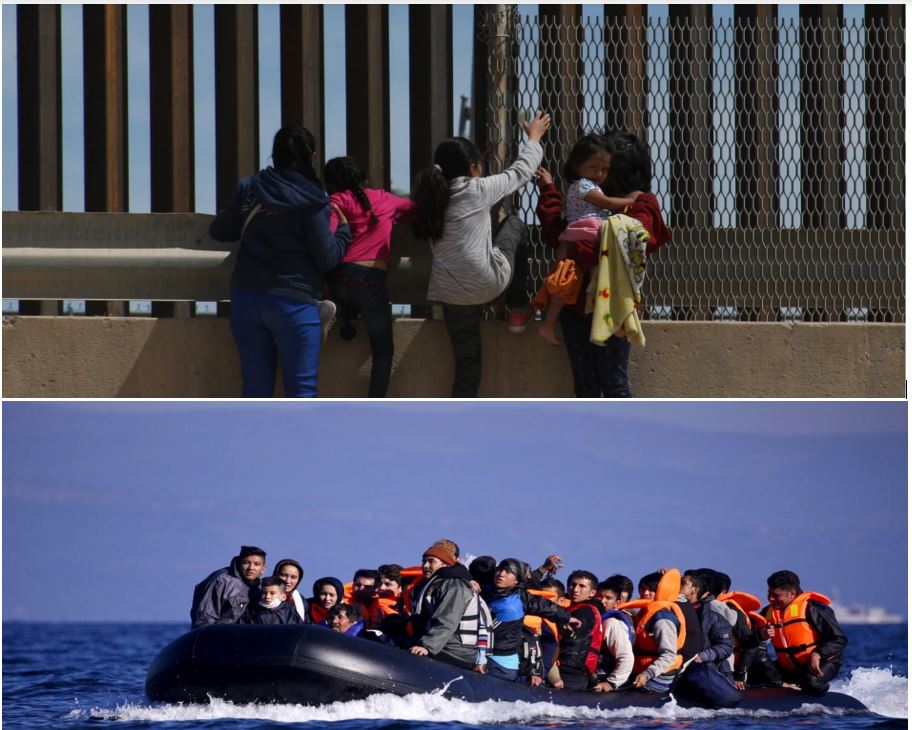
All the stories of dangerous migrations, the brutal clampdown on illegal migrants, the perilous journeys undertaken by humans in dinghies and trailer trucks have its roots in the discrimination of the color of one’s passport!
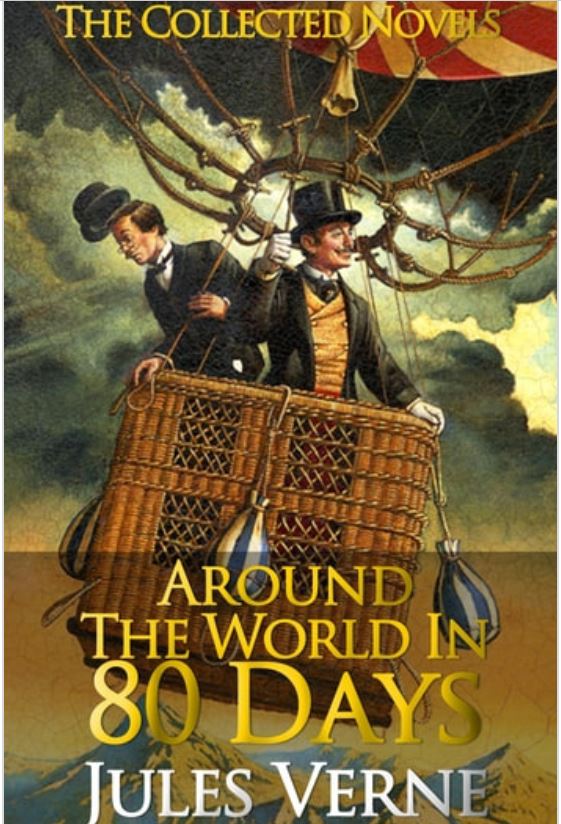
Postscript: In Jules Verne’s ‘Around the World in Eighty Days’, Phileas Fogg was accompanied by his valet in his journey around the world. The character was arguably named by playing around with the word passport. Verne named him Jean Passepartout.
Discover more from Manish Mohandas
Subscribe to get the latest posts sent to your email.

One thought on “Passport, please!”