China has 1100. South Korea 86, Malaysia 61, Indonesia 48 and India a paltry 24. What am I referring to? If you guessed ‘billionaires’, the answer is wrong. It’s the number of skyscrapers taller than 200 meters! Why is India an outlier in this otherwise pan-Asian phenomenon?
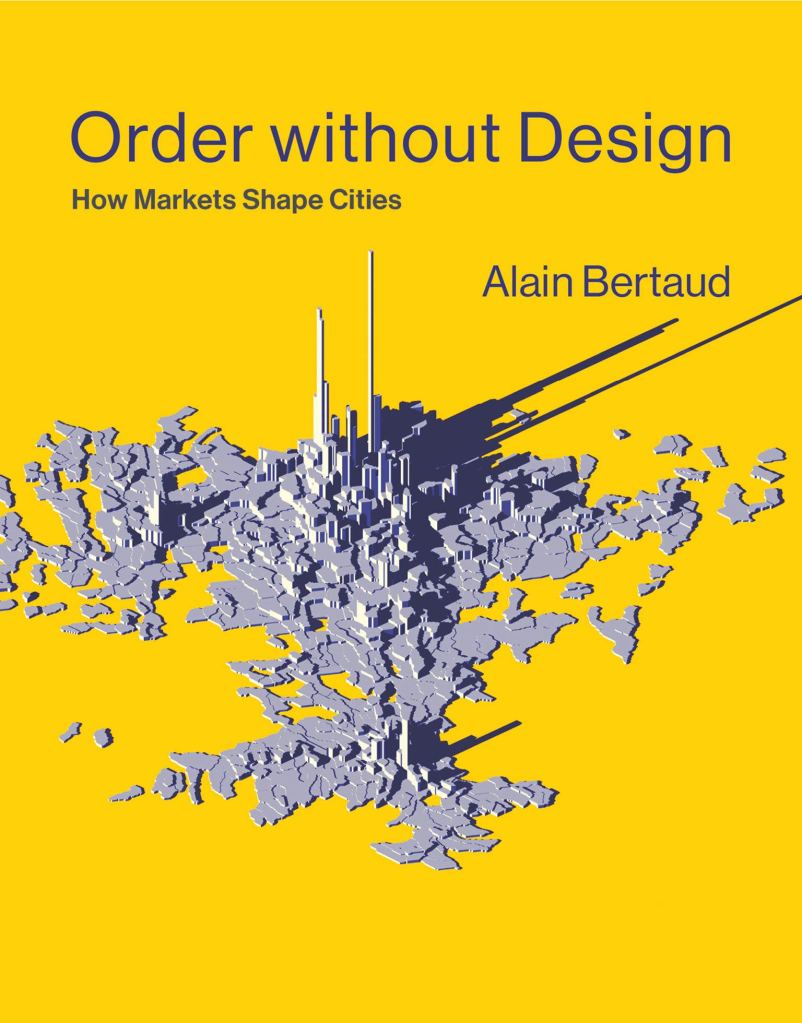
One answer to this is the low Floor Area Ratio (FAR) adopted by most Indian cities. The FAR is the ratio of the total area of a building by the total area of the parcel of land on which its built. So the higher the FAR, taller are the buildings that emerge. In ideal conditions, when density increases and demand for real estate shoots up, city authorities must respond by adapting the FAR. In short, cities should grow vertically as a response to the market forces. This is also a fact borne out in almost all the emerging economies of Asia, barring India.
The urbanist Alan Bartaud, in ‘Order without Design’, argues that cities should ideally get shaped by the market forces operating in them. According to Bartaud:
Density is an indicator of land consumption, reflecting the equilibrium between supply and demand for land in a specific location. Population density is therefore an indicator dependent on market parameters, mainly household income, land supply elasticity, and transport speed and cost
The two main drivers of urbanization are:
- Job opportunities
- Reasonable commute to work

The modern-day city-life is one of drudgery for most. During the 1968 French civil unrest, the slogan of ‘Metro, Dodo, Boulot’ was ubiquitous across street graffiti. Loosely, it translates to Commute, Work, Sleep – an apt metaphor for the soul-crushing impact that a commute can have on a city’s dwellers. One response to this is to improve mobility. Mobility here becomes all encompassing by not just referring to the ability to get to one’s current job quickly, but by the ability to choose among all jobs and amenities offered in a metropolitan area while spending less than an hour commuting.
Thus, while job opportunities are primarily driven by the market, the government’s responsibility should be to invest in urban transport that can move vast multitudes that live away from the city center and to respond to regulatory constraints that disperse populations artificially. (Ask yourself why is the whole of New Delhi bereft of any skyscraper when the majority of the population live in cramped spaces?). In the 19th century, the primary mode of transport in London was the horse carriage. So, consequentially, the choice of residence for the vast labor pool was limited by the efficiency of the horse-drawn carriages and thus emerged the Dickensian slums of the era.
No planner should aspire to shape a city’s limits or try to cap its population size. The examples of Russia and China during the heydays of the command-economy model should be sufficient to deter one. (How can one forget our own dystopian Chandigarh!) Planners should instead focus on public goods such as parks, water bodies, open spaces, street spaces, roads and grapple with the tradeoffs such as congestion and pollution with increased transportation.
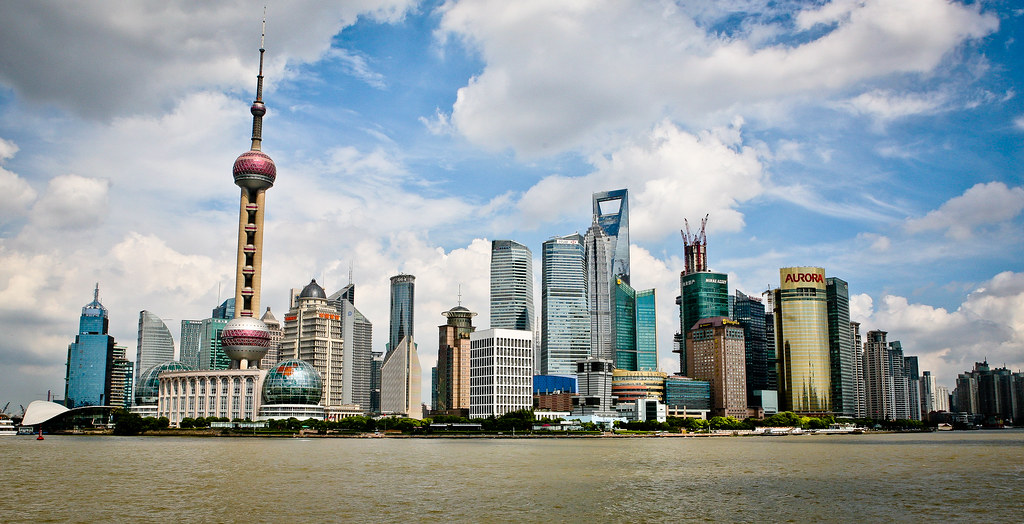
Bartaud argues that the dazzling skyline of Manhattan and Pudong in China are driven by the city’s responsiveness to the market. In short, economics rules!
The prosperity of a city depends on the elasticity of the supply of floor space as economic and demographic conditions change. The quantity of floor space cannot be contingent on a fixed design established in advance by a master plan.
If planners want to have more influence over urban development, they should develop a set of indicators, such as land prices, rent, average commuting time under different transport modes. These indicators should be considered as “blinking red” when they pass a certain threshold. Planners should immediately respond to these red-alert levels by removing supply bottlenecks. Supply bottlenecks might include obsolete regulations but also insufficient investment in roads and transport infrastructure.
Finally, what really caught me off-guard was Bartaud’s rhetorical question on what do planners mean by empty words such as “livable city,” “resilient city,” or “sustainable city.” Can being sustainable guide the design of cities better than market mechanisms? Is Goal 11 of the SDGs on Sustainable Cities attainable in its present avatar? For Bartaud;
Planners strive to transform existing cities. They like to speak about their plans in terms of “vision.” The vision is often expressed with abstract nonquantifiable qualifying terms, such as “livable city,” “resilient city,” or “sustainable city.” An urban planner’s vision can be achieved through design, regulations, and capital investments. Economists, by contrast, are content to play a less ambitious but more analytical role. They are mostly interested in understanding the way market forces and government actions interact in shaping cities. Economists attempt to identify the causes that are changing urban prices and shapes by analyzing empirical data. Economists, like other social scientists, specialize; most neglect the spatial dimension of the economy. But urban economists focus specifically on spatial organization
To work in development without using the adjectives of ‘sustainable’ and ‘resilient’ is nothing short of a professional hazard!!
Discover more from Manish Mohandas
Subscribe to get the latest posts sent to your email.

4 thoughts on “Order without Design”