I’m someone who has always found train journeys to be magical. It’s not the swanky berths, fancy catering or the air conditioning that draws me in but the melancholy of dark vistas, remote hamlets, headlights of cars on lonely highways and tiny deserted railway stations in the middle of nowhere. Watching these sights appear and disappear only to linger on in one’s memory is an experience that I can never tire of.
It’s probably this brooding sense of sadness, anxiety, solitude, isolation and quite despair that always drew me to the paintings of Edward Hopper. I don’t think there’s any painter who has managed to capture the emotional disconnectedness and this sense of alienation of people from their surroundings as Hopper did. His iconic works are often set in a liminal space with an overbearing sense of eerie silence. If you’re not familiar with his work, I would strongly recommend flipping through his paintings online and meditating on their pathos for a while.
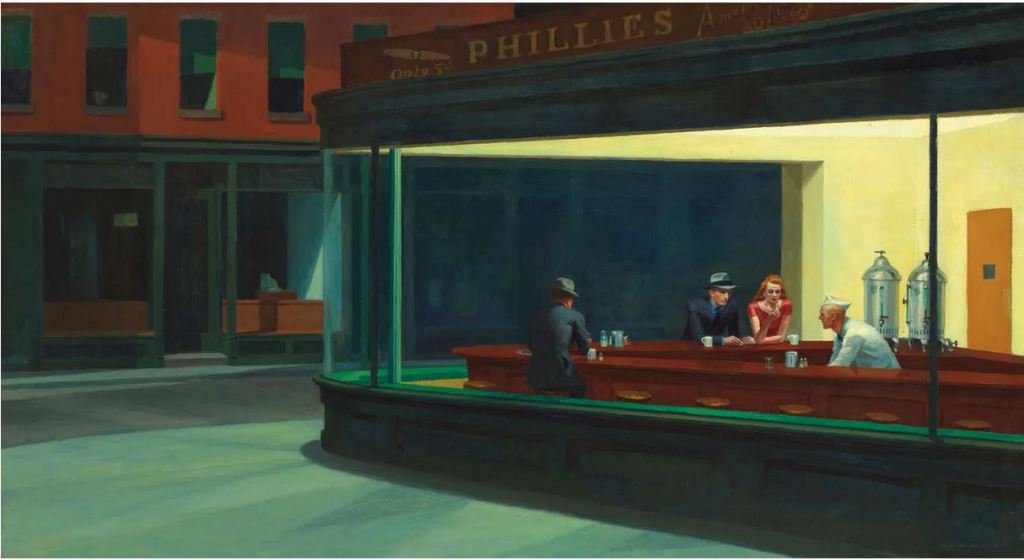
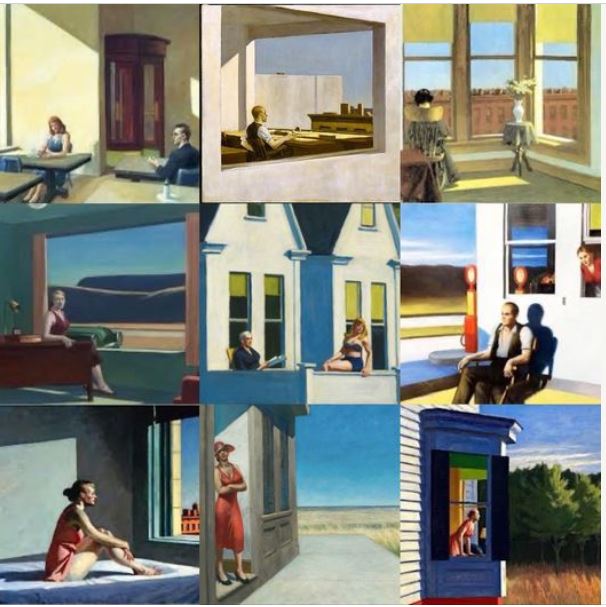
Hopper’s style has been a source of inspiration for several artists. In 2021, the French artist Xavier Marabout was sued by Hopper’s heirs for his creative attempt to marry Hopper’s content with the most celebrated detective of the world – Tin Tin. Thankfully, Marabout won his case.
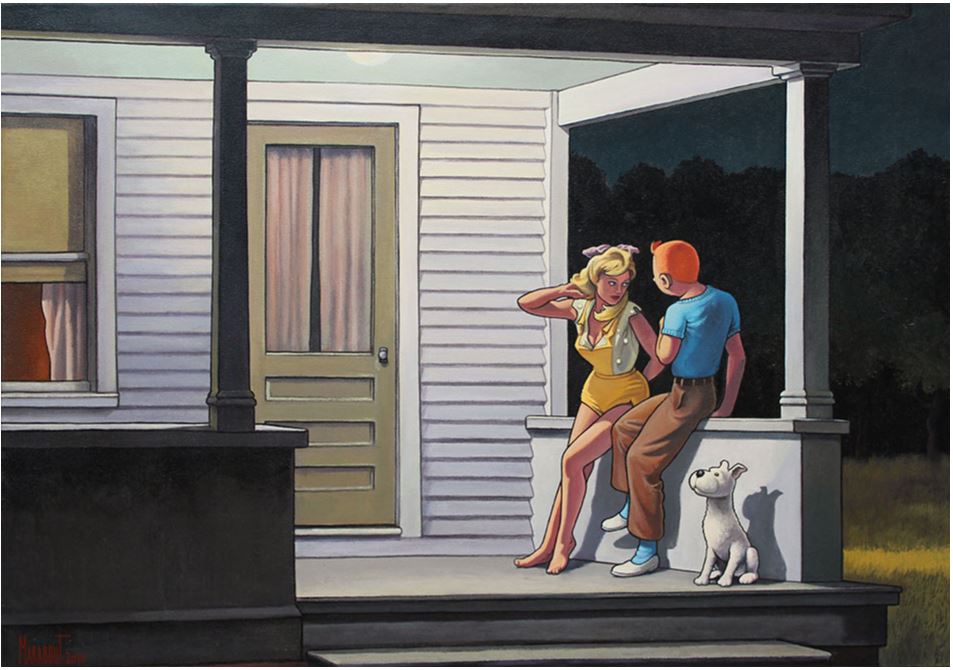

The full prints of Marabout can be accessed here. I’d highly recommend exploring them in detail.
Last month, on Twitter (where else?), I also came across Atul Dodiya’s recent exhibition on iconic Bollywood scenes drawn in a typical ‘Hopperesque’ style!
Finally, I’d strongly recommend reading Alain de Botton’s take on Hopper’s aesthetic of sadness. It was de Botton who introduced me to this genius through his writings. de Botton sums his art thus:
It’s a curious feature of Hopper’s work that although it seems concerned to show us places that are transient and un-homely, we may, in contact with it, feel as if we have been carried back to some important place in ourselves, a place of stillness and sadness, of seriousness and authenticity: it can help us to remember ourselves. How is it possible to forget ‘oneself’? At stake is not a literal forgetting of practical data, rather a forgetting of those parts of ourselves with which a particular sense of integrity and well-being appears to be bound up.
Discover more from Manish Mohandas
Subscribe to get the latest posts sent to your email.

Really interesting
LikeLike