I’m midway through David Chalmers’ “Reality+” and I’m happy to report that I haven’t understood much of it! Chalmers’ fundamental question is : “Are we all living in a simulation?” While he’s written a whole book to explain his arguments, I found his opening examples to introduce his framework of inquiry quite captivating.
For Chalmers, the simulation question can be approached by relying on three traditional questions which philosophy has grappled with:
Knowledge (How do we know the world?)
Reality (What is the nature of the world?)
Value (What is the difference between good and bad?)
To explain each of these, he relies on three stories:
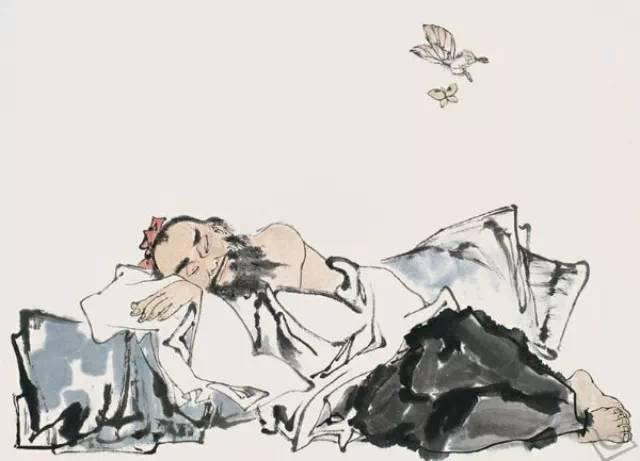
Zhuangzi’s Butterfly Dream
Once Zhuangzi dreamt he was a butterfly, a butterfly flitting and fluttering around, happy with himself and doing as he pleased. He didn’t know he was Zhuangzi. Suddenly he woke up and there he was, solid and unmistakably Zhuangzi. But he didn’t know if he was Zhuangzi who had dreamt he was a butterfly, or a butterfly dreaming he was Zhuangzi.
Narada as Sushila
Narada says to the god Vishnu, “I have conquered illusion.” Vishnu promises to show Narada the true power of illusion (or Maya). Narada wakes up as a woman, Sushila, with no memory of what came before. Sushila marries a king, becomes pregnant, and eventually has eight sons and many grandsons. One day, an enemy attacks, and all her sons and grandsons are killed. As the queen grieves, Vishnu appears and says, “Why are you so sad? This is just an illusion.” Narada finds himself back in his original body only a moment after the original conversation. He concludes that his whole life is an illusion, just like his life as Sushila.
Plato’s Allegory of the Cave
In his extended dialogue, the Republic, he tells the story of humans who are chained up in a cave, seeing only shadows cast on a wall by puppets that imitate things in the world of sunlight outside. The shadows are all the cave people know, so they take them to be reality. One day, one of them escapes and discovers the glories of the real world outside the cave. Eventually he reenters the cave and tells stories of that world, but no one believes him.
In light of the three examples, Chalmers posits that:
The first question, raised by Zhuangzi’s butterfly dream, concerns knowledge. I’ll call it the Knowledge Question. Can we know whether or not we’re in a virtual world? The second question, raised by Narada’s transformation, concerns reality. I’ll call it the Reality Question. Are virtual worlds real or illusory? The third question, raised by Plato’s cave, concerns value. I’ll call it the Value Question. Can you lead a good life in a virtual world? These three questions in turn lead us to three more general questions that are at the heart of philosophy: Can we know anything about the world around us? Is our world real or illusory? What is it to lead a good life?
Not a bad way to get a reader hooked to a book exploring the many facets of ‘reality’!
Discover more from Manish Mohandas
Subscribe to get the latest posts sent to your email.


Your blog got me curious. Just ordered this book. Thanks
LikeLike